Cost to Run A Cpap Machine on Off-Grid Solar
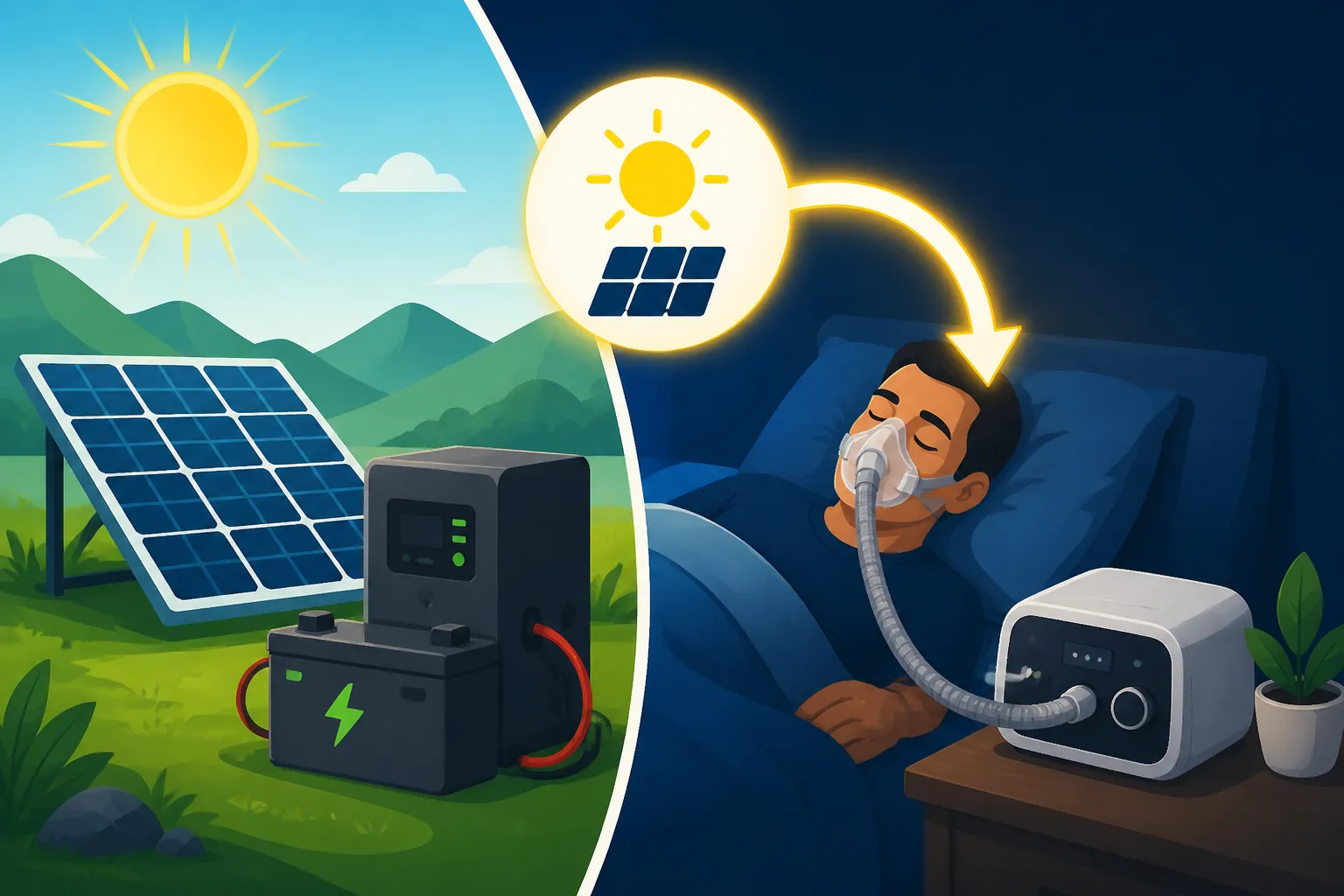
It’s a unique kind of worry, isn't it? Knowing you rely on a CPAP machine every single night for your health, but dreaming of the freedom of off-grid living, camping, or just having reliable backup power. The thought of losing power or being somewhere without an outlet can feel genuinely terrifying. Many folks wonder if truly going off-grid means sacrificing that essential medical device, or if it will cost an arm and a leg to keep it running. This guide is dedicated to demystifying the cost of running a CPAP machine on off-grid solar, helping you understand the components, the financial outlay, and how to set up a reliable system without breaking the bank.
Understanding Your CPAP Machine's Power Needs
Before you can even begin to think about solar panels and batteries, you need to get intimately familiar with your CPAP machine's power appetite. It’s not just about plugging it in; it’s about understanding how much energy it truly demands, especially when you factor in those crucial accessories.
Decoding Your CPAP's Wattage and Run Time
The first step in sizing any off-grid solar system is to know your load. For your CPAP machine, this means figuring out its wattage and how many hours you use it. Most CPAP machines themselves, without any heated elements, typically draw a modest 30 to 60 watts. This is your continuous wattage – what the machine needs to function throughout the night.
However, here’s where many people get tripped up: the accessories. If you use a heated humidifier or a heated tube, your machine’s power consumption can easily jump to 100-150 watts, or even higher for a short burst. That heated humidifier is often the biggest power hog, as it constantly heats water to prevent dryness during therapy. It’s crucial to check the label on your specific CPAP machine and its power brick. It will usually state the input voltage and current, or directly the wattage.
Once you have the wattage, you can calculate the total energy consumed in a night, measured in watt-hours (Wh). For instance, if your CPAP draws 50 watts and you use it for 8 hours a night, that's 50W * 8h = 400 Wh per night. If you add a heated humidifier that pushes it to 120 watts, your nightly usage climbs to 120W * 8h = 960 Wh. This number, your daily energy usage, is the cornerstone for sizing your entire off-grid system, from panels to batteries. If you want a deeper dive, check out our guide on How to Calculate Daily Energy Usage.
The DC vs. AC Power Dilemma for CPAPs
This is a critical point that can significantly impact the efficiency and cost of your off-grid CPAP setup. Most CPAP machines operate internally on direct current (DC) power, typically 12V or 24V. However, they almost universally come with an external power brick that converts standard household alternating current (AC) into the DC power the machine needs.
When you use your CPAP with its standard AC adapter, plugged into an off-grid inverter, you're essentially going through two conversions: your battery bank provides DC power, the inverter converts it to AC, and then the CPAP's power brick converts it back to DC. Each conversion involves some energy loss, often around 10-20% per conversion. This means you're losing valuable battery power just to switch between current types unnecessarily.
The more efficient approach is to use a direct DC converter for your specific CPAP model, if one is available. Many CPAP manufacturers and third-party accessory providers offer 12V or 24V DC converters that bypass the need for an inverter. This eliminates one conversion step, saving energy and extending your battery life, which is invaluable in an off-grid scenario. While the DC converter itself is an additional cost, the long-term energy savings and improved reliability often make it a worthwhile investment. Always check with your CPAP manufacturer or a reputable medical supply store for compatible DC options.
Essential Off-Grid Solar Components and Their Costs
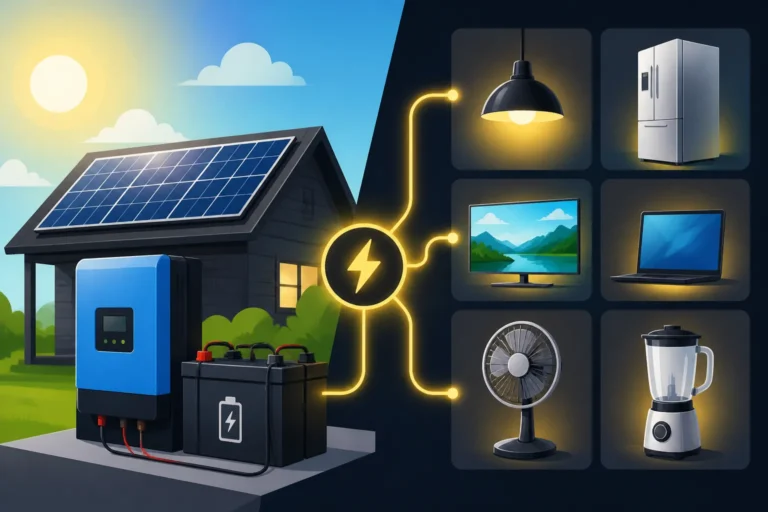
Building an off-grid solar system to power your CPAP machine, or any device for that matter, involves several key components working in harmony. Understanding each piece and its typical cost will help you budget effectively and choose the right equipment for your specific needs.
Solar Panels: Your Energy Harvesters
Solar panels are the very first step in your off-grid power generation. They capture sunlight and convert it into DC electricity. For running a CPAP machine, you won't typically need a massive array, especially if you're only powering that one device and perhaps a few small electronics.
Types and Sizing: You'll generally find monocrystalline panels on the market, known for their efficiency and compact size. For a dedicated CPAP setup, a single 100-watt or 200-watt panel might be sufficient to recharge your battery daily, assuming decent sunlight hours. If you use a heated humidifier or live in a region with frequent cloudy days, you might consider a 300W or even 400W array to ensure consistent charging. Portable solar panels are also an excellent option for CPAP users on the go, often folding up for easy transport. Companies like Renogy and BougeRV offer reliable portable options. We have a detailed guide on Cost of Off-Grid Solar Panels that can give you more insight into pricing variations.
Costs: A good quality 100-watt rigid solar panel can range from $80 to $150, while a 200-watt panel might cost $150 to $250. Portable folding panels, due to their convenience and integrated charge controllers in some cases, tend to be a bit more expensive per watt, often starting around $200-$400 for a 100-200W kit. You can find competitive prices and a wide selection of panels on platforms like Amazon.
Batteries: The Heart of Your Off-Grid System
The battery bank is arguably the most critical component for a CPAP user going off-grid, as it's what stores the solar energy to power your machine through the night when the sun isn't shining. Without adequate battery capacity, your CPAP will simply stop working.
Types and Capacity:
There are two main types of batteries you'll consider:
-
Lead-Acid Batteries: This category includes flooded lead-acid (FLA), gel, and Absorbent Glass Mat (AGM) batteries.
- AGM batteries are popular for smaller off-grid setups due to being sealed, maintenance-free, and relatively affordable. However, they perform best when only discharged to about 50% of their capacity to prolong their lifespan.
- Cost: A 100Ah (Amp-hour) 12V AGM battery, which provides 1200Wh of theoretical capacity (but only 600Wh usable), can cost anywhere from $180 to $300.
-
Lithium Iron Phosphate (LiFePO4) Batteries: These are increasingly becoming the standard for off-grid applications.
- Advantages: They can be discharged much deeper (typically 80-100%) without damage, have a significantly longer lifespan (2000-5000+ cycles compared to 300-1000 for AGM), are lighter, and often come with an integrated Battery Management System (BMS) for safety.
- Cost: A 100Ah 12V LiFePO4 battery (providing 1200Wh, almost all usable) typically costs between $300 and $600. While the upfront cost is higher, their longer lifespan and greater usable capacity often make them more cost-effective in the long run. To learn more about this comparison, check out our article on LiFePO4 vs Lead-Acid Battery Cost.
Sizing for CPAP:
To determine how much battery capacity you need, refer back to your daily watt-hour usage. You want enough capacity to power your CPAP for at least one or two nights (days of autonomy) without sun, plus a buffer. For example, if your CPAP uses 500 Wh per night, and you want 2 nights of autonomy, you need 1000 Wh of usable capacity.
- For AGM, you'd need approximately 2000 Wh of total capacity (two 100Ah 12V batteries).
- For LiFePO4, you'd need approximately 1000-1200 Wh of total capacity (one 100Ah 12V battery).
You can explore more about sizing batteries in our guide on How Many Batteries to Run A Cpap Machine. Our comprehensive guide on Best Off-Grid Solar Batteries also offers some excellent product recommendations.
Charge Controllers and Inverters: Power Management
These two components are the brains and brawn of your off-grid power system, ensuring safe charging and usable power for your devices.
Charge Controller:
- Purpose: The charge controller sits between your solar panels and your batteries. Its primary job is to regulate the voltage and current coming from the solar panels to prevent overcharging and damaging your batteries. It also often has low-voltage disconnect features to protect your batteries from over-discharging.
- Types:
- PWM (Pulse Width Modulation): Simpler, less expensive, but less efficient, especially in colder weather or when panel voltage significantly differs from battery voltage.
- MPPT (Maximum Power Point Tracking): More advanced and efficient, especially for larger systems or when you want to maximize power harvest from your panels. MPPT controllers can cost more upfront but often pay for themselves in improved performance.
- Costs: A basic PWM controller for a small CPAP setup might cost $20-$50. A good MPPT controller for a 100-400W solar array can range from $80 to $200.
Inverter:
- Purpose: The inverter converts the DC power stored in your batteries into AC power, which is what most household appliances (including your CPAP's standard power brick) use.
- Types (for CPAPs): You absolutely need a pure sine wave inverter for sensitive electronics like CPAP machines. Modified sine wave inverters are cheaper but can damage electronics and cause them to run inefficiently or noisily.
- Sizing: An inverter's rating should be greater than the maximum surge wattage of all AC devices you plan to run simultaneously. For a CPAP alone, a small 300-600W pure sine wave inverter is usually sufficient. If you plan to power other devices, you'll need a larger one. Read our guide on Best Off-Grid Solar Inverters for recommendations.
- Costs: A quality pure sine wave inverter in the 300-600W range typically costs $100-$300. Larger inverters for whole-house use can be significantly more. Remember, if you use a DC converter for your CPAP, you might not need an inverter solely for the CPAP, reducing this cost component.
Calculating the Full Cost of Your CPAP Solar Setup
Now that we've broken down the individual components, let's put it all together to understand the full cost of running your CPAP machine on off-grid solar. The total cost can vary significantly based on your specific needs, the quality of components you choose, and whether you opt for a DIY approach or a pre-built solution.
Estimating Component Costs for Different Setups
Let’s look at a few common scenarios for CPAP users and estimate the costs involved. These are general estimates, and prices can fluctuate based on brands, sales, and your location.
Scenario 1: Basic Portable Setup (Occasional Travel/Backup)
This is for someone who needs a CPAP for a few nights of camping, travel, or as a reliable emergency backup. Often, a portable power station (also known as a solar generator) is the ideal solution here because it integrates the battery, inverter, and charge controller into one unit.
- CPAP Usage: No humidifier, 8 hours/night @ 50W = 400Wh/night.
- Components:
- Portable Power Station: A unit with at least 500Wh to 1000Wh capacity (e.g., Jackery Explorer 500, Bluetti EB55). These typically include a pure sine wave inverter and an MPPT charge controller.
- Portable Solar Panel: 100W-200W foldable panel to recharge during the day.
- DC Converter (Optional but Recommended): Reduces power loss.
- Estimated Cost Range:
- Portable Power Station: $400 – $800 (for 500Wh – 1000Wh capacity)
- Portable Solar Panel: $200 – $400
- DC Converter: $50 – $100
- Total for Basic Portable Setup: $650 – $1300
Scenario 2: Dedicated Mid-Range Setup (Regular Off-Grid Use, e.g., Cabin/RV)
This setup is for more consistent use, providing reliable power for your CPAP machine every night, potentially with a humidifier.
- CPAP Usage: With humidifier, 8 hours/night @ 120W = 960Wh/night.
- Components:
- Solar Panels: Two 100W rigid monocrystalline panels (200W total).
- Battery: One 100Ah 12V LiFePO4 battery (1280Wh usable, allowing 1 night + buffer). Or two 100Ah 12V AGM batteries (1200Wh usable).
- Charge Controller: 20A MPPT charge controller.
- Inverter: 500W-1000W pure sine wave inverter (if not using a DC converter).
- DC Converter (Highly Recommended): For CPAP if available.
- Estimated Cost Range:
- Solar Panels (2x100W): $160 – $300
- LiFePO4 Battery (100Ah 12V): $300 – $600
- MPPT Charge Controller: $80 – $200
- Pure Sine Wave Inverter (if needed): $100 – $300
- DC Converter: $50 – $100
- Total for Mid-Range Setup: $690 – $1500
Scenario 3: Integrated with a Larger Off-Grid System (Whole Home/Homestead)
If your CPAP is part of a larger off-grid power system for a cabin or home, its cost is integrated into the overall system design. In this case, you'd likely have a 24V or 48V system with multiple panels and batteries. The marginal cost of adding CPAP capability to an already robust system is lower, as you just need to ensure the overall system is sized correctly. A great resource for this is How to Size an Off-Grid Solar System.
Here's a quick comparison table for the primary components:
| Component Category | Basic Portable Setup (CPAP only) | Dedicated Mid-Range Setup (CPAP + basic needs) |
|---|---|---|
| Solar Panels | 100-200W portable ($200-$400) | 200-300W rigid ($160-$450) |
| Battery Bank | 500-1000Wh integrated ($400-$800) | 100Ah-200Ah LiFePO4 ($300-$1000) |
| Charge Controller | Integrated (part of portable unit) | 20-30A MPPT ($80-$200) |
| Inverter | Integrated (part of portable unit) | 500-1500W Pure Sine Wave ($100-$400) |
| DC Converter | Optional ($50-$100) | Highly Recommended ($50-$100) |
| Wiring/Fuses/Misc. | Minimal (part of portable unit) | $50-$150 |
| Total Estimated Cost | $650 – $1300 | $740 – $2250 |
Beyond the Basics: Wiring, Mounting, and Extras
While the major components take up the bulk of the budget, don't overlook the smaller, yet essential, items that ensure your system functions safely and reliably.
- Wiring and Connectors: You'll need appropriate gauge wires for your solar panels, batteries, and inverter. MC4 connectors are standard for solar panels, and you'll need battery cables. Fuses and circuit breakers are non-negotiable for safety. While these items individually don't cost much, they can add up, usually ranging from $50-$150 depending on the system size. It's crucial to select properly sized wiring to prevent voltage drop and ensure safety.
- Mounting Hardware: For rigid solar panels, you'll need racking and mounting hardware to secure them to a roof, pole, or ground mount. This can add another $50-$200, depending on the complexity of your installation. Portable panels often come with built-in stands or require minimal mounting.
- Monitoring Tools: A battery monitor (like a Victron SmartShunt) is an excellent investment, even for a CPAP-only system. It gives you an accurate reading of your battery's state of charge, voltage, and current flow, so you know exactly how much power you have left. These typically cost $50-$150.
- Backup Options: For critical medical devices like CPAPs, having a backup plan is wise. This could be an extra battery, a small gas generator, or simply the ability to scale back usage (e.g., turning off the humidifier) during extended cloudy periods. The cost of adding a small generator, for example, could be $300-$800.
- Professional Installation (Optional): While many CPAP solar setups can be DIY projects, especially the portable ones, if you're integrating into a larger system or are unsure about electrical work, consulting or hiring a professional electrician for parts of the installation is a good idea. This adds to the cost, but ensures safety and compliance. Our article on DIY vs Professional Off-Grid Solar Cost details the pros and cons.
Maximizing Efficiency and Saving Money
Going off-grid, even for something as specific as a CPAP machine, can seem like a significant investment. However, there are smart strategies you can employ to make your system more efficient and reduce your overall costs, both initially and in the long run.
Optimizing Your CPAP Usage
The most direct way to save money and reduce the size of your off-grid system is to minimize the power draw of your CPAP machine itself. Every watt-hour you save means you need smaller solar panels and a smaller battery bank, leading to lower upfront costs.
- Turn Off Heated Elements: As we discussed, the heated humidifier and heated tube are the biggest power hogs. If your therapy allows, try running your CPAP without these features. Many users find they can tolerate it, especially in humid environments, or by using a room humidifier instead of the integrated one. If you must use them, consider setting the heat level to the minimum effective setting. Even reducing the temperature by a few degrees can make a noticeable difference in power consumption.
- Use a DC Converter: Seriously, I can't stress this enough. If your CPAP model has a direct DC converter option (usually 12V or 24V), invest in it. This eliminates the need for an inverter (or at least bypasses its use for your CPAP), cutting down on energy losses from DC-to-AC and AC-to-DC conversions. This is often the single most impactful step you can take to make your CPAP more off-grid friendly.
- Consider a Travel CPAP: If your primary off-grid use is for camping, RVing, or short trips, a dedicated travel CPAP machine might be worth considering. Brands like ResMed AirMini or Philips DreamStation Go are designed to be much more power-efficient, often drawing less than 30W even with minimal humidification options. Their compact size and lower power draw make them ideal for portable solar setups.
Smart Solar Choices and Installation Strategies
Beyond optimizing your CPAP, there are smart decisions you can make when selecting your solar equipment and setting up your system.
- Right-Size Your System: It's tempting to either go too big or too small. Oversizing means spending more money than you need to, while undersizing leads to frustrating power shortages. Carefully calculate your daily energy needs (as outlined in How Much Solar to Run A Cpap Machine) and factor in a realistic number of "days of autonomy" (how many days your battery can last without sun). Aim for a system that reliably meets your needs with a modest buffer, but don't go overboard if your budget is tight. Our guide on How to Budget for an Off-Grid Solar System can offer further insights.
- DIY Installation (Where Appropriate): For smaller, dedicated CPAP solar setups, particularly those using portable power stations or simple panel-and-battery kits, a DIY installation can save a significant amount on labor costs. Many components are designed for easy plug-and-play assembly. However, always prioritize safety. If you're dealing with higher voltages or complex wiring, don't hesitate to consult a qualified electrician. There are plenty of online resources and forums to guide you through DIY steps.
- Explore Off-Grid Solar Kits: For beginners or those who prefer a streamlined approach, off-grid solar kits can be a fantastic value. These kits often include pre-matched components (panels, charge controller, inverter, and sometimes batteries) designed to work together. While they might not be as customizable as building from scratch, they simplify the purchasing process and often offer better pricing than buying individual components. You can find excellent options on Amazon from brands like Renogy or BougeRV. Check out our recommendations in Best Off-Grid Solar Kits for Beginners.
- Consider Expandability: If you think you might want to expand your off-grid system in the future to power more than just your CPAP, design with expandability in mind. Choose a charge controller that can handle more panels down the line, and select an inverter with a bit of headroom. While it might mean a slightly higher upfront cost, it saves money and hassle compared to replacing components entirely later on.
- Monitor and Maintain: Once your system is up and running, consistent monitoring and maintenance are key to its longevity and efficiency. Keep your solar panels clean, check battery terminals for corrosion, and monitor your system's performance. A well-maintained system operates optimally, ensuring your CPAP is always powered and you get the most out of your investment.
By carefully planning your usage, choosing the right components, and being strategic about your setup, running your CPAP machine reliably off-grid is not only possible but can also be surprisingly cost-effective. It truly offers that peace of mind, knowing your essential medical device is always powered, no matter where you are or what the grid is doing.
Disclaimer
Please remember that this article provides general information and estimates. The actual cost and requirements for your off-grid solar CPAP setup will depend on your specific CPAP model, personal energy consumption habits, geographic location, chosen equipment brands, and installation preferences. Always consult with your medical provider regarding the criticality of your CPAP usage and consider professional electrical advice for complex installations to ensure safety and compliance with local codes.