Off-Grid Solar Cost for a Camper
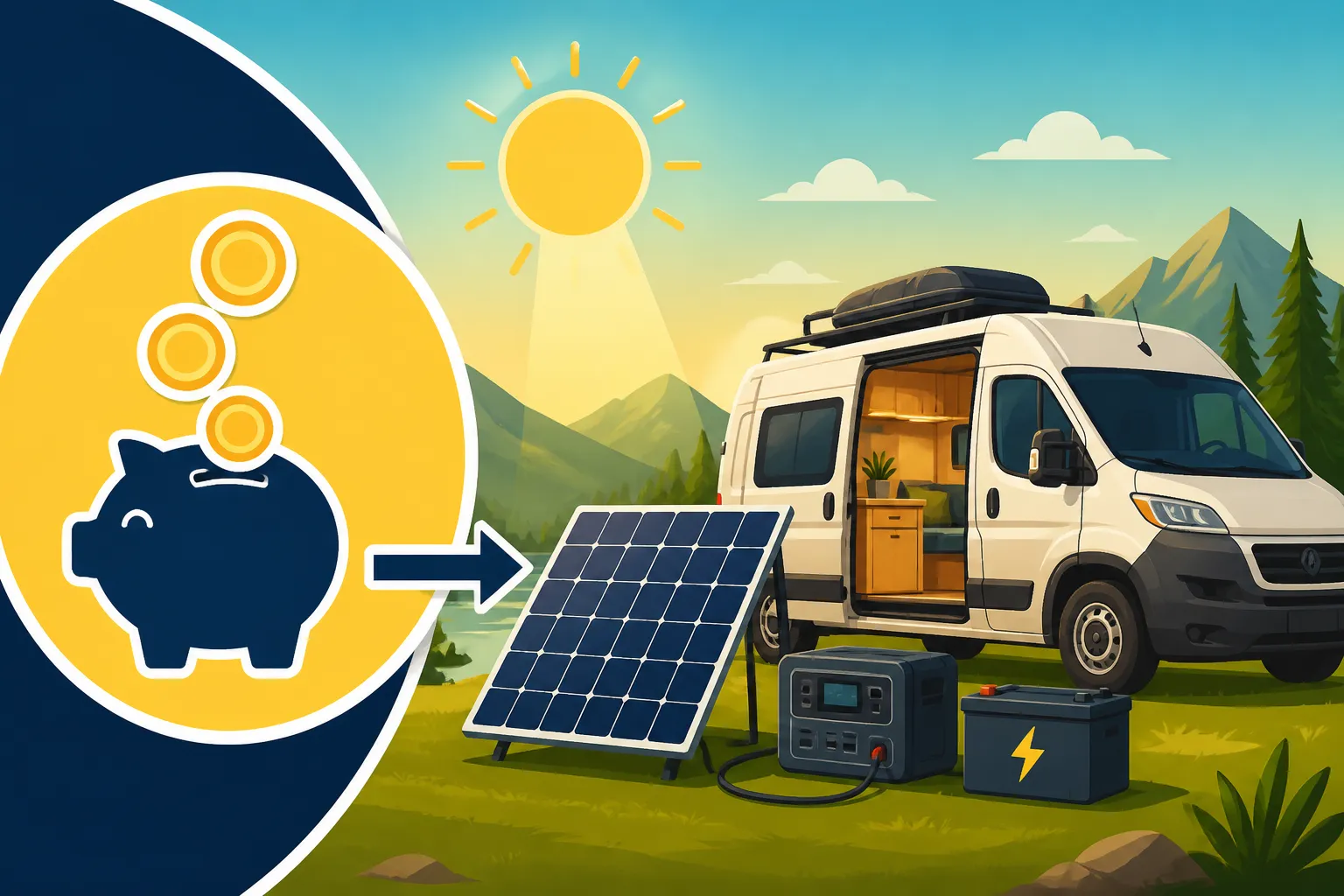
Thinking about taking your camper off-grid and ditching those expensive campground hookups? It's a dream for many, but the biggest hurdle often isn't the technical know-how, it's figuring out exactly how much it's going to hit your wallet. This guide is here to unravel the mystery of off-grid solar costs for your camper, from the initial investment in panels and batteries to the long-term savings.
Estimating Your Camper's Energy Needs
Before you even start looking at shiny solar panels or beefy batteries, you absolutely have to know how much power you're actually going to use. This isn't just about guessing; it's about doing a proper load analysis. Skimping on this step is like trying to bake a cake without knowing how much flour you need – you'll end up with a mess or a flat disappointment. Your daily energy consumption will directly dictate the size and, therefore, the cost, of every major component in your off-grid solar system. If you overestimate, you spend too much; underestimate, and you'll be constantly running out of power.
Identifying Your Appliances and Their Power Draw
Think about every electrical item you use in your camper, from the smallest phone charger to your refrigerator and microwave. List them out. This step can feel tedious, but it's genuinely the most crucial part of designing an efficient and cost-effective system. Don't forget seasonal items, like a small heater for chilly mornings or a fan for hot afternoons. For each item, you'll need to find its wattage. This is usually listed on a label on the appliance itself, in the owner's manual, or easily found with a quick online search for the specific model.
For example, a typical 12V RV refrigerator might draw around 60 watts, a fan might be 15 watts, and a laptop charger could be 60 watts. Your phone charger might only be 10-15 watts. Don't forget those phantom loads, like anything that's plugged in but not actively "on," drawing a tiny bit of power. It all adds up! Understanding how to calculate daily energy usage is really the foundation of getting this right.
Calculating Daily Watt-Hours
Once you have the wattage for each appliance, you need to estimate how many hours a day you'll use it. This will give you the daily watt-hours (Wh) for each item. Then, you simply add all those individual watt-hour figures together to get your total daily energy consumption. This total number is your golden ticket – it tells you exactly how much energy your solar system needs to generate and store each day.
Let's say your fridge runs for 12 hours a day, your lights are on for 4 hours, and you charge your laptop for 2 hours.
- Fridge: 60W * 12 hours = 720 Wh
- LED Lights: 10W * 4 hours = 40 Wh
- Laptop Charging: 60W * 2 hours = 120 Wh
- Phone Charging: 15W * 3 hours = 45 Wh
- Water Pump: 50W * 0.5 hours (30 min) = 25 Wh
Total Daily Watt-Hours: 720 + 40 + 120 + 45 + 25 = 950 Wh.
This calculation is vital because it helps you determine how many solar panels for off-grid living your camper needs, as well as the appropriate battery bank size. You'll often want to factor in a buffer for cloudy days or increased usage, perhaps by multiplying your total by 1.25 or even 1.5, depending on how many days of autonomy you desire.
Breaking Down the Components and Their Costs
The overall cost of off-grid solar for a camper isn't one big lump sum; it's a collection of individual components, each with its own price tag. Understanding these pieces and their typical price ranges will give you a much clearer picture of your total investment. We're talking solar panels, batteries, an inverter, a charge controller, and all the bits and bobs to connect them.
Solar Panels: Types, Wattage, and Pricing
Your solar panels are what harvest sunlight and convert it into usable electricity. For campers, you typically see two main types: rigid panels and flexible panels. Rigid panels, often monocrystalline, are more efficient and durable but require a fixed mounting solution. Flexible panels are lighter, can conform to curved surfaces, and are easier to install on uneven roofs, but tend to be less efficient and may have a shorter lifespan.
The cost of off-grid solar panels can vary widely based on their wattage (how much power they produce), brand, and type. A single 100-watt rigid panel might cost anywhere from $80 to $150, while a flexible one of the same wattage could be $100 to $250. For a modest camper setup needing around 300-400 watts, you might be looking at two to four panels, totaling $200-$1000. Larger setups for full-time living might require 600-1000 watts or more, easily pushing panel costs into the $1,000-$2,500 range. For more detailed insights, check out this guide on the Cost of Off-Grid Solar Panels.
Batteries: The Heart of Your System and Its Biggest Expense
This is usually where the bulk of your budget goes. Batteries store the energy your panels collect so you can use it when the sun isn't shining. The choice of battery technology significantly impacts both performance and cost.
- Lead-Acid Batteries (Flooded, AGM, Gel): These are the traditional, more budget-friendly options. They are heavy, have a shorter lifespan (2-5 years), and generally shouldn't be discharged below 50% to maximize their life. A good quality 100Ah AGM battery might run you $200-$350. For the 950 Wh daily usage we calculated earlier, you'd need roughly 200Ah of 12V battery capacity (950 Wh / 12V = 79.17 Ah, then double for 50% discharge limit, so ~160Ah usable, thus 200Ah to be safe). Two 100Ah AGM batteries could cost $400-$700.
- Lithium Iron Phosphate (LiFePO4) Batteries: These are the gold standard for off-grid campers. They are lighter, last much longer (8-15 years, or thousands of cycles), can be discharged almost completely (80-100% depth of discharge), and often perform better in a wider range of temperatures. The downside? Higher upfront cost. A 100Ah LiFePO4 battery can cost $400-$1,000 or more. For our 950 Wh example, one 100Ah LiFePO4 battery (providing ~100Ah usable at 12V) would likely suffice, putting your battery cost in the $400-$1,000 range. While pricier upfront, many argue the lifetime cost of an off-grid solar system is lower with LiFePO4 due to their longevity and performance.
When considering the cost of an off-grid solar battery bank, it's clear that your battery choice will be a major determinant of your total system price. For a truly portable setup or a smaller camper that you only use occasionally, something like a Jackery solar generator can be an excellent starting point, combining battery storage and an inverter in one unit for ease of use, typically ranging from a few hundred to several thousand dollars depending on capacity.
Inverters and Charge Controllers: Essential Brains of the Operation
These two components are critical for managing the power flow.
- Charge Controller: This device regulates the voltage and current coming from your solar panels to your batteries, preventing overcharging and optimizing the charging process. There are two main types:
- PWM (Pulse Width Modulation): Simpler, less efficient, and cheaper. Good for smaller, less critical systems. A 20A PWM controller might be $30-$80.
- MPPT (Maximum Power Point Tracking): More advanced, significantly more efficient (especially in varying light conditions), and more expensive. Essential for larger systems and maximizing energy harvest. A good 30A-60A MPPT controller can range from $150 to $500, or even more for high-end brands. For most serious off-grid camper setups, an MPPT charge controller is highly recommended.
- Inverter: Your solar panels and batteries typically operate on Direct Current (DC), but most of your camper appliances (like microwaves, coffee makers, or standard outlets) run on Alternating Current (AC). The inverter converts DC power from your batteries into usable AC power.
- Modified Sine Wave: Cheaper, but can be hard on sensitive electronics. Generally not recommended for anything more than basic resistive loads (like a simple lightbulb). Costs $50-$200.
- Pure Sine Wave: Produces clean, grid-like power that's safe for all electronics. This is the preferred choice for campers. A 1000W-2000W pure sine wave inverter, suitable for most camper needs, can cost $200-$600. If you plan to run high-draw appliances like an air conditioner or microwave, you might need a 3000W or 4000W inverter, which could push costs to $500-$1,500. Knowing how to size an off-grid inverter correctly is key here.
Overall, budget $200-$1,000 for your charge controller and inverter, with the exact figure depending heavily on your system size and desired quality.
Wiring, Mounting, and Other Balance of System Costs
Don't forget the "little things" that add up! These are often overlooked but are absolutely essential for a safe and functional system.
- Wiring and Cables: You'll need appropriate gauge wiring for both your DC solar array and your battery bank, as well as AC wiring from your inverter to your camper's electrical panel. This includes MC4 connectors for your solar panels. Prices vary based on length and gauge, but budget $50-$200.
- Mounting Hardware: Brackets, rails, and fasteners to secure your panels to your camper roof. These can be fixed mounts, tiltable mounts (allowing you to angle panels for better sun exposure), or even removable Z-brackets for portable panels. Expect to spend $50-$300, depending on the number of panels and mounting style.
- Fuses and Breakers: Crucial safety components that protect your system from overcurrents and short circuits. These include inline fuses, DC circuit breakers, and an AC breaker panel if you're integrating with your camper's existing electrical system. Budget $50-$200 for these.
- Monitoring System: A battery monitor (shunt-based) is highly recommended to accurately track your battery's state of charge and overall system performance. Basic monitors can be $30-$100, while more advanced Bluetooth-enabled systems for LiFePO4 batteries might be $150-$300.
- Combiner Box: For larger arrays with multiple panels, a combiner box helps simplify wiring and provides a central point for overcurrent protection. ~$50-$150.
- Miscellaneous: Sealants, conduit, lugs, heat shrink, zip ties, and other small consumables. Another $50-$100 easily.
You'll often find competitive pricing and a wide selection of panels, batteries, and other accessories on platforms like Amazon, making it a good place to source individual components, especially if you're taking the DIY route.
Here's a quick overview of potential component costs for an average camper setup:
| Component | Budget-Friendly Range (USD) | Mid-Range (USD) | Premium/Larger System (USD) |
|---|---|---|---|
| Solar Panels (300-400W) | $200 – $400 | $400 – $800 | $800 – $1,500+ |
| Batteries (100-200Ah) | $400 – $700 (AGM) | $800 – $1,500 (LiFePO4) | $1,500 – $3,000+ (Larger LiFePO4) |
| Charge Controller | $50 – $100 (PWM) | $150 – $300 (MPPT) | $300 – $600+ (High-end MPPT) |
| Inverter (1000W-2000W Pure Sine) | $200 – $400 | $400 – $700 | $700 – $1,500+ |
| Wiring, Fuses, Mounts | $150 – $300 | $300 – $500 | $500 – $800+ |
| Total Estimated Parts | $1,000 – $1,900 | $2,050 – $3,800 | $3,800 – $7,400+ |
This table gives you a broad stroke, but remember that specific choices and desired capacity will significantly alter these figures. You can also explore Off-Grid Solar Kits: What to Buy, as many come bundled with essential components.
DIY vs. Professional Installation Cost Differences
Once you have all your components, the next big cost factor is installation. Are you going to tackle this yourself, or are you going to hire someone to do it for you? Both options have their pros and cons, especially when it comes to your budget and the complexity of your camper.
The DIY Route: Saving Money with Sweat Equity
Many camper owners choose to go the DIY route for their off-grid solar setup, and it's certainly possible to save a substantial amount on labor costs. If you're handy, enjoy learning new skills, and are comfortable with basic electrical work, this could be a great option. The savings here are primarily in avoiding professional installation fees, which can range from $500 to several thousand dollars, depending on the complexity of your system and the installer's rates. If you're wondering how much cheaper is DIY off-grid solar, the answer can be significant – sometimes cutting the total cost by 20-40%.
However, going DIY isn't "free." You'll need to invest your time, which for a full system can be many hours, if not days or even weeks for a complete beginner. You'll also need some basic tools, like wire strippers, crimpers, a multimeter, and possibly a drill. There's a steep learning curve, especially when it comes to understanding proper wiring, system sizing, and safety protocols like grounding an off-grid solar system. Mistakes can be costly, both in terms of damaged equipment and potential safety hazards. However, there are tons of resources available, including comprehensive guides on how to install an off-grid solar system step by step.
Hiring a Pro: The Convenience Factor
For those who aren't comfortable with electrical work, lack the time, or simply want the peace of mind that comes with a professionally installed system, hiring an experienced RV solar installer or a certified electrician is the way to go. While this increases your upfront cost, it saves you time, frustration, and ensures the system is installed correctly and safely. Professionals can also help with optimal panel placement, wiring integration with your camper's existing systems, and troubleshooting any issues.
Installation costs can range from $500 for a very basic setup (e.g., just panels and a simple battery hookup) to $2,000-$5,000 or more for a complex, whole-camper integration with multiple batteries, large inverters, and sophisticated monitoring. The exact price will depend on your location, the installer's hourly rate, and the complexity of your specific system design. When you're considering the DIY vs professional off-grid solar cost, remember that a pro can also often provide warranties on their work, which can be invaluable. They can also ensure that your system meets any relevant local codes or manufacturer specifications, though camper solar often falls into a different category than residential.
Beyond the Initial Setup: Long-Term Costs and Savings
It's easy to get caught up in the initial sticker price, but going off-grid with solar for your camper isn't just about the first purchase. There are long-term considerations, both in terms of ongoing costs and the significant savings you'll realize over time. Thinking about the lifetime cost of an off-grid solar system will give you the truest financial picture.
Maintenance and Potential Upgrades
Generally, off-grid solar systems for campers are quite low maintenance. Your solar panels themselves will likely last 20-25 years, often requiring nothing more than an occasional cleaning to remove dirt, dust, or snow that might impede their efficiency. You can find excellent advice on how to maintain off-grid solar panels to keep them performing optimally.
The main maintenance cost will be your batteries. Lead-acid batteries will need to be replaced every 2-5 years, which, as we saw earlier, can be a significant cost (hundreds to over a thousand dollars per replacement cycle). LiFePO4 batteries, while more expensive upfront, typically last 8-15 years, drastically reducing your long-term replacement costs. Even with lithium, you might face a cost to replace off-grid solar batteries eventually.
Other components like inverters and charge controllers are usually quite robust, but like any electronic device, they can fail. Replacements might cost anywhere from a couple of hundred to over a thousand dollars, depending on the specific component. However, with quality components and proper installation, these issues are generally infrequent. You might also decide to expand your system in the future, adding more panels or batteries as your energy needs grow. The cost of expanding an off-grid system should be factored into long-term planning.
The Real Savings Over Time
While the upfront cost can seem daunting, the real beauty of off-grid solar on your camper is the long-term savings. Think about what you're not paying for:
- Campground Electrical Hookup Fees: These can add up quickly, especially if you spend a lot of time on the road. Many campgrounds charge $10-$30 or more per night for electrical hookups. Over weeks, months, or years, this is a substantial expense.
- Generator Fuel: If you're currently relying on a gas or diesel generator for power, you know how much fuel costs, not to mention the noise and fumes. An off-grid solar system virtually eliminates this expense. Comparing off-grid solar vs generator fuel cost clearly shows solar as the long-term winner.
- The Freedom Factor: This isn't strictly a financial saving, but the ability to camp anywhere, anytime, without worrying about power sources, has immense value that's hard to put a price on. You're not restricted to developed campgrounds and can explore more remote, often free, locations.
Over the lifespan of your solar system, especially with long-lasting LiFePO4 batteries, the savings on hookup fees and fuel can easily offset and even surpass your initial investment. Many people find that off-grid solar is cheaper than the grid connection in the long run, and for a camper, it's often more about maximizing freedom and minimizing ongoing operating costs.
Disclaimer
Please remember that the information provided in this article is for general guidance and informational purposes only. Off-grid solar system design and installation can be complex and involve electrical hazards. Always consult with qualified professionals and adhere to local codes and safety standards before undertaking any electrical work. Costs are estimates and can vary significantly based on location, specific product choices, market fluctuations, and system complexity.