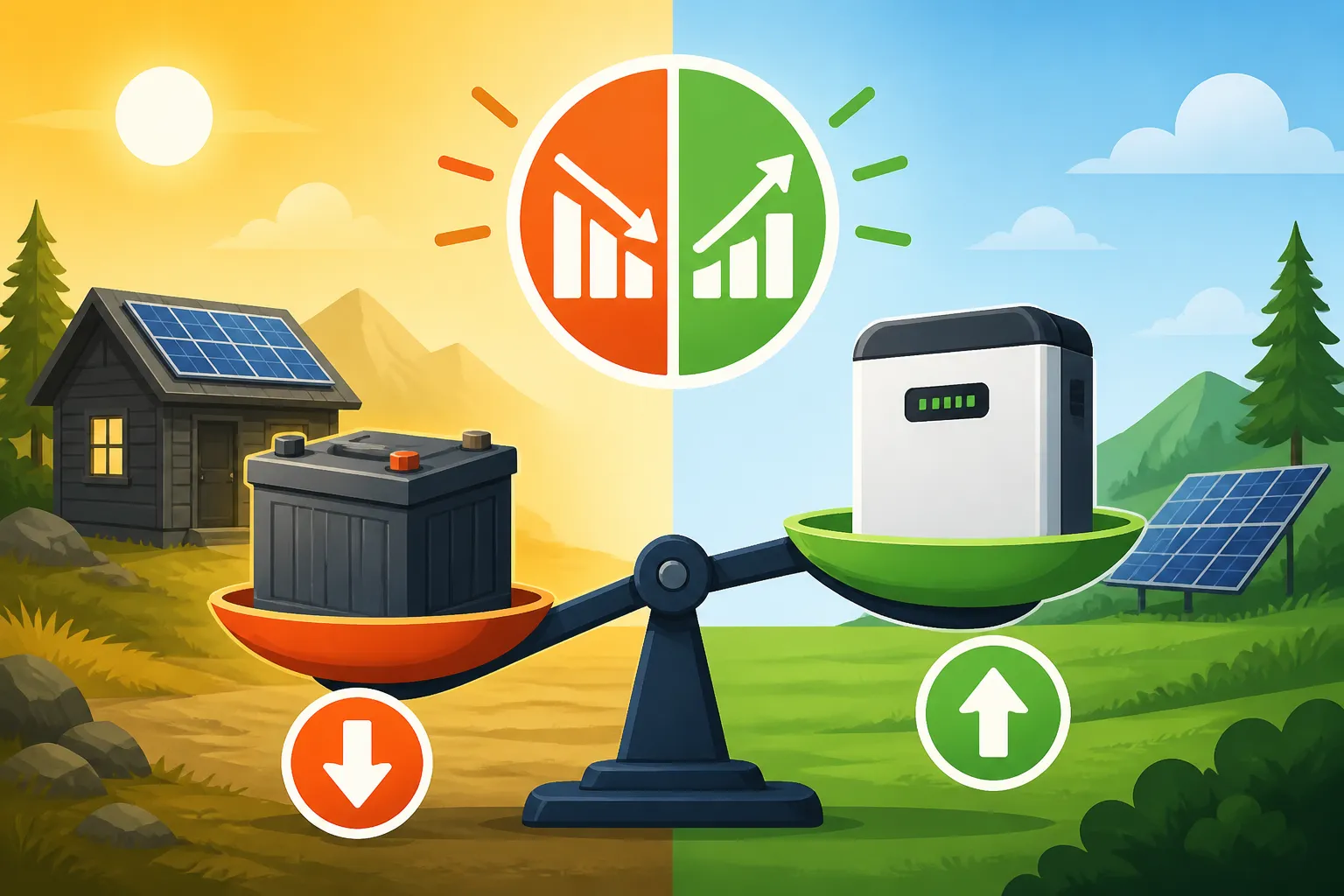
How Battery Choice Affects Off-Grid Cost
Embarking on the off-grid journey can feel like navigating a maze, and one of the biggest head-scratchers for many folks is figuring out how to budget for the battery bank. It's frustrating when you see such a huge range in prices, making it tough to know if you're truly saving money upfront or just setting yourself up for bigger headaches and expenses down the road. This guide is here to shed some light on precisely how your battery choice impacts the overall cost of your off-grid solar system, ensuring you can make an informed decision without any nasty surprises.
The Foundation of Off-Grid Power: Why Batteries Matter So Much
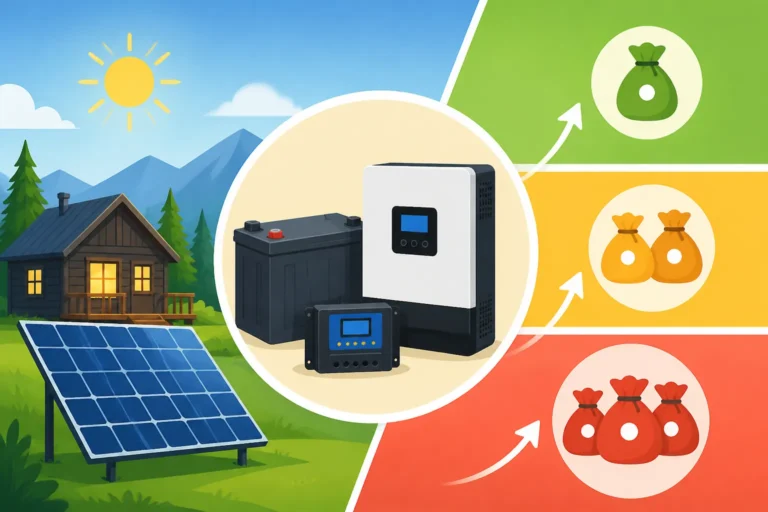
When you decide to go off-grid, your battery bank isn't just an accessory; it's the heart of your entire power system. It’s what stores the sunshine your solar panels collect during the day, making sure you have lights on, refrigerators running, and devices charging long after the sun goes down or on those dreary, cloudy days. The upfront investment in batteries can be one of the most significant portions of your total off-grid solar cost, often making up 30-50% of the entire system's price tag. This isn't just about how much energy they can hold; it's about their longevity, their efficiency, and how much effort they demand from you over their lifetime.
Initial Sticker Shock Versus Long-Term Value
It's natural to compare prices when you're making a big purchase, and batteries are no exception. You might look at a basic lead-acid battery and then a cutting-edge lithium battery and wonder why there's such a massive price difference. The initial cost can indeed be a barrier, making many off-gridders lean towards cheaper options. However, what often gets overlooked is the concept of long-term value. A battery that costs less upfront might require more frequent replacement, demand more maintenance, or simply not perform as well over its lifespan, ultimately costing you more time, money, and frustration than a higher-priced, more robust alternative.
Consider a scenario where you're setting up a small cabin for weekend use. A few inexpensive flooded lead-acid batteries might seem perfect. But if you then decide to transition to full-time living, those batteries will degrade much faster under constant cycling, forcing you to replace them in just a few years. Suddenly, that "cheap" option isn't so cheap anymore. Understanding the true Off-Grid Solar Return on Investment means looking beyond the immediate purchase price.
The Role of Battery Capacity in Your Budget
The size of your battery bank, measured in amp-hours (Ah) or kilowatt-hours (kWh), directly correlates with its cost. Simply put, the more power you need to store, the more batteries you'll need, and thus, the higher the expense. This capacity is determined by your daily energy usage and the desired "days of autonomy" – how many days your system can run without any solar input. If you live in a region with frequent cloudy weather, you might want 3-5 days of autonomy, meaning a much larger and more expensive battery bank.
For instance, powering a small RV for weekend trips might only require a modest 200-400Ah at 12V, which could be a couple of decent deep-cycle batteries. But if you're planning to run a full-sized refrigerator, air conditioning, and a well pump for a homestead, you're likely looking at a substantial 48V system with 400-800Ah or more, which means a significant leap in your Cost of an Off-Grid Solar Battery Bank. Accurately performing an Off-Grid Solar Load Calculation Explained early in your planning phase is crucial for avoiding both overspending and undersizing your battery bank.
Deciphering Battery Chemistries and Their Price Tags
When it comes to off-grid batteries, you'll encounter a few main types, each with its own characteristics, pros, cons, and, critically, price point. Understanding these differences is key to making a choice that fits both your budget and your lifestyle.
Lithium Iron Phosphate (LiFePO4): The High-Performance King
LiFePO4 batteries, often just called lithium or LFP, are the darlings of the off-grid world for good reason. They offer an incredibly long cycle life, typically 3,000 to 7,000 cycles, and can be discharged deeply (80-100% Depth of Discharge, or DoD) without significant harm. This means you get more usable energy out of them and they last for many, many years – sometimes 10-15 years or more. They are also incredibly efficient, lightweight, and often come with an integrated Battery Management System (BMS) that protects them from overcharging, over-discharging, and temperature extremes.
The trade-off, as many off-gridders painfully discover, is the initial price. LiFePO4 batteries have a significantly higher upfront cost compared to lead-acid alternatives. For example, a single 100Ah 12V LiFePO4 battery from a reputable brand like Battle Born or EG4 could set you back $600-$1,000, whereas a similar capacity lead-acid battery might be $150-$300. However, when you factor in their longer lifespan and deeper discharge capabilities, their cost-per-cycle can actually be lower than lead-acid batteries over the long haul. This is a critical point to consider when you think about the Off-Grid Solar Payback Period Explained. Many choose to view them as an investment in reliability and convenience, especially for full-time living or critical applications.
Lead-Acid Batteries: The Traditional, Budget-Friendly Option
Lead-acid batteries have been the workhorse of off-grid systems for decades, mainly because of their lower upfront cost. There are a few sub-types to consider:
Flooded Lead-Acid (FLA)
These are the most traditional and often the cheapest option. They require regular maintenance, specifically checking electrolyte levels and adding distilled water, and they need proper ventilation as they emit hydrogen gas during charging. FLAs are sensitive to depth of discharge; typically, you shouldn't discharge them below 50% to maximize their lifespan, which is usually 300-1,000 cycles (3-7 years). If you're building a system on a tight budget or for intermittent use, such as a hunting cabin that's only powered a few weekends a year, FLAs can be a viable choice. The initial cost for a 100Ah 12V FLA might be as low as $100-$200.
Sealed Lead-Acid (SLA): AGM and Gel
These batteries are maintenance-free in terms of watering and don't off-gas as much, making them safer for indoor installations or in vehicles like RVs and vans.
- AGM (Absorbed Glass Mat) batteries offer better performance than FLAs, including faster charging and better cold-weather performance. They typically have a lifespan of 500-1,200 cycles (4-8 years) and can handle slightly deeper discharges (down to 50-60% DoD). Their price point is higher than FLAs but still significantly less than LiFePO4, usually in the range of $200-$400 for a 100Ah 12V battery. Many off-gridders have found good deals on AGM batteries from retailers on platforms like Amazon.
- Gel batteries are a type of SLA that uses a silica gel to suspend the electrolyte. They are very resistant to vibration and extreme temperatures, making them robust. However, they charge more slowly and perform poorly with high discharge rates. Their lifespan and DoD are similar to or slightly better than AGMs, but they tend to be pricier and are less common in general off-grid applications compared to AGM or LiFePO4.
Here's a quick comparison of the main battery types:
| Feature | Flooded Lead-Acid (FLA) | AGM Lead-Acid | Gel Lead-Acid | LiFePO4 (Lithium) |
|---|---|---|---|---|
| Initial Cost | Low | Medium | Medium-High | High |
| Lifespan (Cycles) | 300-1,000 | 500-1,200 | 500-1,500 | 3,000-7,000+ |
| Usable Capacity (DoD) | 50% | 50-60% | 50-60% | 80-100% |
| Maintenance | High (watering, ventilation) | Low (no watering) | Low (no watering) | Very Low |
| Efficiency | 70-85% | 80-85% | 80-85% | 90-99% |
| Weight | Heavy | Heavy | Heavy | Light |
| Temperature Range | Moderate | Moderate (better cold) | Wide (better heat/cold) | Wide (BMS dependent) |
Beyond the Initial Sticker Price: Lifetime Value and Hidden Costs
The real cost of your off-grid battery bank isn't just what you pay at the register. It's a complex calculation that includes the initial purchase price, the cost of associated components, installation, ongoing maintenance, and eventual replacement. Ignoring these factors can lead to significant overspending in the long run. Understanding the true Lifetime Cost of an Off-Grid Solar System requires a holistic view of your battery choice.
Replacement Cycles and Longevity
This is where the upfront cost often gets misleading. A cheaper battery that needs to be replaced every 3-5 years will add up quickly. Let's say you buy a set of lead-acid batteries for $1,000, and they last 5 years. Over 20 years, you'll replace them four times, bringing your total battery expenditure to $5,000 (not accounting for inflation or potential price changes). Now, consider a set of LiFePO4 batteries costing $3,000, but they last 15 years. Over 20 years, you'd only replace them once (at the 15-year mark, replacing the original set, plus a new set for the remaining 5 years), bringing your total to $6,000 (first $3k + second $3k). The initial $2,000 difference suddenly shrinks significantly, and you've enjoyed consistent, reliable power with minimal fuss for longer.
This calculation highlights why many seasoned off-gridders advocate for investing in quality LiFePO4 batteries from the start, especially for permanent or full-time living setups. The convenience of not having to replace batteries frequently and the peace of mind that comes with a robust power supply can be priceless. Thinking about How to Budget for an Off-Grid Solar System should always include a multi-decade perspective on battery life.
Maintenance Requirements and Hidden Labor Costs
Different battery chemistries come with different levels of commitment from you. Flooded lead-acid batteries, for instance, demand regular attention. You need to check their water levels every few weeks or months, depending on usage, and top them off with distilled water. This might seem minor, but it's a chore, especially if your battery bank is in an awkward spot, like under an RV bench or in a dimly lit shed. There's also the need for proper ventilation to safely dissipate hydrogen gas. While the cost of distilled water is minimal, your time and effort are not.
Sealed lead-acid batteries (AGM, Gel) eliminate the watering requirement, reducing maintenance significantly. LiFePO4 batteries are virtually maintenance-free. Their internal Battery Management System (BMS) handles charging, discharging, and balancing, essentially taking care of themselves. This lack of ongoing labor can be a huge selling point, particularly for those who want a set-it-and-forget-it system or who are frequently on the go. When estimating Off-Grid Solar Maintenance Costs, remember to factor in not just parts, but also your valuable time.
Efficiency Losses and Usable Capacity
Battery efficiency refers to how much energy you put into a battery (charge) that you can actually get back out (discharge). Lead-acid batteries typically have a round-trip efficiency of 70-85%, meaning 15-30% of the energy from your solar panels is lost as heat during the charging and discharging process. LiFePO4 batteries, on the other hand, boast efficiencies of 90-99%. This higher efficiency means you need fewer solar panels to charge them adequately, or you get more usable energy from the same solar array, which can lead to savings on other components.
Furthermore, the usable capacity of a battery is crucial. As mentioned, lead-acid batteries should only be discharged to 50% DoD to maintain their lifespan. This means if you have a 100Ah lead-acid battery, you only have 50Ah of usable capacity. A 100Ah LiFePO4 battery, however, can be discharged to 80-100% DoD, giving you 80-100Ah of usable capacity. To get the same amount of usable energy, you might need twice as many lead-acid batteries as LiFePO4 batteries, effectively doubling your initial lead-acid purchase to achieve comparable performance, which makes the cost comparison more nuanced. This insight is essential when determining How Much Battery Capacity You Need.
Sizing Your Battery Bank: How Capacity Impacts Cost
One of the most significant factors in your overall off-grid battery cost is the sheer size of the battery bank you need. This isn't a one-size-fits-all solution; it’s deeply personal to your energy demands and location. Getting this right means you won't be left in the dark, nor will you have spent a fortune on excess capacity you don't truly use.
Calculating Your Daily Energy Usage
Before you can even think about specific battery types, you must understand your daily energy needs. This involves a thorough How to Do an Off-Grid Load Analysis, listing every electrical appliance you plan to run, its wattage, and how many hours per day you'll use it. For example, a 60W light bulb used for 5 hours consumes 300 Watt-hours (Wh) (60W * 5h). A small refrigerator running 24/7 might consume 500-1000Wh per day. Summing up all these individual appliance usages will give you your total daily Watt-hour requirement.
Let's say your calculated daily usage comes out to 3000 Wh (3 kWh). This is your target. From there, you'll need to account for inverter efficiency losses (typically 5-10%) and the usable depth of discharge (DoD) of your chosen battery chemistry. A comprehensive guide on How to Calculate Daily Energy Usage will walk you through this critical first step.
Days of Autonomy and System Oversizing
Once you know your daily energy consumption, the next step is deciding on your "days of autonomy." This refers to how many consecutive days your battery bank can power your home or RV without any input from your solar panels (e.g., during prolonged cloudy weather or winter). For most off-grid homes, 3 to 5 days of autonomy is a common target to ensure reliability. Remote cabins or areas with very consistent sun might opt for 1-2 days, while critical systems or very cloudy regions might push for 7 days.
The more days of autonomy you build into your system, the larger (and more expensive) your battery bank will become. If your daily usage is 3 kWh and you want 3 days of autonomy, you need to store at least 9 kWh of usable energy. If you chose lead-acid batteries with a 50% DoD, you'd actually need 18 kWh of total battery capacity. With LiFePO4 at 80% DoD, you'd need about 11.25 kWh of total capacity. This demonstrates how battery chemistry directly affects the required physical size and thus the Cost to Run A Refrigerator on Off-Grid Solar and other appliances for extended periods without sun. Planning for How to Account for Cloudy Days is a significant cost driver.
The Impact of System Voltage and Brand on Overall Expenditure
Beyond chemistry and capacity, other factors like your system's voltage and the brands you choose can significantly sway your final battery bill. These choices often intertwine with other components of your off-grid system, creating a ripple effect on costs.
Choosing Your System Voltage: 12V, 24V, or 48V
Off-grid battery banks typically operate at 12V, 24V, or 48V. Your choice of system voltage has implications for cable sizing, inverter cost, and overall efficiency, which in turn influences your battery cost.
- 12V Systems: These are common for smaller applications like RVs, vans, small cabins, or basic camping setups. Many automotive and marine accessories run on 12V, making direct DC loads easy. However, for higher power needs, 12V systems require very thick and expensive wiring to minimize voltage drop, and the current can be quite high, leading to larger losses. If you're building a modest system for something like a weekend Off-Grid Solar Cost for an RV, 12V might suffice, but if you're pulling significant wattage, you'll need more parallel strings of batteries, which can be complex.
- 24V Systems: This is a good intermediate choice for medium-sized systems, often found in larger RVs, small homes, or workshops. It reduces current by half compared to 12V for the same wattage, allowing for thinner wiring and less voltage drop. Many inverters and charge controllers are readily available for 24V.
- 48V Systems: These are the standard for larger off-grid homes and substantial power needs. By increasing the voltage, current is dramatically reduced, leading to much smaller cable sizes, lower transmission losses, and often more efficient inverter operation. While 48V batteries or 48V compatible components might sometimes have a slightly higher individual unit cost, the overall system savings from reduced wiring, fuse, and breaker sizes can be substantial. For a comprehensive home system, understanding Why 48V Is Better for Large Systems is key to optimizing costs.
The decision of 12V vs 24V vs 48V: Which to Choose heavily influences how many individual batteries you string together in series or parallel, directly impacting your total battery purchase. For example, to get 400Ah of usable capacity at 12V with LiFePO4, you might buy four 100Ah 12V batteries and wire them in parallel. To get similar usable capacity at 48V, you might buy four 100Ah 12V batteries and wire them in series to make a 48V bank (still 100Ah at 48V, but much higher overall energy). Or you might purchase purpose-built 48V batteries, which can be more expensive but also more integrated and compact.
The Influence of Battery Brands and Quality
Just like with any product, battery brands vary significantly in quality, warranty, and, of course, price. While it's tempting to opt for the cheapest option you find, especially on online marketplaces, a reputable brand often means better performance, longer life, and reliable customer support if something goes wrong.
Well-known brands in the off-grid battery space, such as Battle Born, Victron Energy, and EG4, might have higher initial price points for their LiFePO4 offerings. However, they typically offer robust warranties (often 10 years or more), excellent customer service, and a proven track record of performance. These batteries are built with high-quality cells and advanced BMS systems, which contribute to their longevity and safety. You're paying for peace of mind and consistent power delivery.
On the other hand, numerous lesser-known brands, often found on sites like Amazon or other online retailers, can offer very attractive prices. While some might be perfectly adequate, others may use lower-grade cells, have less sophisticated BMS, or offer minimal warranty support. If you choose a budget brand, you run the risk of premature failure, reduced performance, or difficulty getting assistance, which could lead to unexpected costs down the line. It's a calculated risk, and understanding Best Off-Grid solar battery brands can help guide your decision. Even an all-in-one portable power solution from a brand like Jackery, while often using LiFePO4 batteries, can still have varying price points based on its capacity and features, which impacts overall system cost if it's meant to be your primary power source.
Strategies for Budgeting and Saving on Off-Grid Batteries
Navigating the financial aspect of off-grid solar, especially when it comes to batteries, can be daunting. But there are smart ways to approach your budget that can help you save money without compromising too much on quality or reliability.
DIY Battery Builds Versus Pre-Built Solutions
One significant area where off-gridders can potentially save money is by building their own LiFePO4 battery banks. This involves purchasing individual lithium cells (often prismatic cells from reputable suppliers) and assembling them into a pack with an external Battery Management System (BMS). This approach requires a good understanding of electrical wiring, battery balancing, and safety protocols, but it can cut down costs considerably compared to buying pre-assembled units from premium brands.
For example, buying individual 3.2V 280Ah LiFePO4 cells and assembling a 48V 280Ah battery bank (which would be roughly 14 kWh) could cost significantly less than buying an equivalent pre-built 48V battery from a top-tier brand. However, this is not for the faint of heart and comes with its own risks if not done correctly. You need to source quality cells, ensure proper cell balancing, and correctly size and install the BMS. If you're handy and enjoy tinkering, this could be a rewarding cost-saving measure. For those who prefer a plug-and-play solution, the extra cost of a pre-built battery is often worth the convenience and integrated safety features. Exploring the Cost of a DIY Off-Grid Solar Build reveals these trade-offs.
Phased Approach to Building Your Battery Bank
Trying to fund a massive battery bank all at once can be a huge hurdle. A fantastic strategy for many off-gridders is to adopt a phased approach. Instead of buying your entire desired battery capacity upfront, you start with a smaller, functional system that meets your immediate essential needs. As your budget allows or your energy demands grow, you can then add more batteries to expand your capacity.
This approach works particularly well with LiFePO4 batteries because they are generally easier to expand without significant performance degradation compared to mixing old and new lead-acid batteries. For instance, you might start with a 48V 100Ah LiFePO4 bank, and six months later, add another 48V 100Ah module. This helps spread out the Cost of Expanding an Off-Grid System over time, making the overall investment more manageable. It also allows you to fine-tune your actual energy needs after living with a smaller system for a while, preventing you from overspending on unnecessary capacity initially. This strategy is also useful if you're just starting with a cabin or RV and plan to incrementally increase your off-grid living over time.
Maximizing Battery Lifespan Through Proper Management
Regardless of the battery chemistry you choose, proper management and care can significantly extend its lifespan, thereby delaying costly replacements and effectively reducing your long-term off-grid expenses. This isn't a direct "cost saving" at the point of purchase, but it's crucial for the overall financial health of your system.
For lead-acid batteries, this means strictly adhering to recommended discharge limits (typically 50% DoD), maintaining electrolyte levels for FLAs, and ensuring they are always fully recharged regularly. Avoiding prolonged periods of partial state of charge (PSoC) is paramount, as this can severely shorten their life. For LiFePO4 batteries, while more resilient, it's still beneficial to keep them within their optimal temperature range, avoid unnecessary deep discharges to 0% if possible, and ensure the charge controller is correctly configured to their specific charging parameters. Investing in a good battery monitor, like those offered by Victron Energy, can provide invaluable data on your battery's state of charge and health, allowing you to manage it proactively. Understanding How to Budget for Off-Grid Batteries also means budgeting for the tools and knowledge to take care of them.
Disclaimer
Please remember that the information provided in this guide is for educational purposes only and should not be considered professional financial or electrical advice. Off-grid solar systems involve high voltages and significant risks. Always consult with qualified professionals for system design, installation, and compliance with local electrical codes and regulations. Battery costs and lifespans are estimates and can vary based on brand, quality, usage patterns, and market fluctuations.