Best Off-Grid Solar Kit for a Barn
Living on a homestead or owning a remote property often means dealing with the constant headache of power accessibility. Hauling extension cords across muddy fields, relying on noisy gas generators for simple tasks, or just plain not having power when and where you need it in your barn can be incredibly frustrating. Whether you're running lights for milking, charging tools for repairs, or even just powering a radio while you work, a reliable power source is essential. This comprehensive guide is here to walk you through everything you need to know to choose the best off-grid solar kit for your barn, ensuring you get dependable, quiet, and sustainable power right where you need it, without the grid connection hassle.
Understanding Your Barn's Unique Power Needs
Before you even start looking at solar panels or batteries, the most crucial step is to really get a handle on what you actually need to power in your barn. Every barn is different, and what works for a small garden shed won't cut it for a bustling agricultural hub. Rushing this step is a common mistake that leads to undersized systems and endless frustration.
Assessing Electrical Loads and Usage Patterns
Think of your barn as a small, independent electrical ecosystem. What appliances or devices will you absolutely need to run, and for how long each day? This isn't just about what you might use; it's about your critical daily operations. For example, if you have chickens, their coop lights might only be on for a few hours in the morning and evening. A water pump for livestock, however, might kick on several times a day, drawing significant power each time. Don't forget those power tools that you use for an hour here or there, or the charging station for your cordless drills and other gadgets.
To make this step concrete, grab a pen and paper, or even a spreadsheet, and list out every single item that will draw power from your solar system. For each item, you'll want to find its wattage (usually on a label on the appliance or in its manual) and estimate how many hours per day you'll use it. If an appliance only gives you amps, you can multiply amps by voltage (e.g., 120V for most household items) to get an approximate wattage. Remember that some appliances, like power tools or refrigerators, have a "starting wattage" (or surge wattage) that is much higher than their "running wattage." Your inverter needs to be able to handle these brief, high surges. If you want to dive deeper into this calculation, check out our guide on how to calculate daily energy usage.
Let's imagine a typical barn scenario:
- Lighting: Two LED shop lights, 30W each, used for 4 hours a day (60W x 4h = 240Wh).
- Small Radio: 10W, used for 6 hours a day (10W x 6h = 60Wh).
- Cordless Tool Charger: 50W, used for 2 hours a day (50W x 2h = 100Wh).
- Small Fan (Summer): 40W, used for 5 hours a day (40W x 5h = 200Wh).
- Small Water Pump (Intermittent): 150W, runs for a total of 1 hour a day in short bursts (150W x 1h = 150Wh).
- Mini Fridge (for meds or drinks): 60W running, but cycles on and off, perhaps running for a total of 8 hours a day (60W x 8h = 480Wh). This one also has a high surge when it kicks on.
Adding these up gives you a baseline daily watt-hour total, but it's crucial to account for surge wattage when selecting your inverter. This detailed load analysis is the cornerstone of designing an effective off-grid solar system.
Considering Seasonal Variations and Future Expansion
Barns often have dynamic power needs that shift with the seasons. In winter, you might need supplemental heating for animals, heat lamps for chicks, or warmer water for livestock, all of which draw significant power. Come summer, fans for ventilation become critical. These seasonal demands need to be factored into your system design, especially your battery bank capacity and solar panel array size. You'll need enough stored energy to get through shorter, cloudier winter days, and enough charging capacity to recover quickly. Our guide on how to size an off-grid solar system can help you balance these seasonal considerations.
Beyond seasonal changes, think about your barn's future. Are you planning to add more animals, expand your workshop, or integrate new technology down the line? It's much easier and often more cost-effective to design an expandable system from the outset rather than having to completely overhaul it later. For instance, oversizing your charge controller slightly or choosing an inverter that can handle more panels in the future can save you headaches and money. This foresight is critical; don't just build for today, build for tomorrow's possibilities. You can also explore options like how to design an expandable system to help plan for these future needs.
Essential Components of an Off-Grid Solar Kit for Barns
An off-grid solar kit isn't just a collection of solar panels; it's a carefully integrated system of components designed to work together to reliably deliver power. Understanding each piece of the puzzle is key to making an informed decision for your barn.
Solar Panels
These are the workhorses, converting sunlight into electricity. For a barn, you'll typically be looking at rigid monocrystalline or polycrystalline panels. Monocrystalline panels are generally more efficient and perform better in low light, making them a popular choice for their output. Polycrystalline panels are a bit less efficient but often more budget-friendly. The key is to choose panels with good durability, as they'll be exposed to the elements.
Mounting options are critical for barns. You might opt for a roof mount if your barn roof has good southern exposure and is structurally sound. If not, ground mounts are a fantastic alternative, allowing you to optimize the tilt and angle of your panels for maximum sun exposure throughout the year, especially in areas with significant seasonal changes in sun path. Pole mounts can also be effective for getting panels above potential shading. The specific amount of solar panels you'll need depends directly on your energy usage and local sun hours, so checking out resources like "How Many Solar Panels for Off-Grid Living" can be very helpful. Brands like Renogy and Rich Solar offer a wide range of reliable panels suitable for barn applications, known for their durability and performance.
Battery Bank
The battery bank is the heart of your off-grid system, storing the energy captured by your panels for use when the sun isn't shining. This is where most off-grid solar system costs come from, and for good reason—it's what makes true independence possible.
- LiFePO4 (Lithium Iron Phosphate) Batteries: These are increasingly popular for off-grid applications, and for good reason. They offer superior cycle life (thousands of cycles compared to hundreds for lead-acid), high depth of discharge (you can use almost all of their rated capacity without damaging them), faster charging, and are significantly lighter. While the upfront cost is higher, their longevity and performance often make them more economical in the long run. Many models, such as those from Battle Born or EG4, even come with built-in Battery Management Systems (BMS) for protection. For barns in colder climates, ensure your LiFePO4 batteries have a low-temperature cutoff or internal heating, as they cannot be charged below freezing without damage.
- Lead-Acid Batteries (AGM/Gel): These are a more traditional, budget-friendly option. AGM (Absorbed Glass Mat) batteries are sealed, maintenance-free, and can handle moderate cycling. Gel batteries are similar but often have a slightly lower discharge rate. The main drawbacks are their shorter lifespan, lower usable capacity (you shouldn't discharge them below 50% to maximize their life), and heavier weight. If you opt for lead-acid, be prepared for more frequent replacements. You can compare the economics further in our article on LiFePO4 vs Lead-Acid Battery Cost.
The size of your battery bank (measured in amp-hours or watt-hours) determines how long your barn can run on stored power during cloudy days or at night. This is often referred to as "days of autonomy." For a barn, having enough autonomy to get through 2-3 cloudy days is a solid starting point. Don't underestimate how many batteries for an off-grid system you might need; it’s usually more than you think, especially for a working barn.
Inverter and Charge Controller
These two components are the brains and brawn of your electrical flow.
- Charge Controller: This device regulates the voltage and current coming from your solar panels to your battery bank, preventing overcharging and optimizing the charging process. There are two main types:
- PWM (Pulse Width Modulation): A simpler, less expensive option that essentially throttles the panel's output to match the battery voltage. It's less efficient but perfectly adequate for smaller, simpler systems.
- MPPT (Maximum Power Point Tracking): A more advanced and efficient controller that actively tracks the optimal voltage and current point of your solar panels to extract the maximum available power. MPPT controllers are highly recommended for larger systems or any setup where you want to maximize energy harvest, especially when panel voltage is much higher than battery voltage. Our guide on how to choose an off-grid charge controller can help you decide.
- Inverter: Your solar panels and batteries produce DC (Direct Current) power, but most standard barn appliances run on AC (Alternating Current). The inverter converts this DC power into usable AC power.
- Pure Sine Wave Inverters: These produce a clean, smooth waveform that is identical to grid power. They are essential for sensitive electronics, motors, and appliances with microprocessors (like your mini-fridge or quality power tools). They are more expensive but crucial for reliable operation.
- Modified Sine Wave Inverters: These produce a "choppier" waveform and are cheaper. While they might run simple resistive loads (like incandescent lights), they can damage sensitive electronics, reduce the efficiency of motors, and cause buzzing in audio equipment. For a barn, you'll almost always want a pure sine wave inverter to protect your valuable equipment. Our resource on how to size an off-grid inverter goes into detail about matching the inverter to your total wattage and surge requirements.
Wiring, Fuses, and Safety Equipment
Don't skimp on the critical safety and connection components. Properly sized wiring is essential to prevent voltage drop and overheating. Fuses and breakers protect your system and property from electrical faults. These components are non-negotiable for safety and system longevity. Ensure all wiring is rated for outdoor use if exposed, and rodent-proof where necessary. A good grounding system for your entire setup is also paramount for safety. Our detailed guide on how to wire an off-grid solar system provides comprehensive best practices.
Recommended Off-Grid Solar Kit Configurations for Barns
Matching a solar kit to your barn's needs isn't a one-size-fits-all endeavor. Let's break down some common scenarios and appropriate system sizes. Remember, these are general guidelines; your specific load calculations will dictate the precise components.
Small Barn or Shed: Basic Lighting and Charging
For a small garden shed, a tool shed, or a tiny chicken coop where you primarily need light for a few hours, perhaps to charge a small power tool battery, or keep a small radio going, you don't need a huge, complex system.
A basic kit might include:
- Solar Panels: 100W to 400W (e.g., one or two 200W panels).
- Battery: A single 100Ah 12V LiFePO4 battery or a couple of smaller AGM batteries.
- Charge Controller: A 20A MPPT or PWM charge controller.
- Inverter: A 500W to 1000W pure sine wave inverter, capable of handling small tool surges.
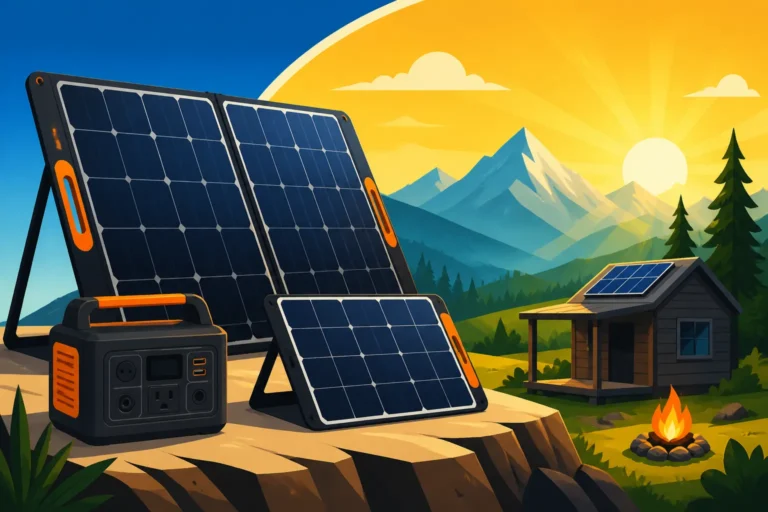
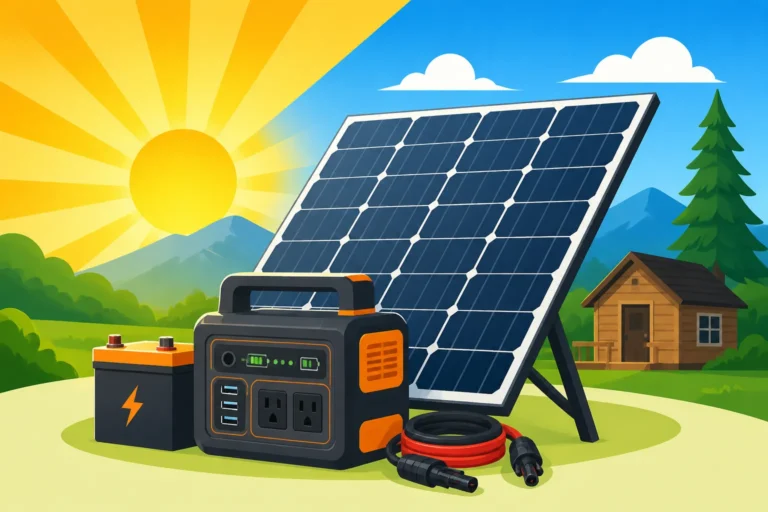
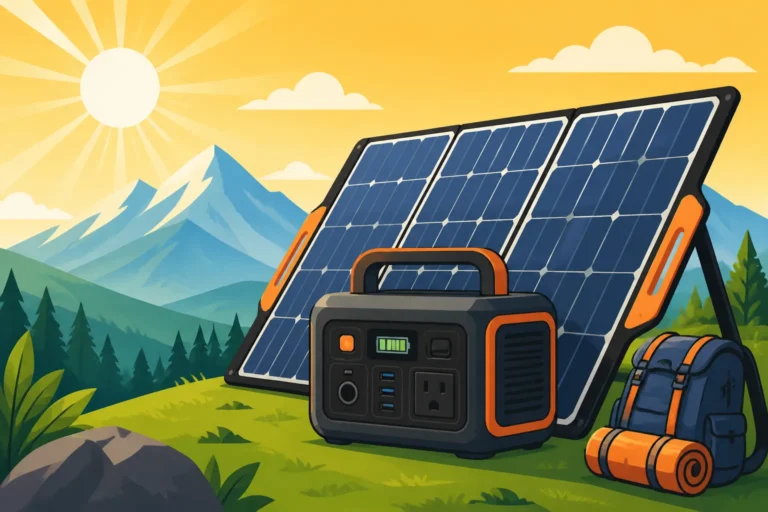
This type of system is excellent for providing just enough power for intermittent use. For this scale, even a portable power station like a Jackery Explorer 1000 or Jackery Explorer 2000 Plus could be a fantastic, ready-to-go "kit." These all-in-one units combine a battery, inverter, and charge controller into a single, user-friendly device. You just plug in your solar panels, and you're good to go. They are particularly appealing for their portability and ease of setup, making them ideal for a barn where you might not want permanent wiring or if you need to move power between different outbuildings.
Example Use Case: Running a couple of LED lights (total 60W) for 3 hours, charging a cordless drill (50W) for 1 hour, and a small fan (30W) for 2 hours. A 200W panel with a 100Ah LiFePO4 battery would comfortably handle this, assuming adequate sun exposure.
Medium Barn: Tools, Lights, and Small Appliances
This is probably the most common scenario for many homesteaders and hobby farmers. You're looking to power more substantial lighting, frequently use corded power tools (circular saws, drills, grinders), run a small refrigerator or freezer for perishables, and perhaps a small well pump for non-potable water.
A medium-sized kit would scale up significantly:
- Solar Panels: 800W to 2000W (e.g., four to eight 250W panels).
- Battery: 200Ah to 400Ah at 24V (or equivalent 12V in series/parallel configuration). Multiple LiFePO4 batteries are ideal here for longevity and performance.
- Charge Controller: A 40A to 60A MPPT charge controller (essential for efficiency at this scale).
- Inverter: A 2000W to 4000W pure sine wave inverter, robust enough for motor starting loads from tools and refrigeration.
This system provides a good balance of power and storage for daily use. It allows for longer run times for appliances and handles the higher surge demands of power tools much better. The transition to a 24V or even 48V system starts to become more practical at this size, as higher voltages mean less current, allowing for smaller gauge wiring and reduced power loss. Brands like Victron Energy or Growatt offer integrated inverter-charger units that are perfect for this mid-range, providing a cleaner and more efficient setup. Don't forget to look into comprehensive off-grid solar kit price ranges to budget effectively for such a system.
Example Use Case: Running six LED shop lights (total 180W) for 5 hours, using a 1500W circular saw for 30 minutes, a 60W mini-fridge cycling for 10 hours, and a 300W well pump for 30 minutes. This would require a system with at least 1500W of solar panels and a 200Ah 24V battery bank for reliable operation.
Large Barns or Agricultural Operations: High Demand
For a large working barn, perhaps housing significant livestock, a commercial-scale workshop, or even an equine facility with multiple stalls, your power needs will be much higher. This could include heavy-duty machinery, multiple heat lamps, constant ventilation, security systems, and extensive lighting.
This setup approaches a full-scale residential off-grid system:
- Solar Panels: 3000W to 10,000W+ (e.g., ten to forty 300W panels). You might even consider bifacial panels to capture light from both sides, especially if ground-mounted over a reflective surface.
- Battery: 600Ah to 1000Ah+ at 48V. This will likely involve a large bank of server-rack style LiFePO4 batteries for maximum capacity and cycling ability.
- Charge Controller: Dual or larger MPPT charge controllers (e.g., two 80A units or a single 100A+ unit).
- Inverter: A 5000W to 12000W+ pure sine wave inverter-charger. These are often integrated units from manufacturers like Sol-Ark or Outback Power, designed for whole-home or large-load applications, often with generator integration capabilities for backup.
This kind of system offers serious power independence, capable of running almost anything you'd find in a traditional home, including heavy motors and resistive loads. Careful planning, professional installation, and a robust battery management system are absolutely critical for a system of this scale. You might also integrate a backup generator, especially for winter months or prolonged cloudy periods, and an automatic transfer switch to seamlessly switch between solar and generator power. Knowing what kind of system fits your specific requirements is a big part of how to choose an off-grid solar system.
Example Use Case: Powering a large workshop with 2000W in power tools for 2 hours, multiple 100W heat lamps for 8 hours, a 500W ventilation fan for 12 hours, a 1000W well pump for 1 hour, and general lighting. This would necessitate a minimum 5kW solar array and a 800Ah 48V battery bank to ensure continuous, reliable power.
Here's a quick comparison table to visualize the differences:
| Barn Size / Use Case | Estimated Daily Use (Wh) | Recommended Solar Array (W) | Battery Bank (Voltage/Ah) | Inverter (Pure Sine Wave) | Example Brands/Features |
|---|---|---|---|---|---|
| Small Shed/Basic Lighting | 200-500 | 100-400 | 12V / 50-100 Ah | 500-1000W | Jackery (Explorer series) for portability, Renogy kits. Ideal for intermittent light use, phone charging, small tool battery charging. Simple DIY. |
| Medium Barn/Workshop | 1000-3000 | 800-2000 | 24V / 200-400 Ah | 2000-4000W | Victron Energy, Growatt all-in-one units. Good for power tools, small fridges, multiple lights, smaller well pumps. More permanent installation, potential for expansion. |
| Large Barn/Agri-Op | 5000-15000+ | 3000-10000+ | 48V / 600-1000+ Ah | 5000-12000W+ | Sol-Ark, Outback Power. Designed for heavy machinery, extensive heating/cooling, full-time living loads. Often includes generator integration. Requires careful planning, potentially professional installation, and robust battery management. High capacity, long autonomy. |
DIY Versus Professional Installation for Your Barn
Once you've wrapped your head around the components and sizing, the next big question is: do I build this system myself, or do I hire someone? There are compelling arguments for both sides, and your choice will heavily depend on your skills, budget, and the complexity of your chosen system.
Pros and Cons of a Do-It-Yourself Approach
Many folks love the idea of going off-grid because it aligns with a self-sufficient mindset. Building your own barn solar system can be incredibly rewarding, both personally and financially. The biggest upside is, of course, the cost savings. You eliminate significant labor costs, which can represent a substantial portion of the total project budget. Our article on how much cheaper is DIY off-grid solar can give you some surprising figures. You also gain an intimate understanding of your system, which can be invaluable for future troubleshooting, maintenance, and potential expansions. It's a fantastic learning experience, building practical skills that extend beyond just solar. For many, it's not just about saving money, it's about the satisfaction of creating something functional with your own hands.
However, the DIY route isn't without its challenges. The learning curve can be steep, especially if you're not familiar with electrical principles, wiring diagrams, and safety protocols. Mistakes can be costly, both in terms of damaged equipment and, more importantly, safety hazards like electrical fires or shocks. It demands a significant time commitment for research, planning, sourcing components, and the actual physical installation. For larger, more complex systems, ensuring everything meets electrical codes (even if you're off-grid, local codes often still apply, especially if there's any AC wiring) can be tricky. You'll need specific tools, and a good understanding of how to install an off-grid solar system safely and effectively.
When to Call in the Experts
For certain barn solar setups, or for specific individuals, bringing in professional help is not just an option, it's a necessity. If your barn system is large and complex – perhaps you're planning for heavy equipment, high daily power consumption, or integration with a backup generator – the stakes are higher, and a professional electrician or solar installer can ensure everything is designed and installed to the highest safety and performance standards. They have the expertise to navigate intricate wiring, optimize system performance, and correctly size all components, like those covered in our Off-Grid Solar System Sizing Guide.
Professionals also understand local permitting requirements and electrical codes, helping you avoid costly rework or potential fines. They typically offer warranties on their labor, and manufacturer warranties on equipment often depend on proper installation. If you're pressed for time, lack the specific tools or expertise, or simply prefer peace of mind knowing the job is done right, hiring a professional is a wise investment. They can help you with everything from initial load calculations to final commissioning, ensuring your system is reliable and safe from day one. This doesn't mean you can't be involved; many professionals are happy to work with you, explaining processes and even teaching you maintenance tips along the way.
Planning for Maintenance and Longevity
Installing an off-grid solar kit in your barn is a long-term investment. To ensure it provides reliable power for years to come, proactive maintenance is absolutely essential. Don't fall into the trap of "set it and forget it."
Routine Checks and Cleaning
Just like any other piece of equipment, your solar system components benefit from regular inspection and care. For your solar panels, the most common maintenance is simply keeping them clean. Dirt, dust, bird droppings, and leaves can significantly reduce their efficiency, especially in a barn environment where dust and debris are often abundant. A gentle cleaning with water and a soft brush a few times a year, or more often if they appear visibly dirty, can make a real difference in your energy harvest. If you're in a snowy region, remember to clear snow off your panels to ensure they can generate power.
Beyond cleaning, routinely check all your connections – from the panels to the charge controller, batteries, and inverter. Look for any loose wires, corrosion, or signs of rodent damage. Critters love to chew on wires! Inspect mounting hardware to ensure everything is secure, especially after heavy winds or storms. For lead-acid batteries, this would include checking electrolyte levels and terminal connections, but LiFePO4 batteries are generally maintenance-free in this regard. Many charge controllers and inverters have displays or apps that provide system performance data; make it a habit to check these regularly to ensure everything is operating within normal parameters. Catching a small issue early can prevent a major, expensive problem down the line.
Battery Health and Replacement Cycles
Your battery bank is the most critical and often the most expensive component to replace in your off-grid system. Understanding its health and expected lifespan is paramount. Even LiFePO4 batteries, with their impressive cycle life, won't last forever. Their lifespan is typically measured in cycles (full charge and discharge), and while they can last 10-15+ years, heavy daily use will shorten that.
Monitoring your battery's state of charge and ensuring it doesn't regularly drop too low will extend its life. Avoid deep discharges, especially with lead-acid batteries. Pay attention to any alarms or warnings from your battery management system (if you have LiFePO4) or battery monitor. If you start noticing a significant drop in autonomy (your system can't last as long on stored power as it used to), or if charging takes unusually long, it might be a sign that your batteries are nearing the end of their useful life. Planning for the eventual cost to replace off-grid solar batteries is a smart financial move, even if it's many years down the road. Some systems allow for easy battery bank expansion, which can be a good way to gradually upgrade your storage capacity as your existing batteries age.
Regular, thoughtful maintenance not only ensures consistent power for your barn but also protects your investment, allowing you to enjoy the benefits of off-grid solar independence for decades.
Disclaimer
The information provided in this article is for general informational purposes only and does not constitute professional advice. Off-grid solar system design and installation involve electrical work that can be dangerous if not performed correctly. Always consult with qualified professionals and adhere to all local electrical codes, regulations, and safety standards when planning or installing any solar power system.