2026 Solar Tax Credit and Off-Grid Systems
The 2026 federal solar tax credit rules explain how off-grid homeowners qualify for battery savings and panel reductions.

The 2026 federal solar tax credit rules explain how off-grid homeowners qualify for battery savings and panel reductions.
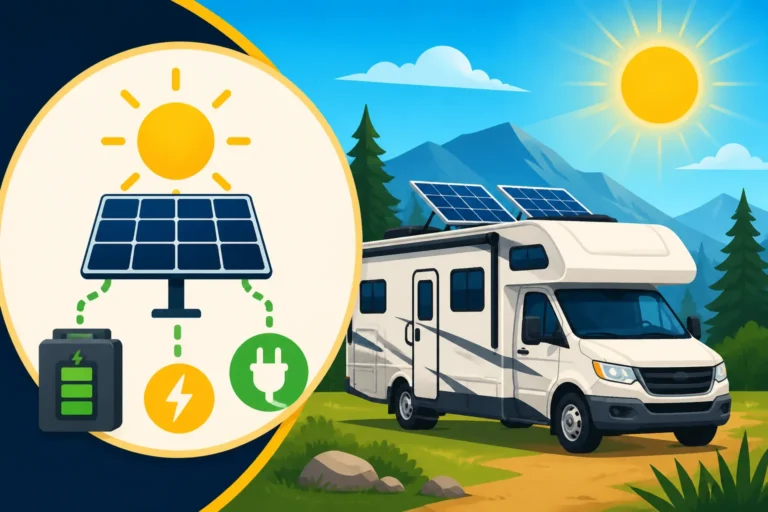
The upfront cost of an RV off-grid system can sting, and the final price shifts with several factors, balanced against long-term savings on the road.
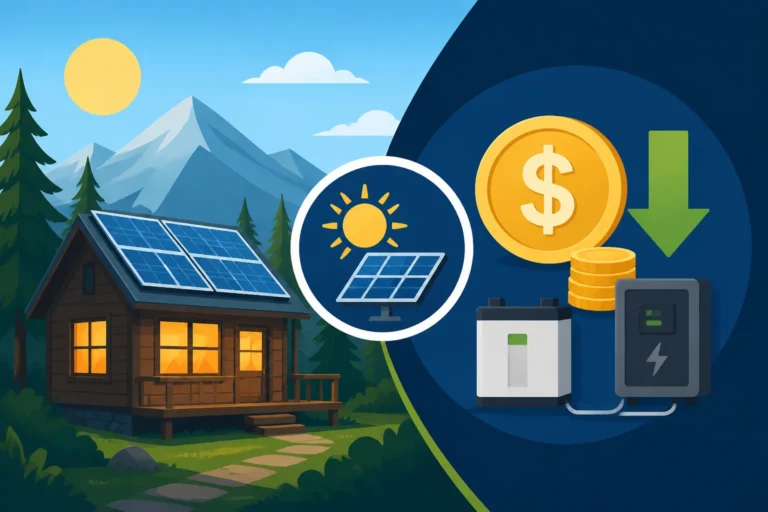
Off-grid solar system costs for a cabin depend on daily watt hours, appliance usage, and individual components like solar panels.
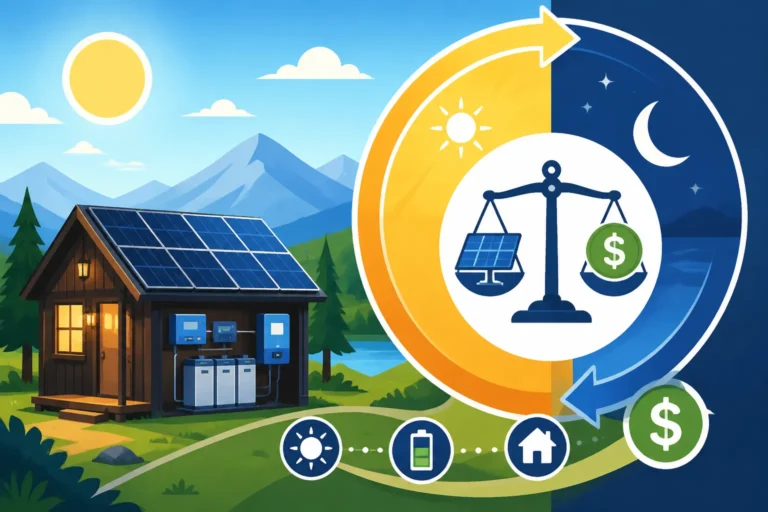
Off-grid solar payback calculations show when energy savings equal initial setup costs using specific financial formulas.
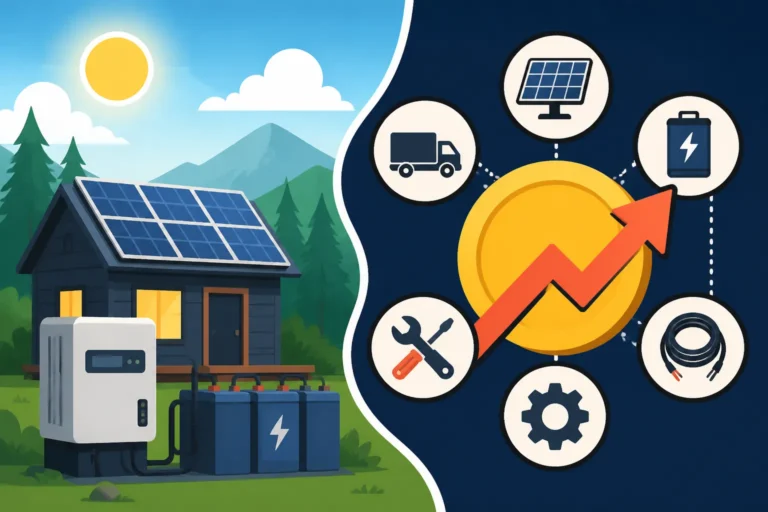
Off-grid solar system costs depend on solar panel wattage, mounting hardware, and core components required for independent power generation.
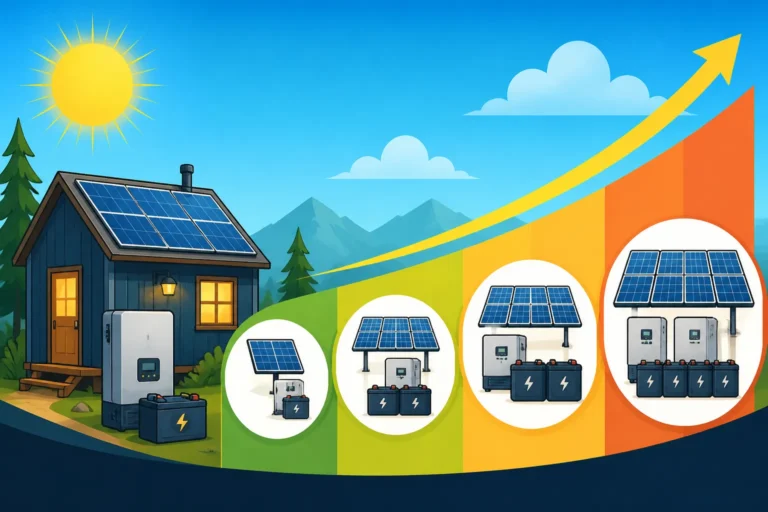
Off-grid solar system costs broken down by size, detailing solar panels, batteries, inverters, and charge controllers for your budget.
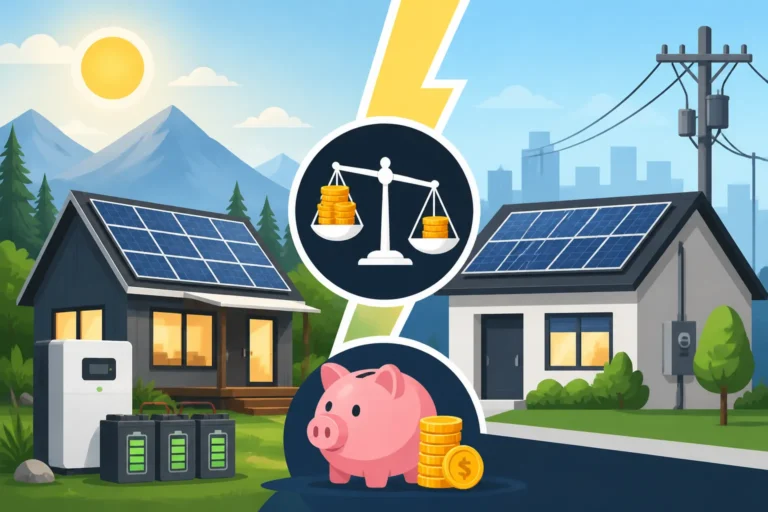
Off-grid and grid-tied solar system costs, battery needs, and grid connections compared to align your budget and lifestyle.

Off-grid solar system costs, including panels, batteries, inverters, and installation choices, determine true financial investment value.
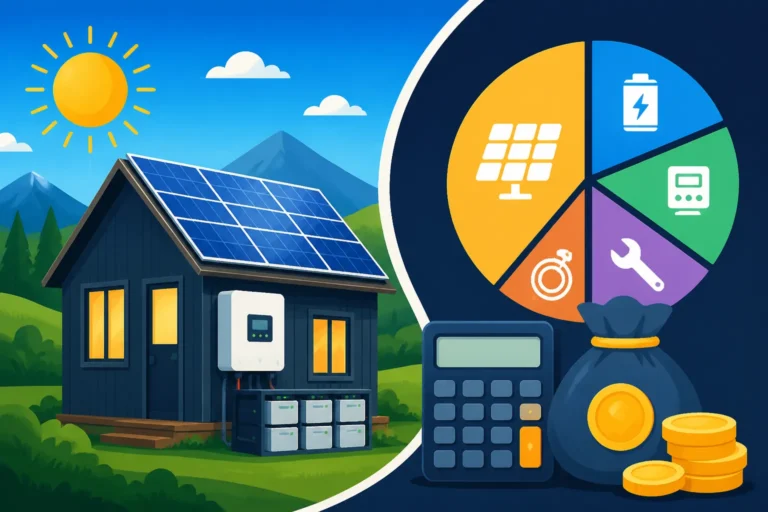
Off-grid solar system costs include panels priced from seventy cents to one dollar fifty per watt and battery banks up to four thousand dollars.
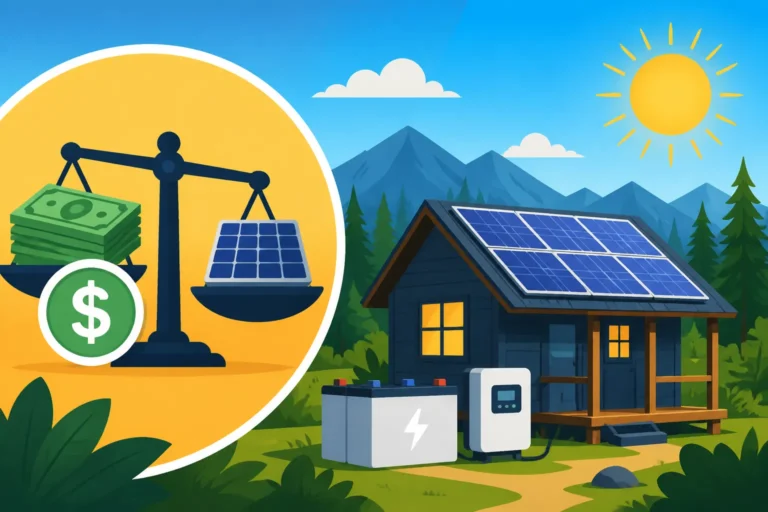
Off-grid solar system costs depend on components like 100-watt to 400-watt solar panels, lead-acid batteries, and inverters.