What Size Inverter to Run A Washing Machine
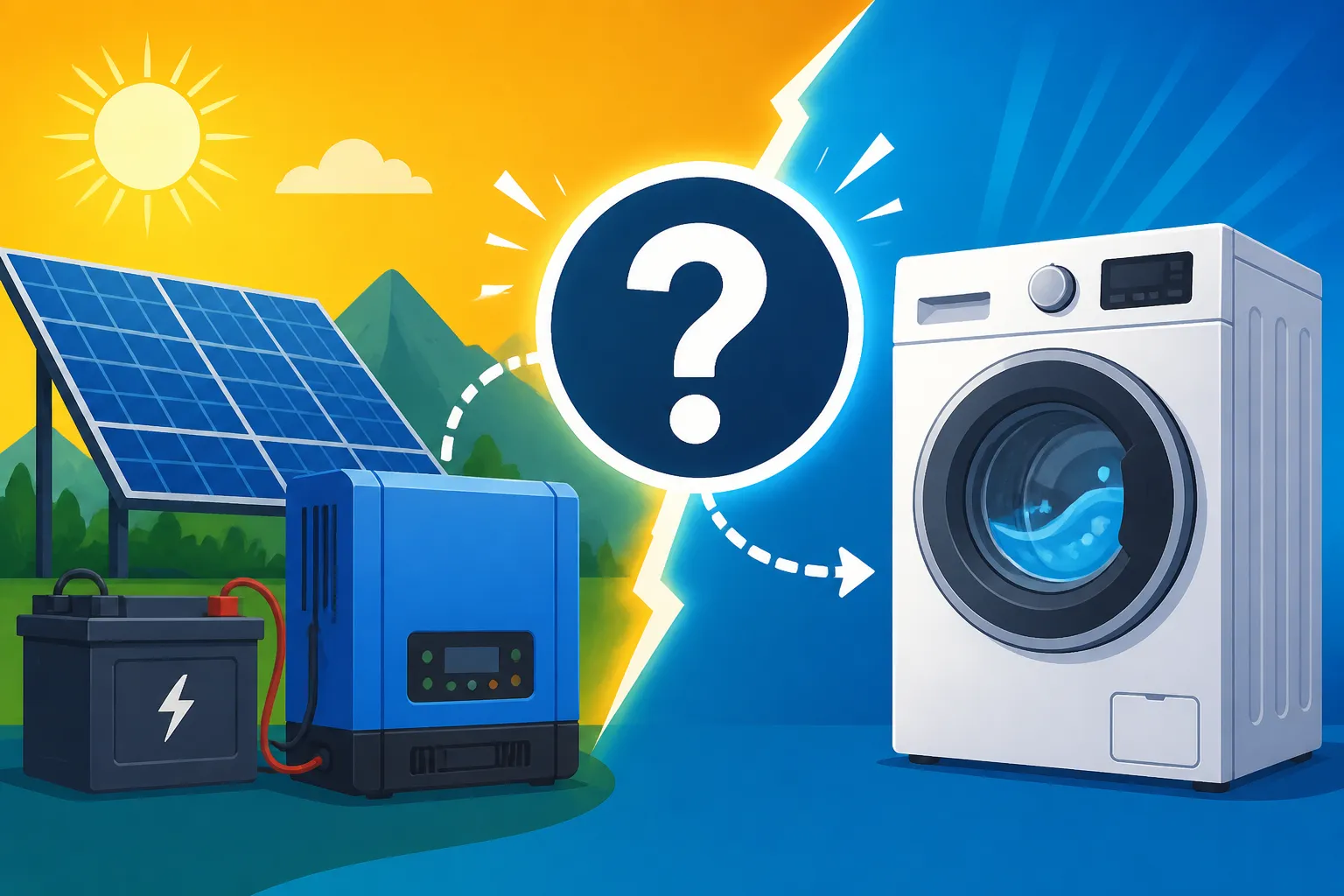
One of the biggest hurdles many people face when considering off-grid living or adding solar to their RV or cabin is the question of running everyday appliances. It’s easy to power a phone charger or a few lights, but when it comes to something as power-hungry as a washing machine, the challenge feels a lot more significant. This guide is going to walk you through exactly how to figure out what size inverter you’ll need to run your washing machine reliably, making sure you don't undersize your system and end up with frustrating power failures.
Understanding Washing Machine Power Demands
Let's be real, a washing machine isn't just a simple on/off appliance. It's a complex piece of machinery that goes through several phases, each with its own unique power draw. Understanding these demands is the first critical step in correctly sizing your off-grid inverter.
Different Cycles and Their Wattage
Think about what your washing machine actually does. It fills with water, agitates clothes, drains, spins, and often heats water. Each of these actions requires power, but not all equally.
- Agitation: When the motor is churning your clothes, it draws a certain amount of power. This is usually the continuous running wattage you'll see listed. For many models, this might be in the range of 500-800 watts.
- Water Heating: This is the big one. If your washing machine has an internal water heater (which many modern ones do, especially for "sanitize" or "hot wash" cycles), it will be the most significant power draw. Heaters can easily pull 1000-2000 watts, or even more, during their operation. If you're running off-grid, using a cold wash cycle whenever possible is a huge energy saver.
- Spin Cycle: The spin cycle, particularly the initial acceleration phase, involves a motor starting up quickly. While the continuous spin might not draw as much as heating, the starting surge can be quite high. This surge, a momentary spike in power, is what often trips undersized inverters.
- Pumps: The water pump that fills and drains the tub also consumes power, though typically less than the main motor or heater.
It's important to differentiate between continuous running watts and peak starting watts or surge watts. An appliance like a washing machine with a motor will always have a higher starting wattage than its running wattage. This surge can last for a fraction of a second to a few seconds, but your inverter needs to be able to handle it without shutting down. If you want to dive deeper into these specifics, our guide on how to handle starting watts vs running watts goes into great detail.
Front-Load vs. Top-Load Efficiency
The type of washing machine you have can significantly impact its energy consumption, especially on an off-grid system.
- Front-Load Washers: Generally, front-load washing machines are more energy-efficient than traditional top-loaders. They use less water, which in turn means less energy is needed for heating if you use hot water. Their tumbling action is often more efficient than an agitator. Many modern front-loaders also have high-speed spin cycles that extract more water, reducing dryer time (another big energy consumer!). However, they still have powerful motors that will create a significant surge when they start up.
- Top-Load Washers: Traditional top-loaders with a central agitator tend to use more water and can be less energy-efficient. High-efficiency (HE) top-loaders exist and bridge the gap, often using an impeller instead of an agitator, which reduces water usage. Regardless, always check the specific model's energy guide. For off-grid setups, every watt counts, so leaning towards a modern, energy-efficient model is always a smart move.
Checking Your Specific Appliance's Requirements
This is perhaps the most crucial step. Guessing won't cut it. You need to know the actual wattage of your washing machine.
- Look for the Label: Most appliances have a label, usually on the back, inside the door, or near the power cord, that lists its electrical specifications. You'll typically find volts (V), amps (A), and sometimes watts (W) directly.
- Consult the Manual: If you can't find a label, your washing machine's owner's manual or the manufacturer's website will have this information. Look for "power consumption," "wattage," or "electrical requirements."
- Calculate if Necessary: If you only find voltage and amperage, you can calculate the wattage: Watts (W) = Volts (V) x Amps (A). For example, a 120V washing machine drawing 10 amps would be 1200 watts. Remember, this is usually the running wattage.
- Identify Peak Surge: This is trickier. Manufacturers rarely list surge wattage. You'll have to estimate or use a clamp meter if you have access to one. A common rule of thumb for motor-driven appliances is to assume the surge wattage is 2-3 times the continuous running wattage. So, if your washer runs at 800 watts, its surge could be 1600-2400 watts. This is a critical piece of the puzzle, as discussed in our guide on how to calculate off-grid solar needs.
Once you have these numbers, especially the estimated peak surge, you're well on your way to picking the right inverter.
The Role of the Inverter in Your Off-Grid System
Your inverter is the heart of your AC electrical system when you're off-grid. It's what allows you to use standard household appliances, transforming the DC power from your batteries into the AC power your washing machine needs.
What an Inverter Does
In simple terms, an inverter takes the direct current (DC) electricity stored in your battery bank (which is usually 12V, 24V, or 48V) and converts it into alternating current (AC) electricity, typically 120V or 240V, just like what comes out of the outlets in a grid-tied home. This conversion is essential because almost all standard household appliances, including your washing machine, are designed to run on AC power.
Without an inverter, you'd be limited to 12V DC appliances, which are far less common and much more expensive for things like washing machines. The quality and sizing of your inverter directly impact the reliability and safety of running your AC loads. If you're interested in understanding more about this essential component, check out our guide on how to size an off-grid inverter.
Continuous vs. Surge Wattage
This distinction is absolutely vital, especially for appliances with motors like washing machines, refrigerators, well pumps, or air conditioners.
- Continuous Wattage (Rated Power): This is the maximum amount of power the inverter can continuously supply without overheating or failing. When you see an inverter advertised as a "2000-watt inverter," this usually refers to its continuous wattage. Your washing machine's running wattage (e.g., during agitation or heating) must fall within this continuous rating.
- Surge Wattage (Peak Power): This is the maximum power the inverter can supply for a very short period, typically a few milliseconds to a few seconds. Motor-driven appliances like washing machines require a burst of extra power to get their motors started from a standstill. This momentary spike is the surge. If your inverter's surge rating is too low to handle your washing machine's starting surge, the inverter will likely trip, shut down, or could even be damaged.
A common mistake is to size an inverter based only on the continuous running watts of an appliance. For a washing machine, ignoring the surge wattage is a recipe for frustration. Always ensure your chosen inverter's surge rating can comfortably accommodate the highest estimated surge of your washing machine and any other appliances that might start simultaneously. Our in-depth look at how to size an off-grid inverter provides more context on this critical calculation.
System Voltage Considerations
The voltage of your off-grid solar system (12V, 24V, or 48V) plays a significant role in inverter selection and overall system efficiency.
- 12V Systems: These are common for smaller setups like RVs, vans, or tiny cabins with modest power needs. The advantage is that 12V components are widely available and often simpler to wire. However, for higher wattage appliances like washing machines, a 12V system will draw a lot more current (amps) from the batteries for the same amount of power. High current requires thicker, more expensive wires to prevent voltage drop and overheating. A 12V inverter capable of running a washing machine might be quite large and less efficient due to the high current conversion.
- 24V Systems: A good middle ground, often used for medium-sized RVs, larger cabins, or small homes. 24V systems draw half the current of a 12V system for the same wattage, meaning you can use thinner wires and experience less voltage drop. Many robust inverters are available for 24V systems, offering a good balance of cost and efficiency.
- 48V Systems: This is typically the preferred voltage for larger off-grid homes and homesteads. 48V systems draw significantly less current than 12V or 24V systems for the same power, making them the most efficient choice for high-power applications. This results in smaller wire sizes, less voltage drop, and often more efficient and powerful inverter options. If you're planning on running multiple large appliances regularly, a 48V system is usually the way to go.
When selecting your inverter, it must match your battery bank's voltage. You can't use a 12V inverter with a 48V battery bank, for instance. Your choice of system voltage also affects other components, such as your charge controller and battery bank wiring configurations. For a comprehensive overview of system design, our article on off-grid solar system design basics is a great resource.
Step-by-Step Inverter Sizing for a Washing Machine
Now that we understand the basics, let's get down to the practical steps of sizing your inverter specifically for a washing machine. This isn't just about the washer; it's about how it fits into your entire off-grid power picture.
Calculate Peak Starting Watts
This is, without a doubt, the most critical number you need. As we discussed, a washing machine's motor needs a significant burst of power to overcome inertia and start spinning. This is known as the "locked rotor amps" (LRA) or simply the surge.
- Find the Running Wattage (Continuous Power): Locate this on the appliance label, in the manual, or calculate it from Volts x Amps. Let's say your washing machine runs at 800 watts.
- Estimate the Surge Factor: For motor-driven appliances like washing machines, the surge wattage can be 2 to 3 times the running wattage. Some sources suggest even higher, up to 7 times, for a fraction of a second, but 2-3x is a good conservative estimate for inverter sizing for these types of loads.
- Example 1 (Conservative): 800 watts (running) x 2 (surge factor) = 1600 watts peak surge.
- Example 2 (More Robust): 800 watts (running) x 3 (surge factor) = 2400 watts peak surge.
It's usually safer to lean towards the higher end of the estimate, especially if you can't find specific surge data. This ensures your inverter can handle the sudden demand.
So, for our hypothetical 800-watt washing machine, you'd want an inverter that can at least handle a 2400-watt surge, even if its continuous rating is much lower.
Factor in Other Simultaneous Loads
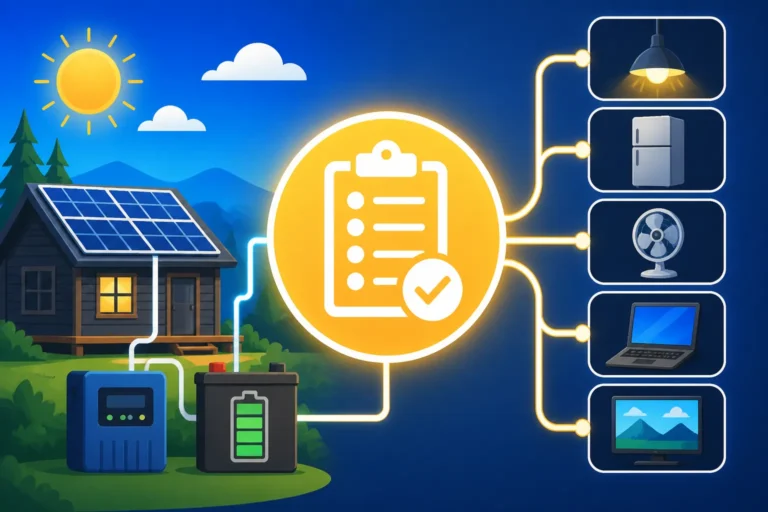
You're probably not only running your washing machine. What else might be on at the same time? This is where a detailed load analysis comes in handy, as covered in our article on how to calculate daily energy usage.
- Lights: A few LED lights might only add 50-100 watts.
- Refrigerator: If your off-grid refrigerator is running its compressor cycle, it will also have a running wattage (e.g., 100-200 watts) and its own starting surge (e.g., 500-1000 watts).
- Electronics: Charging a laptop (50-100 watts), watching TV (50-150 watts).
- Well Pump: If you have a well pump, its surge can be immense, often thousands of watts. It's usually best to run this separately from your washing machine if possible.
Here's how to incorporate other loads:
- Identify maximum concurrent continuous loads: Add up the running watts of everything you might want to run simultaneously with the washing machine.
- Washing machine running: 800 watts
- Refrigerator running: 150 watts
- Lights: 100 watts
- Laptop: 60 watts
- Total Concurrent Continuous Load: 1110 watts
- Identify the single highest surge load: This will almost always be the washing machine's initial startup, or perhaps a well pump if it's operating.
- Washing machine peak surge: 2400 watts (from our earlier estimate)
- Refrigerator surge: 800 watts (if it happens to kick on right when the washer does)
- Calculate the Total Maximum Surge: This is the sum of your maximum concurrent continuous loads plus the single highest surge that could occur. You don't add all the individual surges together because it's highly unlikely they would all happen at the exact same millisecond.
- Total Maximum Surge = (Total Concurrent Continuous Load – Running Watts of the Highest Surge Appliance) + Highest Surge Appliance's Peak Watts
- Total Maximum Surge = (1110 watts – 800 watts) + 2400 watts = 310 watts + 2400 watts = 2710 watts
So, for this scenario, your inverter needs a continuous rating of at least 1110 watts and a surge rating of at least 2710 watts.
Add a Safety Margin
It's never a good idea to size your inverter to the bare minimum. Always add a safety margin to both your continuous and surge wattage calculations. This accounts for:
- Inaccuracies in appliance ratings: Sometimes the label is an average, or the appliance might draw slightly more under certain conditions.
- Aging components: Over time, appliance motors can become less efficient and draw more power.
- Future expansion: You might add another small appliance later.
- Inverter efficiency: Inverters aren't 100% efficient; some power is lost in conversion.
- Temperature: Inverters can perform differently in very hot or very cold conditions.
A good rule of thumb is to add 15-25% to your calculated continuous and surge wattages.
- Continuous Load: 1110 watts + 20% = 1332 watts
- Peak Surge Load: 2710 watts + 20% = 3252 watts
Therefore, in this example, you'd be looking for an inverter with a continuous rating of at least 1300-1500 watts and a peak surge rating of at least 3200-3500 watts. When you're trying to figure out how many watts of solar you need, remember that your inverter size dictates what you can use at any given moment, but your solar array and battery bank dictate how much you can use over time.
Choosing the Right Inverter for Your Washing Machine
Now that you have your wattage requirements, it's time to pick an inverter that can actually meet them. This is where understanding inverter types and reputable brands comes into play.
Pure Sine Wave Inverters are Non-Negotiable
This is one of the most important pieces of advice I can give you: Always choose a pure sine wave inverter for motor-driven appliances like washing machines.
- Pure Sine Wave: This type of inverter produces a clean, smooth AC waveform that is identical to (or even better than) the power you get from the utility grid. It's safe for all electronics and appliances, especially those with motors, sensitive electronics, or heating elements. Your washing machine, with its sophisticated motor and control board, needs this clean power to operate efficiently and avoid potential damage.
- Modified Sine Wave (or Modified Square Wave): These inverters are cheaper because they produce a "choppier" waveform. While they might power simple resistive loads (like old incandescent light bulbs or basic toasters), they are unsuitable for anything with a motor, a compressor, or sensitive electronics. Using a modified sine wave inverter with a washing machine can lead to:
- Reduced motor efficiency and premature wear.
- Overheating of the appliance.
- Audible buzzing noises from the appliance.
- Damage to the internal electronics.
- The appliance simply not working or constantly tripping the inverter.
So, save yourself the headache and potential cost of replacing an expensive appliance: go pure sine wave. If you're curious about the technical differences, our article on pure sine wave vs modified sine wave inverters has all the details.
Reputable Brands and Where to Buy
When you're investing in an inverter, quality matters. This is not a component to cheap out on. Reputable brands offer better efficiency, reliability, safety features, and customer support.
Some of the top brands in the off-grid inverter space include:
- Victron Energy: Known for high-quality, robust, and highly configurable inverters and inverter-chargers. Their MultiPlus line is a favorite for full-time off-grid living.
- OutBack Power: Another industry leader, offering very durable inverters suitable for demanding off-grid applications.
- Sol-Ark: These are often all-in-one hybrid inverter-chargers, great for integrating solar, battery, grid (if applicable for hybrid), and generator inputs into one unit. They simplify wiring and offer advanced monitoring.
- Renogy: Offers a range of pure sine wave inverters, from smaller units for RVs to larger ones suitable for cabins. Renogy products are widely available on platforms like Amazon and their own website, making them accessible for DIYers. They often strike a good balance between features and affordability for many off-grid enthusiasts.
- Growatt: Another brand gaining popularity, offering good value for their hybrid and pure sine wave inverters.
- AIMS Power: Provides a broad selection of pure sine wave inverters, often favored for their robust build and various voltage options.
You can purchase these inverters from specialized solar retailers, electrical supply houses, or large online marketplaces. For brands like Renogy, Amazon is a convenient place to check for availability and pricing, often with user reviews that can help inform your decision.
Before you buy, look at the specifications closely. Does it meet your continuous wattage requirement? More importantly, does its surge rating comfortably exceed your calculated washing machine's peak surge, plus your safety margin? Our article on the best off-grid solar inverters provides a comprehensive comparison of various models and brands to help you make an informed decision.
All-in-One Inverter Chargers
For more comprehensive off-grid systems, especially those that might incorporate a generator backup, an all-in-one inverter charger can be an excellent investment. These units combine several essential components:
- Inverter: Converts DC battery power to AC power for your appliances.
- Charger: Charges your battery bank from an AC source, such as a generator or shore power (if you're using it in an RV or temporarily connected to grid power).
- Transfer Switch: Automatically switches your loads between inverter power and an external AC source (like a generator) when the external source is available.
This integration simplifies wiring, reduces clutter, and often provides more advanced power management features. If you plan to use a generator to supplement your solar, an inverter charger can automatically manage when to charge your batteries or power your home directly, making for a much smoother and more hands-off experience. This ties into considering how to add a generator to your design for ultimate reliability.
Real-World Scenarios and Practical Tips
Let's talk about some real-world considerations and how to make your off-grid washing machine dream a consistent reality. It's not just about the numbers; it's about smart usage too.
Washing Machine on a Small Off-Grid System
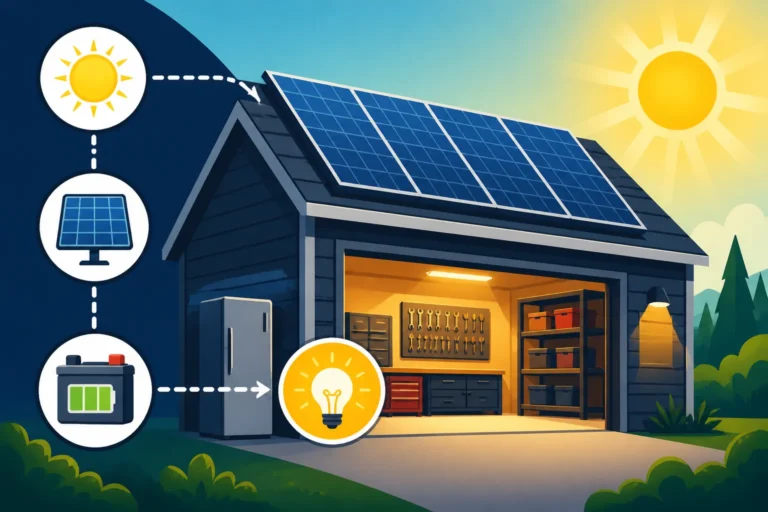
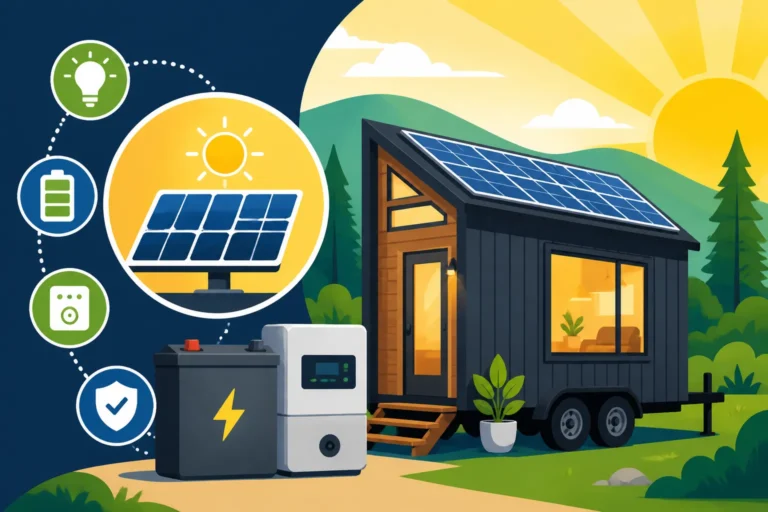
Trying to run a washing machine on a truly small off-grid system (think a modest RV, a tiny cabin, or a basic shed setup) is where the rubber really meets the road, or rather, where the watts meet the inverter. It's challenging but not impossible, provided you make some strategic choices.
- Energy-Efficient Models are Key: Seriously, if you're building a system for a washing machine, scour the market for the most energy-efficient front-loader you can find. Look for models with an Energy Star rating. Some compact models, often designed for apartments or RVs, might have lower overall wattage demands.
- Cold Water Wash Only: This is perhaps the single biggest power-saving trick. If your washing machine has an internal heater, that's where the vast majority of its power draw will come from. By committing to cold water washes, you drastically reduce the continuous load on your inverter and battery bank. Many modern detergents are formulated to work effectively in cold water anyway.
- Consider a Portable Manual or Peddle Washer: For very small systems or minimal washing needs, you might bypass the inverter altogether for laundry. Manual or pedal-powered washing machines exist, and they're fantastic for small loads. You'd still need to wring out clothes and hang them, but they eliminate the electrical demand.
- Run Other Appliances Sparingly: If you're running your washing machine on a smaller system, be prepared to turn off other non-essential appliances during the wash cycle. That means the TV, extra lights, and maybe even waiting for your refrigerator compressor cycle to finish before starting the wash. You're operating on a tighter energy budget.
- Adequate Battery Bank: A washing machine, even with cold washes, pulls significant power over its cycle (which can be 30-60 minutes). You'll need a robust battery bank that can deliver this power without excessive voltage sag and has enough capacity to cover the total energy consumed. Our guide on the best off-grid solar batteries explores options that stand up to these demands.
Optimizing Usage to Reduce Power Strain
Beyond choosing the right inverter and system size, how you use your washing machine makes a massive difference in its impact on your off-grid power system.
- Wash During Peak Solar Hours: This is a golden rule for all heavy loads. Run your washing machine when your solar panels are producing the most power, typically midday. This allows your solar array to directly contribute a significant portion of the power needed, reducing the strain on your batteries and allowing them to charge back up quickly. This is where understanding your peak sun hours comes in handy.
- Load Management: Don't just throw everything in! If you have multiple heavy loads (e.g., a well pump, an air conditioner, and a washing machine), try to stagger their usage. Don't run them all at once. This prevents your inverter from having to handle multiple large surges or a continuously high combined load, which could overwhelm it.
- Choose Shorter Cycles: If your washing machine offers different cycle lengths, opt for the shortest effective wash cycle. Longer cycles mean more continuous power draw over a longer period, eating into your battery bank.
- Pre-Soak Heavily Soiled Items: Instead of relying on your machine's intensive wash cycles (which consume more power), pre-soak really dirty clothes in a bucket or utility sink. This can reduce the need for longer, more vigorous washing cycles.
- Consider a DC Washing Machine (If Available and Practical): While rare for full-sized units, some very small or specialized RV washing machines might operate directly on DC power. This completely bypasses the inverter for that appliance, eliminating conversion losses and freeing up your AC inverter for other loads. However, these are often very small capacity and might not be practical for regular use.
By combining proper system sizing with smart usage habits, you can enjoy the convenience of a washing machine even when living off the grid.
Backup Power Considerations
Even with the best-sized solar array and battery bank, there will be days when the sun simply doesn't shine enough – think prolonged cloudy weather, heavy snow, or even just short winter days. This is where backup power becomes indispensable, especially if you rely on appliances like a washing machine.
- Generator Integration: A conventional fuel-powered generator is the most common form of backup for off-grid systems. For running a washing machine, you'd want a generator that can handle the full continuous and surge load of your washing machine plus any other critical loads. Many off-grid inverter-chargers are designed to integrate seamlessly with generators, automatically starting them when battery levels drop or when a large AC load is detected. Our article on how to add a generator to your design offers comprehensive advice.
- Larger Battery Bank: While not strictly "backup power," oversizing your battery bank can provide a buffer for those low-sun days. If your goal is to run a washing machine every week, you'll need enough battery capacity to sustain it through periods of reduced solar input. Our guide on how many batteries for an off-grid system will help you calculate your needs. Remember, lithium iron phosphate (LiFePO4) batteries like those from Battle Born or EG4 offer deeper discharge capabilities and longer lifespans compared to traditional lead-acid, making them a more robust choice for high-draw appliances.
- Solar Generators/Portable Power Stations: For smaller setups, or as an emergency backup specifically for a few key appliances, a robust solar generator (like an EcoFlow Delta Pro or a Bluetti AC200MAX) can be a good option. These units often have powerful pure sine wave inverters built-in and can be charged from solar, vehicle, or a wall outlet (if available). While likely too small to power a full-sized washing machine for multiple cycles, they can handle a load in a pinch. However, for continuous, regular washing machine use, a fully integrated off-grid system is generally more practical.
Having a reliable backup plan ensures that even if nature throws a curveball, your laundry day isn't completely derailed.
| Washing Machine Type | Typical Running Watts (without heater) | Typical Running Watts (with heater) | Estimated Peak Surge Watts (cold wash) | Recommended Continuous Inverter Size | Recommended Surge Inverter Size |
|---|---|---|---|---|---|
| Compact/RV Washer | 150-300W | 500-800W | 300-600W | 500W | 1000W |
| Standard HE Front-Load | 200-500W | 1000-2000W | 400-1000W | 1000W (for cold wash) | 2000W |
| Standard Top-Load (agitator) | 300-600W | 1200-2500W | 600-1200W | 1500W (for cold wash) | 2500W |
| Heavy-Duty/Large Capacity | 400-800W | 1500-3000W | 800-1600W | 2000W (for cold wash) | 3000-4000W |
Note: These are general estimates. Always check your specific appliance's ratings and add a safety margin.
Disclaimer
The information provided in this guide is for educational and informational purposes only and is not intended as professional electrical advice. Working with solar power systems and electricity can be dangerous. Always consult with a qualified electrician or solar professional before installing or modifying any electrical system. Follow all local codes, regulations, and manufacturer instructions. The author and publisher are not responsible for any injury, damage, or loss resulting from the use or misuse of this information.