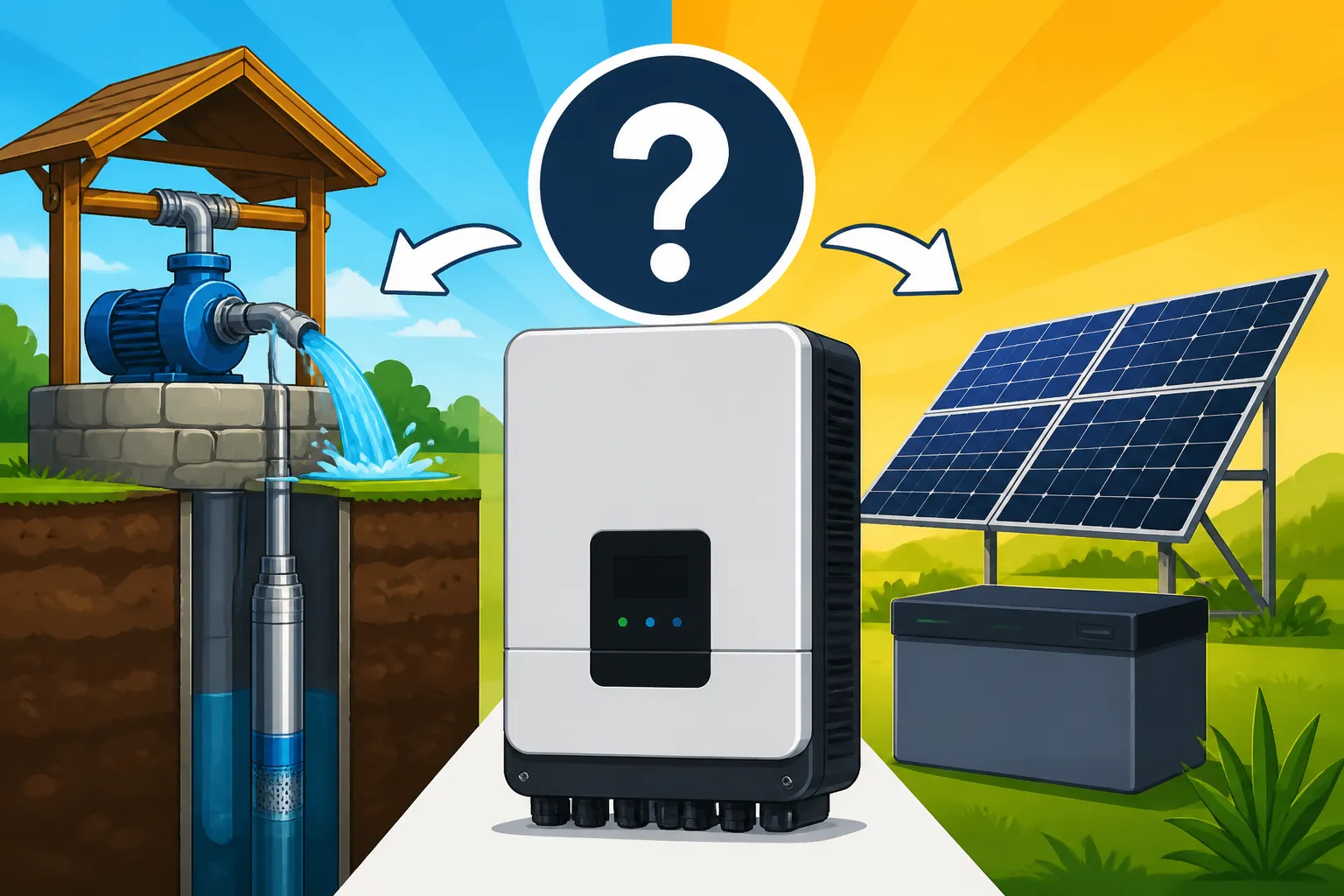
What Size Inverter to Run A Well Pump
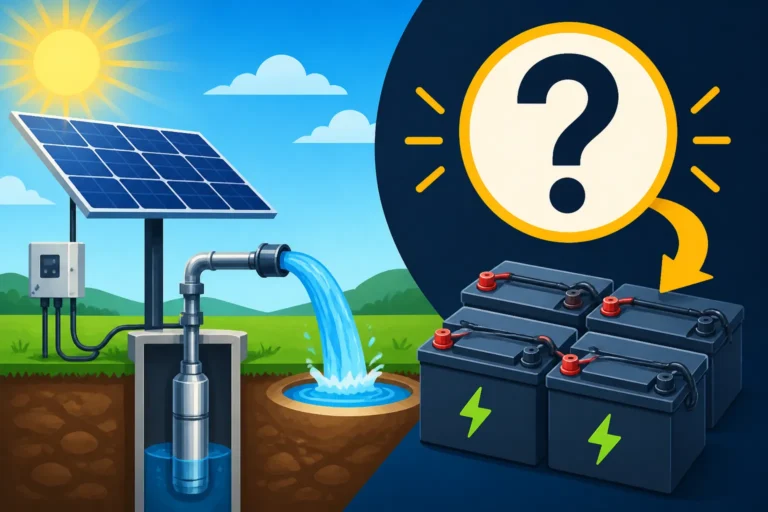
Running a well pump when you're living off the grid can feel like a real puzzle, especially when you consider its hefty power demands. It's not just about keeping the lights on; your well pump is often the heart of your water supply, and if it falters, your whole off-grid setup can grind to a halt. This guide is here to walk you through exactly what size inverter you need to confidently power your well pump, ensuring a steady, reliable water source for your independent lifestyle.
The Unique Power Demands of a Well Pump
Well pumps are notorious for being one of the trickiest appliances to power with off-grid solar, and it's all down to their specific electrical characteristics. Unlike a light bulb that draws a consistent amount of power, a well pump, especially when it first kicks on, demands a massive surge of electricity. This "starting surge" is where most off-grid setups fall short if they haven't been properly sized, leading to frustrated mornings with no running water.
Starting Watts Versus Running Watts
Here's the critical distinction that often trips people up: the difference between a well pump's running watts and its starting watts. The running watts, sometimes called continuous watts, refer to the power the pump draws once it's actively pumping water and operating smoothly. This is the figure you'll often see prominently displayed on the pump's label or in its specifications. For a typical residential well pump, this might be anywhere from 750 watts to 2,000 watts, sometimes even more for larger pumps or deeper wells.
However, when that pump motor first engages, it needs significantly more power to overcome inertia and get the water moving. This initial burst of energy is the starting wattage or surge wattage. It can be anywhere from 2 to 7 times its running wattage, often lasting for just a fraction of a second or a few seconds. For example, a pump that runs at 1,000 watts might require a starting surge of 3,000 to 7,000 watts. If your inverter can't handle this brief but intense power spike, it simply won't start the pump, or it will trigger its overload protection, leaving you in the lurch. This is why when you're looking at How to Size an Off-Grid Solar System, this particular load needs special attention.
Understanding this difference is paramount because an inverter must be capable of handling both the continuous running wattage and the momentary starting wattage without overloading. Many off-grid enthusiasts get excited by the continuous power rating of an inverter but forget to check its surge capability, only to find their well pump refuses to cooperate. It’s a common frustration, but with the right knowledge, you can avoid it entirely.
Types of Well Pumps and Their Requirements
Not all well pumps are created equal, and their design directly impacts their power requirements. Broadly, you'll encounter a few main types in off-grid applications, each with slightly different electrical considerations.
Submersible Pumps: These are perhaps the most common type for deeper wells, as they are designed to be placed directly inside the wellbore, pushing water upwards. Submersible pumps are often single-phase AC motors (though larger three-phase options exist for industrial uses) and typically have the highest starting surge requirements due to the substantial amount of water column they need to lift from a dead stop. The deeper the well and the larger the pump's horsepower (HP) rating, the greater its continuous and starting wattage will be. A 1 HP submersible pump, for instance, might continuously draw around 1,000-1,500 watts but could require a starting surge of 3,000-6,000 watts. These pumps benefit greatly from a robust inverter with excellent surge handling.
Jet Pumps: Often used for shallower wells, cisterns, or boosting pressure from a storage tank, jet pumps are typically located above ground, drawing water up through a suction pipe. While they might have slightly lower overall wattage compared to a deep submersible pump for the same flow rate, they still possess significant starting surge requirements because they are also inductive motors. A typical 3/4 HP jet pump might run at 800-1,200 watts but could surge to 2,500-4,000 watts. Their above-ground location can make them easier to maintain, but their electrical demands are still a serious consideration for inverter sizing.
DC Pumps (12V/24V/48V): These are a fantastic option for off-grid scenarios because they are designed to run directly on DC power from your battery bank, bypassing the need for an inverter for the pump itself. This eliminates the starting surge problem entirely as far as the inverter is concerned, and greatly improves efficiency. However, you'd still need an inverter for your other AC appliances. DC well pumps are generally smaller, lower flow rate pumps, often used for cabins, RVs, or small homesteads, and they are becoming increasingly popular for their simplicity and energy efficiency. They are usually sized by GPM (gallons per minute) and lift capacity rather than HP in the same way AC pumps are. While they don't impact inverter sizing for their operation, they could free up inverter capacity for other loads.
When you're trying to figure out What Size Inverter to Run A Well Pump, it's crucial to know which type of pump you have or plan to install. The specifications for each will guide your calculations, especially the often-hidden starting surge details.
Essential Inverter Characteristics for Well Pumps
Choosing an inverter for a well pump isn't just about picking the biggest number. There are specific features and capabilities you absolutely must look for to ensure reliable operation and protect your valuable equipment. Understanding these characteristics will guide you toward making an informed decision.
Continuous Power Output
The continuous power output, measured in watts (W) or kilowatts (kW), is the maximum amount of power the inverter can supply on an ongoing basis. For your well pump, this rating must at least match, and ideally exceed, the pump's running wattage. For instance, if your well pump continuously draws 1,200 watts, you wouldn't want an inverter rated for only 1,000 watts continuous. That's a recipe for frequent overloads and potential damage to both the inverter and the pump.
Many people tend to look for an inverter that can provide a bit of overhead, say 20-30% more than the pump's continuous draw. This provides a buffer against variations in motor efficiency or other small loads that might inadvertently draw power at the same time. Remember, your inverter isn't just running the well pump; it's likely powering everything else in your off-grid home that uses AC electricity. So, while the well pump is a major consideration, you also need to factor in all your other potential loads when considering How to Size an Off-Grid Inverter overall. For example, a 2000W inverter might seem sufficient for a 1200W pump on paper, but if you want to run a few lights and charge your laptop simultaneously, that overhead disappears quickly.
Surge Capacity and Duration
This is, without a doubt, the most critical specification when sizing an inverter for a well pump. The surge capacity is the maximum power the inverter can deliver for a short period—typically a few milliseconds to a few seconds—to start inductive loads like motors, refrigerators, or, yes, well pumps. As we discussed, a well pump's starting surge can be several times its running wattage.
A good off-grid inverter designed for motor loads will have a surge rating that is significantly higher than its continuous rating. For example, a 3,000-watt continuous inverter might have a 6,000-watt surge rating for 10 seconds or even a 9,000-watt surge for 100 milliseconds. You need to compare your pump's actual starting wattage (which can often be found in its specifications or calculated with a clamp meter during startup) against the inverter's surge rating and, crucially, the duration for which it can sustain that surge. If your pump's startup takes 2 seconds, and the inverter can only sustain its max surge for 0.1 seconds, it's not going to work. Many reputable inverter brands like Victron Energy or even more budget-friendly options found on platforms like Amazon will clearly state both the continuous and surge ratings, including the duration. Don't skimp on this specification; it's the difference between a working well pump and a constantly tripping inverter.
Pure Sine Wave Output
For any motor-driven appliance, including your well pump, a pure sine wave inverter is non-negotiable. There are two main types of inverters: pure sine wave and modified sine wave. You might be tempted by the lower price point of a modified sine wave inverter, but they are generally unsuitable for sensitive electronics and, more importantly, for motors. Modified sine wave inverters produce a choppy, stair-step approximation of AC power, which can cause motors to run hotter, less efficiently, and significantly shorten their lifespan. It can also cause audible humming and buzzing noises.
Pure sine wave inverters, on the other hand, replicate the smooth, clean AC waveform you get from the utility grid. This clean power allows motors to operate at their optimal efficiency, reduces heat buildup, and ensures a longer life for your well pump. While they are a bit more expensive upfront, the peace of mind and protection they offer your appliances make them an essential investment for any off-grid system, especially when considering heavy-duty loads like well pumps. For more details on this, you can check out guides like Pure Sine Wave vs Modified Sine Wave Inverters.
Calculating Your Well Pump's Inverter Needs
Okay, let's get down to the nitty-gritty of determining the actual size you'll need. This isn't just guesswork; it involves a few calculations and a bit of detective work to find your pump's specifications.
Identifying Your Pump's Specifications
The first step is always to gather the data on your specific well pump. You'll typically find this information on a data plate attached to the pump motor itself, in its manual, or on the manufacturer's website. You're primarily looking for:
- Horsepower (HP): This is a general indicator of the pump's power. Common sizes for residential wells are 1/2 HP, 3/4 HP, 1 HP, 1.5 HP, and 2 HP.
- Voltage (V): Most residential well pumps run on 120V AC or 240V AC. It's crucial to match your inverter's output voltage to your pump's requirement.
- Amperage (A): The running amperage (FLA – Full Load Amps) is often listed.
- Running Watts: If not explicitly stated, you can calculate this using the formula: Watts = Volts x Amps (for AC, it's technically Volts x Amps x Power Factor, but for estimation, V*A is usually sufficient).
- Locked Rotor Amps (LRA) or Starting Amps: This is the golden ticket! If the manufacturer provides an LRA or a specific starting wattage, use that. LRA refers to the current drawn when the motor's rotor is prevented from turning, which is a good proxy for the maximum inrush current during startup.
Let's say you have a 1 HP, 240V AC submersible well pump. Its data plate states 8 FLA (Full Load Amps) and 48 LRA (Locked Rotor Amps).
- Running Watts: 240V * 8A = 1,920 watts.
- Starting Watts (using LRA): 240V * 48A = 11,520 watts.
Now, that 11,520 watts for starting seems huge, right? It often is. But it's a very brief spike. Many inverters can handle significantly higher power for milliseconds. However, if LRA isn't provided, you'll need to use a surge factor.
The Surge Factor: A Practical Multiplier
If your pump's specifications don't explicitly list a starting wattage or LRA, you'll have to estimate it using a "surge factor" or "inrush current multiplier." This factor accounts for the fact that inductive motors, like those in well pumps, draw a significantly higher current when they first start up. The typical surge factor for well pumps ranges from 3x to 7x their running wattage, with 5x being a common, conservative estimate for submersible pumps.
Here's how you'd apply it:
- Estimated Starting Watts = Running Watts x Surge Factor.
Let's revisit our 1 HP pump example, assuming we only knew its running watts of 1,920W and no LRA:
- Using a conservative 5x surge factor: 1,920 watts (running) * 5 = 9,600 watts (estimated starting).
- If it's a particularly challenging pump or deep well, you might even consider a 6x or 7x factor to be safe, especially if it's an older, less efficient motor.
So, for our hypothetical 1 HP pump, you'd need an inverter that can continuously deliver at least 1,920 watts (preferably with some buffer) and handle a momentary surge of roughly 9,600 to 11,520 watts for the duration of the pump's startup. This is why when folks ask How to Size a Well Pump Surge, it's not a simple one-size-fits-all answer.
Accounting for Other Loads
It's tempting to size your inverter just for the well pump, but that's a mistake in an off-grid setup. Your inverter needs to handle the total simultaneous load of everything you plan to run at the same time. This is part of the broader Off-Grid Solar Load Calculation Explained.
Imagine this scenario: you've just flushed the toilet, which kicks on the well pump. At the same time, your refrigerator cycles on, your partner decides to use the microwave for a quick warm-up, and you're charging your phone. All of these devices draw power from the inverter. While the well pump has the most significant starting surge, other appliances, like a refrigerator, also have smaller starting surges. The microwave draws a lot of continuous power.
To properly size your inverter, you need to perform a comprehensive load analysis of your entire off-grid system. List every appliance you might use, their running watts, and their starting watts (if applicable). Then, identify the absolute worst-case scenario: which combination of appliances might realistically be running or starting at the exact same moment?
Your inverter's continuous rating must be greater than the sum of all continuous loads that might be on simultaneously. Its surge rating must be able to handle the largest single surge (usually the well pump or a large power tool) plus the continuous running watts of all other appliances that are on at that moment.
Here’s a simplified example of how you might calculate total inverter needs, considering multiple devices:
| Appliance | Running Watts | Starting Watts (estimated) |
|---|---|---|
| Well Pump (1 HP) | 1,920W | 9,600W (5x surge factor) |
| Refrigerator | 150W | 600W |
| LED Lights (total) | 100W | 0W |
| Laptop Charger | 60W | 0W |
| Total Continuous (Max) | 2,230W | |
| Largest Surge (Well Pump) | (add other continuous loads to this) | 9,600W + 150W + 100W + 60W = 9,910W |
In this scenario, you'd need an inverter with a continuous rating of at least 2,230 watts (plus a buffer) and a surge rating of at least 9,910 watts. This table illustrates that when the well pump surges, the other running loads are added to that peak demand.
Choosing the Right Inverter System
Once you've done your homework and crunched the numbers, it's time to look at actual inverter options. Making the right choice means balancing capacity, reliability, and budget.
Common Inverter Sizes for Well Pumps
Based on the typical demands of residential well pumps, certain inverter sizes tend to be more popular and suitable for off-grid applications:
- For Smaller Pumps (1/2 HP or less) or Light Use: If you have a very small well pump, perhaps for a cabin used seasonally or a shallow well, a 2,000-watt pure sine wave inverter might suffice. These often have surge ratings of 4,000-6,000 watts, which can just about manage a smaller pump's startup. However, always verify its specific surge duration.
- For Standard 3/4 HP to 1 HP Pumps: Most standard well pumps will require something more substantial. A 3,000-watt pure sine wave inverter is a common choice, typically offering surge capacities in the 6,000-9,000 watt range. This often provides a good balance between continuous power for everyday loads and the necessary surge for the pump. Brands like Renogy offer reliable 3000W inverters that are popular for DIY off-grid setups.
- For Larger 1.5 HP to 2 HP Pumps or Whole Home Systems: If your well pump is 1.5 HP or larger, or if you have many other appliances running, you'll likely need a 5,000-watt (or higher) pure sine wave inverter. These robust units are designed to handle significant continuous loads and often boast impressive surge capabilities, frequently in the 10,000-15,000 watt range. This kind of power is usually part of a larger off-grid system, often at 24V or 48V. You can also look into specific Best Off-Grid Solar Inverters reviews for models known for their surge capacity.
Remember, always round up if you're on the fence between two sizes. Having a little extra capacity is far better than being constantly underpowered.
Brands and Features to Consider
When you're shopping for an inverter, especially for a crucial load like a well pump, reliability and good customer support are key.
- Victron Energy: Considered a premium brand in the off-grid world, Victron MultiPlus inverter/chargers are renowned for their robust build, excellent surge capability, and advanced features. They integrate seamlessly into comprehensive systems and are a top choice for those seeking maximum reliability. Their surge factors are often excellent, making them ideal for well pumps.
- OutBack Power: Another industry leader, Outback inverters are known for their durability and heavy-duty performance. They are designed for demanding off-grid environments and offer high surge ratings, making them suitable for powering resistive and inductive loads.
- Renogy: For those on a slightly tighter budget or embarking on a DIY project, Renogy offers a range of pure sine wave inverters that provide good value. Their 2000W and 3000W models are quite popular, and while they might not match the extreme surge duration of a Victron, they are often perfectly adequate for many standard well pumps when properly sized. You can often find Renogy products readily available on platforms like Amazon, alongside detailed specifications and user reviews.
- Growatt/EG4: These brands are gaining popularity for their all-in-one inverter-chargers, which integrate an inverter, charge controller, and often a battery charger into a single unit. Many of these modern units boast excellent surge capabilities and are a cost-effective solution for comprehensive off-grid systems.
Beyond the brand, also consider:
- Low Frequency vs. High Frequency: Low-frequency inverters generally have heavier transformers, allowing for much better surge handling and often higher efficiency for inductive loads compared to high-frequency inverters. Many top-tier off-grid inverters for whole-home systems are low-frequency.
- Built-in Transfer Switch: If you plan to incorporate a generator as a backup, an inverter/charger with a built-in automatic transfer switch can simplify your system and ensure seamless power transitions.
- Monitoring Capabilities: Modern inverters often come with Bluetooth or Wi-Fi monitoring, allowing you to track performance, adjust settings, and diagnose issues from your phone or computer.
System Voltage Considerations
The voltage of your off-grid battery bank (and thus your inverter's input voltage) plays a significant role in overall system efficiency and cost, especially for larger systems and high-power loads like well pumps. You can read more about How to Choose System Voltage in depth.
- 12V Systems: These are generally suitable for smaller systems, like an RV or a basic cabin with minimal power needs. While 12V inverters are common, they draw very high currents from the battery bank when powering large loads. For example, a 3000W inverter on a 12V system draws 250 amps (3000W / 12V = 250A) continuously, requiring very thick, expensive cables to minimize voltage drop and overheating. Trying to start a well pump with a 12V system can put immense strain on your batteries and wiring. It's generally not recommended for well pumps over 1/2 HP.
- 24V Systems: A significant upgrade from 12V, 24V systems cut the current in half for the same wattage (e.g., 3000W / 24V = 125A). This means thinner, more affordable wiring, less voltage drop, and less strain on battery connections. 24V is a popular sweet spot for many medium-sized off-grid homes or larger cabins that include a well pump, offering a good balance of efficiency and cost.
- 48V Systems: This is the preferred voltage for larger, whole-home off-grid systems, especially those with high-power appliances like air conditioners or larger well pumps. At 48V, currents are quartered compared to 12V (e.g., 3000W / 48V = 62.5A), allowing for even more efficient wiring, smaller breakers, and reduced stress on all components. While the initial cost for 48V components (like charge controllers) might be slightly higher, the long-term benefits in efficiency, reliability, and expandability are substantial. If you're looking to run a significant well pump (1 HP or more) reliably, a 48V system is usually the way to go.
Matching your inverter's input voltage to your battery bank's voltage is fundamental. If you're designing a new system or upgrading, strongly consider a 24V or 48V battery bank for anything beyond minimal well pump usage. This will make your inverter's job much easier and your system much more robust.
| Pump Horsepower (HP) | Typical Running Watts (AC) | Estimated Starting Watts (5x) | Recommended Inverter Continuous Rating | Recommended Inverter Surge Rating | Ideal System Voltage |
|---|---|---|---|---|---|
| 1/2 HP | 750 – 1,000W | 3,750 – 5,000W | 1,500 – 2,000W | 4,000 – 6,000W | 12V, 24V |
| 3/4 HP | 1,000 – 1,200W | 5,000 – 6,000W | 2,000 – 2,500W | 6,000 – 8,000W | 24V |
| 1 HP | 1,200 – 1,500W | 6,000 – 7,500W | 2,500 – 3,000W | 7,500 – 9,000W | 24V, 48V |
| 1.5 HP | 1,500 – 2,000W | 7,500 – 10,000W | 3,000 – 4,000W | 10,000 – 12,000W | 48V |
| 2 HP | 2,000 – 2,500W | 10,000 – 12,500W | 4,000 – 5,000W+ | 12,500 – 15,000W+ | 48V |
Note: These are estimates. Always check your specific pump's actual running and starting wattage specifications.
Getting the right inverter for your well pump is a cornerstone of a functional and reliable off-grid water system. By carefully considering the pump's specific power demands, prioritizing pure sine wave output and robust surge capacity, and choosing the appropriate system voltage, you can ensure a consistent flow of water, keeping your off-grid dreams alive and well. Don't rush this decision; it's one of the most important you'll make for your entire off-grid journey.
Disclaimer
The information provided in this guide is for general informational purposes only. While we strive to offer accurate and up-to-date advice, off-grid solar system design and installation can be complex and should ideally be undertaken with the guidance of a qualified professional. Electrical work can be dangerous. Always consult with certified electricians and adhere to all local codes and regulations when installing or modifying any electrical system. We are not liable for any losses, injuries, or damages resulting from the use of this information.