Off-Grid Solar Cost for Air Conditioning
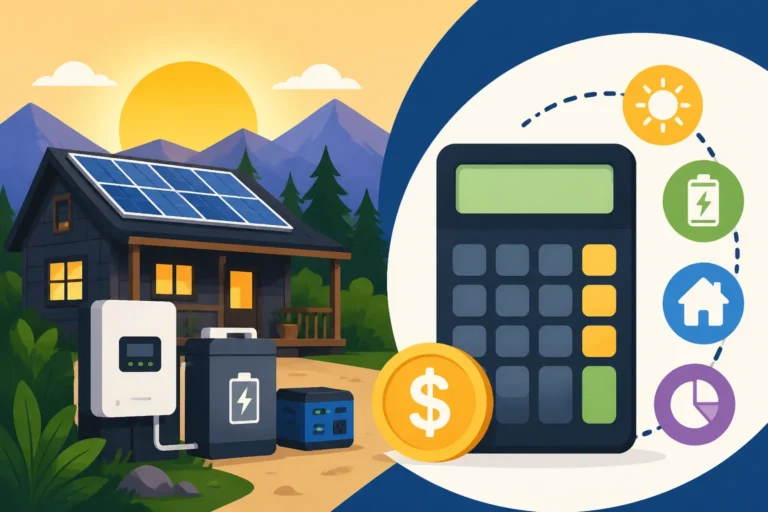
The dream of comfortable, cool living off-grid, especially when summer temperatures soar, often clashes with the harsh reality of powering an air conditioner without a constant grid connection. Many folks find themselves scratching their heads, wondering how to reconcile their desire for an icy blast with the finite energy produced by the sun. The frustration is real: air conditioning is notoriously power-hungry, and figuring out what it truly costs to run off-grid solar can feel like a guessing game. This guide aims to clear up that confusion, offering a comprehensive look at the investments and strategies involved in bringing air-conditioned comfort to your off-grid sanctuary.
The Staggering Reality of Air Conditioning Power Needs Off-Grid
Before diving into dollars and cents, it’s crucial to grasp just how much energy air conditioning consumes. Unlike charging a phone or running a few LED lights, cooling a space is a continuous, heavy load that demands a substantial and reliable power supply. This fundamental truth often surprises newcomers to off-grid living, leading to undersized systems and unexpected discomfort.
Why AC Units Are Such Energy Hogs
Air conditioners work by moving heat, not creating cold, and that process requires significant electrical input. When you flick on an AC unit, especially if the space is already warm, it draws a substantial amount of current to start its compressor and fan. This initial surge can be several times higher than its continuous running wattage, a critical factor for sizing your inverter. Once running, it continues to draw a considerable amount of power for as long as it’s active. This is a stark contrast to intermittent loads like a microwave or a coffee maker, which only pull power for short bursts.
Think about a typical residential AC unit: it's designed with the assumption of an endless, inexpensive grid connection. In an off-grid setting, every watt comes directly from your solar panels or, more critically, from your battery bank. If you're running a 1,000-watt AC unit for eight hours a day, that's 8,000 watt-hours (8 kWh) of energy. To replace that energy from solar panels, considering varying sun conditions, requires a massive solar array and a substantial battery bank, pushing the overall system size and, consequently, the cost way up. For a deeper dive into overall costs, you might want to read our guide on how much an off-grid solar system costs.
The Different Faces of Off-Grid AC and Their Appetite for Power
Not all air conditioners are created equal, especially concerning their off-grid viability. The type of unit you choose will dramatically impact the size and cost of your solar system. Understanding the power profile of each option is your first step toward realistic budgeting.
Window Units and Portable ACs: These are often the most accessible and cheapest to purchase initially, available widely at big box stores and online retailers like Amazon. A standard 8,000 BTU window unit might draw around 700-900 watts, while a 12,000 BTU unit could pull 1,000-1,200 watts. Portable ACs are generally less efficient due to their design, often having some heat escape back into the room through less-than-ideal exhaust venting. While tempting for their low upfront cost, their inefficiency often translates to a larger, more expensive off-grid power system required to run them for any significant period. They are best suited for very small, well-insulated spaces or intermittent use.
Mini-Split Systems: When it comes to efficiency and performance in off-grid homes or cabins, ductless mini-split systems are often the champions. These units separate the condenser (outside) from the air handler (inside), allowing for very efficient operation and precise temperature control. Many modern mini-splits use inverter technology, which means they can ramp their compressor speed up and down, avoiding the large startup surges and constant full-power draw of traditional units. A 9,000-12,000 BTU mini-split might only draw 500-800 watts continuously once the room is cool, though they can surge higher initially. While their upfront purchase and installation cost is higher, their energy efficiency can significantly reduce the required size, and thus the cost, of your solar array and battery bank over time. For more on sizing your power needs, check out our comprehensive guide on how to size an off-grid solar system.
Central Air Conditioning: For most typical off-grid setups, central air conditioning is simply not a practical or cost-effective option. These systems are designed to cool an entire home, often pulling several thousand watts (3,000-5,000+ watts) during operation. The solar array and battery bank needed to support such a massive, continuous load would be astronomically expensive and physically enormous, making them largely unsuitable for anything but the largest, most dedicated off-grid homesteads with unlimited budget and space.
Deconstructing the Costs: Major Components for Off-Grid AC
Once you understand the energy demands, the next step is to break down the costs of the individual components that make up an off-grid solar system capable of powering an air conditioner. It’s not just the AC unit itself; it’s the entire ecosystem of power generation and storage that needs to scale up.
The Solar Array: Your Primary Power Generator
Powering an air conditioner off-grid means you’ll need a significantly larger solar panel array than for basic loads. Let’s say you’ve opted for an efficient mini-split that draws 700 watts continuously. If you want to run it for 8 hours a day, you’re looking at 5,600 watt-hours of consumption. To generate that much energy daily, accounting for factors like peak sun hours and system inefficiencies, you might need a solar array producing 2,000 to 3,000 watts or more. Each 400-watt solar panel might cost $200-$400, so a 3,000-watt array could mean 7-8 panels, costing anywhere from $1,400 to $3,200 just for the panels. This doesn’t even include mounting hardware, wiring, and other accessories.
Consider your geographical location and the time of year you plan to use AC. In areas with fewer peak sun hours or during cloudy seasons, you'll need to either install more panels or accept shorter run times for your AC. This is why a thorough load analysis is critical to determine how many solar panels for off-grid living you actually need. You'll also need to factor in the cost of racking and mounting hardware, which can add hundreds to over a thousand dollars depending on whether you opt for roof mounts, ground mounts, or pole mounts.
The Battery Bank: Your Energy Reservoir
This is often where the biggest cost surprise lies for off-grid AC. Because air conditioning is a continuous load, and you likely want to run it even when the sun isn’t shining (e.g., in the evening or overnight), your battery bank must be robust. Using our 5,600 watt-hour daily consumption example, you’d need a battery bank with enough capacity to store that energy, plus a buffer for cloudy days or extended use. If you want two days of autonomy, that’s over 11 kWh of usable battery capacity.
For lithium iron phosphate (LiFePO4) batteries, which are highly recommended for their longevity and depth of discharge, a 100Ah 12V battery provides 1,200 Wh. To get 11,000 Wh, you'd need roughly nine of these if wired in a 12V system, or fewer if using a higher voltage system like 24V or 48V. At $500-$1,000 per 100Ah LiFePO4 battery, you're looking at $4,500 to $9,000 just for the batteries, and that's often a conservative estimate. Lead-acid batteries are cheaper upfront, but they have shorter lifespans, lower usable capacity, and require more maintenance, often making them more expensive in the long run. It's a complex decision, and understanding the cost of an off-grid solar battery bank is vital. Portable power stations from brands like Jackery can offer some cooling solutions for very small areas or temporary use by powering small fans or evaporative coolers, but they aren't designed to run a full-size AC unit for extended periods.
Inverters and Charge Controllers: The Brains and Brawn of the System
The inverter is the workhorse that converts your battery’s DC power into the AC power your air conditioner (and most other appliances) use. For an AC unit, you absolutely need a pure sine wave inverter to avoid damaging the appliance and ensure efficient operation. Furthermore, the inverter must be sized not just for the continuous running wattage of your AC but also for its high startup surge. A 1,000-watt AC unit might have a startup surge of 2,000-3,000 watts for a split second, meaning your inverter needs to be able to handle that temporary spike. For a system capable of running even a modest mini-split, a quality inverter could range from $1,000 to $4,000, depending on its wattage and features. You can explore more about this in our article about the cost of an off-grid solar inverter.
The charge controller is responsible for regulating the power flowing from your solar panels to your battery bank, protecting the batteries from overcharging and optimizing panel output. With a larger solar array required for AC, you'll also need a larger, often more sophisticated MPPT (Maximum Power Point Tracking) charge controller. These can range from a few hundred dollars for smaller systems to $500-$1,500+ for higher-capacity units capable of handling the multiple large panels needed for off-grid AC. For a detailed breakdown of costs, refer to our article on the cost of a charge controller.
| Component | Estimated Cost Range (for modest off-grid AC) | Notes |
|---|---|---|
| Solar Panels | $1,400 – $3,200 (2000-3000W array) | Varies by panel efficiency, brand, and array size. |
| Batteries (LiFePO4) | $4,500 – $9,000 (10-12 kWh usable) | Most expensive component; crucial for continuous AC. |
| Inverter | $1,000 – $4,000 (3000-5000W pure sine) | Must handle AC surge loads. |
| Charge Controller | $500 – $1,500 | MPPT recommended for efficiency with larger arrays. |
| Mounting Hardware | $300 – $1,000+ | Roof, ground, or pole mounts. |
| Wiring & Safety | $300 – $800+ | Cables, fuses, breakers, disconnects. |
| Misc. Components | $200 – $500 | Monitoring devices, conduits, connectors. |
| Total Estimated Material Cost | $8,200 – $22,000+ | This is for a modest AC system, not whole-house cooling. |
Crunching the Numbers: Total Investment and Hidden Expenses
The individual component costs only tell part of the story. To truly understand the financial commitment of off-grid air conditioning, you need to factor in installation, long-term maintenance, and the nuances of budgeting for such a power-intensive demand.
DIY Versus Professional Installation: Weighing the Costs and Headaches
Many off-gridders pride themselves on their DIY spirit, and installing a solar system yourself can indeed save you a significant chunk of money on labor. If you’re tackling a system designed to run an AC unit, however, you’re venturing into more complex electrical work. This isn’t just hooking up a few panels; it involves proper sizing of all components, safe wiring practices, grounding, and understanding how to connect batteries, inverter, and panels correctly to create a seamless system. Incorrect installation can lead to system failures, inefficiency, or even dangerous electrical hazards.
While you might save $5,000 to $15,000 or more in labor by going the DIY route, you're trading that financial saving for a substantial time commitment, the need for specialized tools, and the responsibility of ensuring everything is up to code and safe. If you're not confident in your electrical skills, hiring a professional solar installer or at least an experienced electrician for the trickier parts of the installation, especially the AC wiring, is a wise investment in safety and reliability. For more detail, check out our article on DIY vs professional off-grid solar cost. A professional installation typically includes design, permitting (if applicable), and warranty, adding peace of mind that a DIY project often can't provide.
Beyond Installation: The Ongoing Costs of Off-Grid AC
Once your system is up and running, your expenses don’t magically disappear. The most significant ongoing cost is often battery replacement. While LiFePO4 batteries can last 10-15 years or even more under ideal conditions, they are still a consumable item with a finite lifespan, especially with heavy daily cycling from AC use. Replacing a large battery bank can cost thousands of dollars, an expense you’ll need to budget for every decade or so. This is why our guide on the cost to replace off-grid solar batteries is so important.
Other maintenance costs include periodic cleaning of solar panels (especially if dust or pollen build-up reduces efficiency), checking wiring connections, and monitoring battery health. While inverters and charge controllers are generally long-lasting (10-20 years for quality units), they too will eventually need replacement, adding another potential multi-thousand-dollar expense down the line. Unexpected repairs, though hopefully rare with a well-designed system, can also crop up. You can learn more about general upkeep in our off-grid solar maintenance costs article.
Real-World Budgeting for Off-Grid Cooling Comfort
Let’s consider a few scenarios to bring these numbers to life:
- Scenario 1: The RV Adventurer: You have a van or RV and want to run a small 5,000 BTU portable AC or an efficient 12V DC air conditioner for a few hours in the afternoon. A system for this might include 400-800 watts of solar panels, 200-400Ah of 12V LiFePO4 batteries (2.4-4.8 kWh), and a 2000W inverter. Materials alone could range from $3,000 to $7,000. If you're doing a full-time RV setup with a mini-split, the cost will likely be higher, potentially reaching $10,000-$15,000.
- Scenario 2: The Weekend Cabin Getaway: You have a small cabin (200-400 sq ft) and want to run a 9,000 BTU mini-split for 6-8 hours on summer weekends. This might require a 1,500-2,000W solar array, a 7-10 kWh battery bank, and a 3000W inverter. Material costs could easily be $8,000 to $15,000, assuming DIY installation. A professional might add another $5,000-$8,000.
- Scenario 3: Full-Time Off-Grid Home with AC: For a small, well-insulated home (800-1200 sq ft) with a 12,000-18,000 BTU mini-split running daily for several hours, you're looking at a substantial investment. This might necessitate a 3,000-5,000W solar array, a 15-25 kWh battery bank, and a 5000W or larger inverter. Material costs alone could range from $15,000 to $30,000+, with professional installation pushing the total closer to $25,000-$45,000.
To accurately budget, you need to conduct a thorough load analysis to determine your exact energy needs. This involves listing every appliance you plan to run, noting its wattage and how many hours per day you'll use it. A simple Kill A Watt meter (available on Amazon) can help measure actual appliance consumption. Don't forget to account for parasitic draws and system inefficiencies. Our article on how to calculate daily energy usage can guide you through this critical step.
Smart Strategies to Reduce Off-Grid AC Costs
Given the significant investment required, it’s wise to explore every possible avenue to make off-grid air conditioning more affordable and sustainable. It’s not just about buying components; it’s about intelligent design and usage.
Prioritizing Energy Efficiency Before You Buy
The single most impactful way to reduce the cost of off-grid air conditioning is to minimize the load itself. This starts with excellent insulation in your dwelling. A well-insulated tiny home, cabin, or RV will retain cool air much longer, meaning your AC unit won’t have to run as frequently or as hard. Simple measures like sealing air leaks around windows and doors, using reflective window coverings, and creating shade with awnings or strategically planted trees can dramatically reduce the need for cooling.
When selecting an AC unit, prioritize models with high SEER (Seasonal Energy Efficiency Ratio) or EER (Energy Efficiency Ratio) ratings. DC-powered mini-splits or RV-specific AC units are often designed with efficiency in mind for smaller off-grid applications. Many modern mini-splits offer "ECO" or "Sleep" modes that further optimize power consumption. Remember, every watt saved on the consumption side translates to fewer solar panels and smaller batteries required, directly reducing your overall system cost. Choosing the most efficient appliances is key to making your off-grid solar cost for air conditioning manageable.
Phased Approach to Building Your Cooling System
If the upfront cost of a full-blown off-grid AC system feels overwhelming, consider a phased approach. Instead of trying to build the entire system at once, you can start with a basic off-grid setup for your essential loads like lighting, refrigeration, and electronics. Then, as your budget allows and your experience grows, you can gradually expand your system to accommodate air conditioning.
For instance, you might first install a modest solar array and battery bank sufficient for your core needs. Later, you can add more solar panels – perhaps an additional 1000-2000 watts – and expand your battery bank by adding more modules. When you're ready, you can integrate a larger, pure sine wave inverter capable of handling the AC unit. This strategy allows you to spread out the significant expenses over time, making the journey to off-grid comfort more financially accessible. For tips on smart budgeting, read our article on how to save money on an off-grid solar build. Expanding your system incrementally is a common and effective way to manage the financial outlay, as detailed in our guide on the cost of expanding an off-grid system.
Disclaimer
The information provided in this article is for general guidance and informational purposes only and does not constitute professional advice. Off-grid solar system design and installation can be complex and involve electrical hazards. Always consult with qualified professionals and adhere to local codes and regulations for your specific project.