Cost of a 3000W Off-Grid Solar System
Trying to figure out the exact cost of a specific off-grid solar system, like a 3000W setup, can feel like navigating a dense fog. You're probably wondering if it's even achievable within a reasonable budget, what hidden expenses might crop up, and what components really drive the price. This guide is here to cut through that confusion, giving you a realistic, comprehensive breakdown of what you can expect to pay for a 3000W off-grid solar system and how to budget for it effectively.
Understanding What a 3000W Off-Grid Solar System Really Means
When we talk about a 3000W off-grid solar system, it's crucial to understand what that "3000W" actually refers to. Often, people confuse the continuous output wattage of an inverter with the overall generating capacity of the solar array or the total daily energy storage. A 3000W system usually implies an inverter capable of providing 3000 watts of continuous power, which is a significant amount for many applications, but it doesn't necessarily mean your solar panels are generating that much at all times, nor does it define your battery bank size. It's a key piece of the puzzle, signaling a certain level of power availability for your appliances, but it's not the whole story.
What a 3000W Inverter Can Power
A 3000-watt pure sine wave inverter is a real workhorse for many off-grid scenarios. It's robust enough to handle most household appliances, though perhaps not all simultaneously. Think about the flexibility it offers: you could run a full-size refrigerator, several lights, a television, a laptop, and charge your phones without breaking a sweat. It can even handle moderate power tools, a small microwave, or a well pump, though you'd want to be mindful of starting surges.
The beauty of a 3000W inverter is that it moves you beyond basic lights and charging into more comfortable, conventional living off-grid. For example, if you're living in a tiny home or a medium-sized RV, this inverter size gives you a lot of freedom. You might even manage a small air conditioner or heater, but that would definitely be a major draw and require careful management of your overall system. You should always check the starting (surge) wattage of your appliances, as many motor-driven devices will momentarily pull much more than their running wattage.
Typical Daily Energy Needs for a 3000W System
While the inverter provides instantaneous power, the actual cost and design of your system are driven by your daily energy consumption, measured in watt-hours (Wh) or kilowatt-hours (kWh). A system built around a 3000W inverter is typically designed to meet daily energy needs ranging from 5,000 Wh to 15,000 Wh (5-15 kWh) per day, depending on how conservative you are with your energy use and your available sunshine.
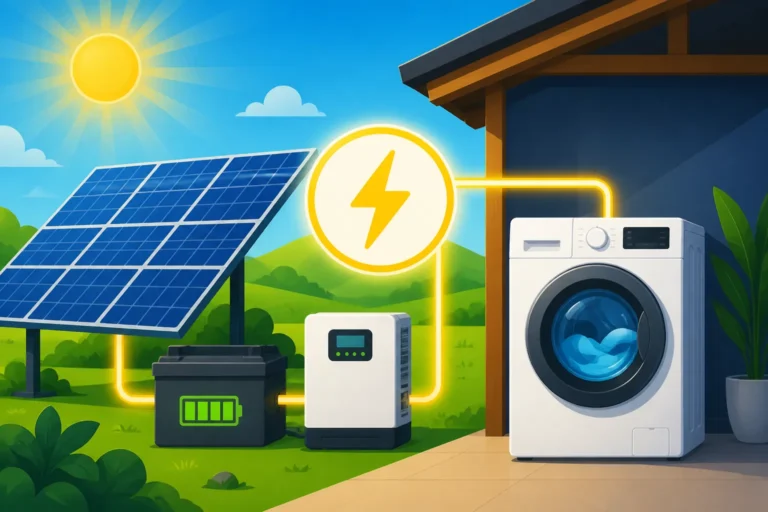
For someone living full-time off-grid, running a refrigerator, lights, a few electronics, and perhaps a small washing machine or occasional power tools, you might find yourself in the 8-10 kWh per day range. If you're running heavy loads like constant air conditioning, a large well pump, or an electric water heater, your daily consumption could easily exceed 15 kWh, necessitating a much larger solar array and battery bank than a basic 3000W inverter might suggest. Understanding your actual daily usage is the first critical step in determining how much an off-grid solar system will cost.
Breaking Down the Core Costs for a 3000W Off-Grid Solar System
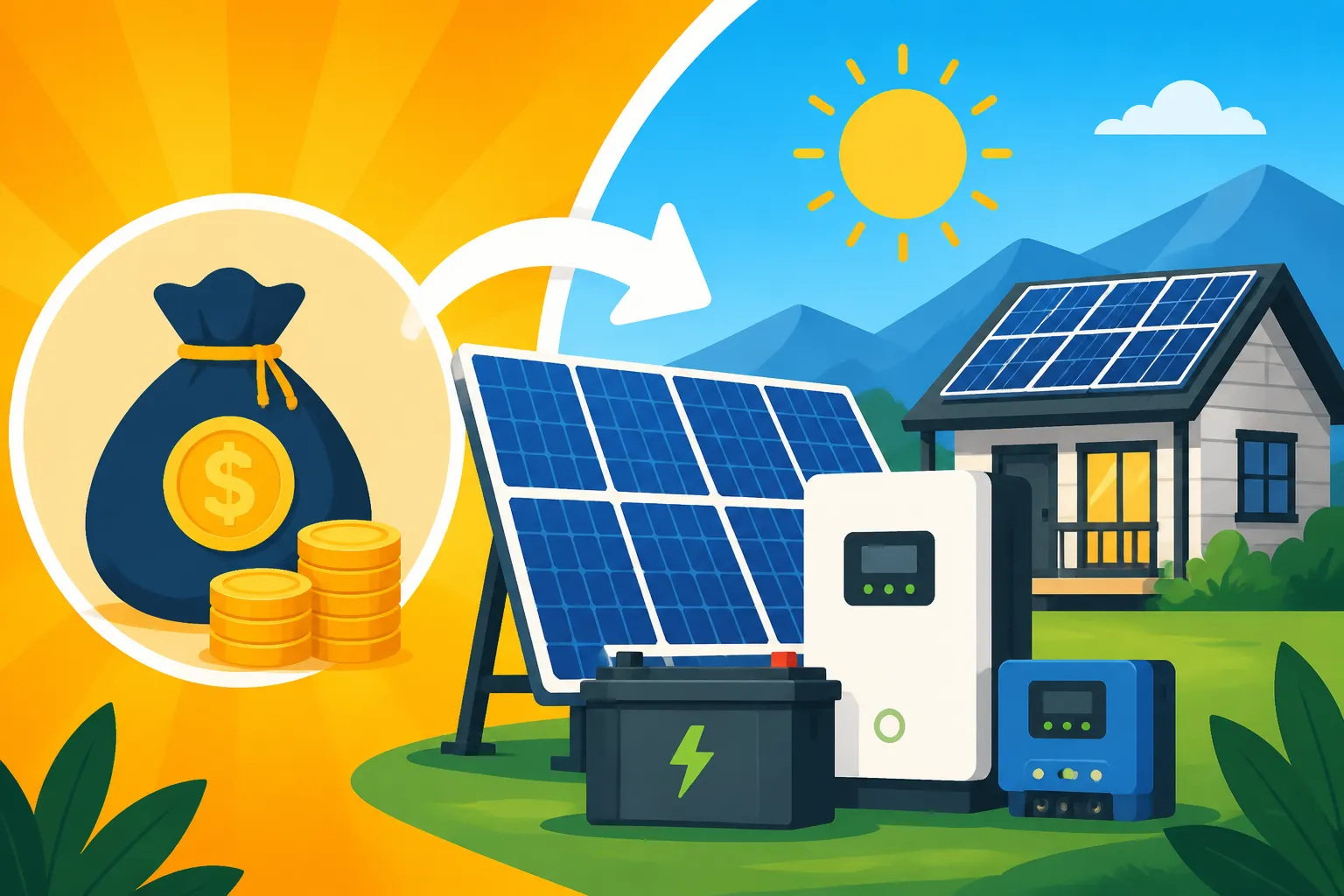
When you're looking at the cost of a 3000W off-grid solar system, it’s not just one price tag. It's a collection of essential components, each with its own significant cost. Think of it like building a house – you don't just buy "a house"; you buy lumber, wiring, plumbing, and appliances. The same goes for solar. Each piece is vital, and understanding their individual costs helps you budget more accurately.
Solar Panels: The Energy Harvesters
The solar panels are what actually collect the sun's energy. For a 3000W inverter system, you'll need a solar array that can generate enough power to charge your batteries adequately each day, especially considering factors like peak sun hours and cloudy weather. This often means your panel wattage will be significantly higher than 3000W – perhaps 4000W to 6000W or even more, to ensure sufficient charging.
Modern solar panels, like those from Renogy or Rich Solar, are typically 300-450 watts per panel. So, for a 4000W array, you might need 10 to 14 panels. The cost for these panels can range from $0.70 to $1.20 per watt, depending on efficiency, brand, and type (monocrystalline vs. polycrystalline). For a 4000W array, you could be looking at anywhere from $2,800 to $4,800 just for the panels. You can often find good deals on panels through various online retailers or specialty solar suppliers.
Batteries: The Heart of Your Storage
Batteries are arguably the most expensive single component in an off-grid solar system, and for good reason – they store the energy you'll use when the sun isn't shining. For a 3000W inverter system, aiming for 2-3 days of autonomy (power without sun) is a good target. If your daily usage is, say, 10 kWh, you'd need 20-30 kWh of usable battery storage.
Lithium iron phosphate (LiFePO4) batteries are highly recommended for off-grid applications due to their long lifespan, high efficiency, and deep discharge capabilities. While their upfront cost is higher than lead-acid, their total cost of ownership is often lower. Expect to pay anywhere from $400 to $1,000+ per kWh of usable capacity for quality LiFePO4 batteries. This means a 20 kWh battery bank could easily run you $8,000 to $20,000. Brands like Battle Born or EG4 are popular choices for their reliability and performance. This component truly drives the "Cost of an Off-Grid Solar Battery Bank".
Inverter: Converting Power for Your Appliances
As mentioned, the 3000W inverter is central to this system's designation. Its job is to convert the DC (direct current) power from your batteries into usable AC (alternating current) power for your standard household appliances. A pure sine wave inverter is essential for sensitive electronics and motors.
High-quality 3000W pure sine wave inverters can range from $500 to $2,000, or even more if you opt for an inverter-charger combination unit with advanced features and monitoring capabilities from brands like Victron Energy or Sol-Ark. These more advanced units integrate multiple functions, simplifying wiring and offering superior performance and monitoring. When thinking about the "Cost of an Off-Grid Solar Inverter," remember that this isn't an area to cut corners.
Charge Controller: Protecting Your Investment
The charge controller is the unsung hero, regulating the voltage and current coming from your solar panels to your battery bank. This prevents overcharging and prolongs battery life. For a system of this size, an MPPT (Maximum Power Point Tracking) charge controller is almost always the best choice. MPPT controllers are significantly more efficient than older PWM (Pulse Width Modulation) controllers, especially on cloudy days or when temperatures fluctuate, maximizing the power harvested from your panels.
A suitable MPPT charge controller for a 4000W-6000W solar array can range from $300 to $800, depending on its amperage capacity and features. You'll need one that can handle the combined wattage and voltage of your solar array. Understanding the "Cost of a Charge Controller" is key to protecting your larger battery investment.
Balance of System Components and Wiring
Beyond the big four, there's a myriad of other components crucial for safety, efficiency, and functionality. This "balance of system" (BOS) includes:
- Mounting hardware: Racks for your solar panels, whether roof or ground mount.
- Wiring and cabling: Appropriate gauge wires for DC and AC circuits, including MC4 connectors for panels.
- Fuses and breakers: Essential safety devices to protect against overcurrents.
- Disconnects: DC disconnects for the solar array and battery bank, and AC disconnects for the inverter.
- Combiner boxes: To combine multiple strings of panels.
- System monitoring: Shunts, meters, and possibly communication modules for remote monitoring.
- Enclosures: Battery boxes, electrical boxes, etc.
These smaller items can quickly add up. For a 3000W system, plan for $1,000 to $3,000 for all the BOS components, depending on the complexity of your setup and whether you're buying quality, weatherproof components. Don't skimp here; proper wiring and safety devices are non-negotiable for a reliable and safe system.
Table: Estimated Component Costs for a 3000W Off-Grid Solar System
Here's a general overview of what you might expect to spend on the main components for a 3000W off-grid solar system. Keep in mind these are broad estimates, and actual prices can vary based on brand, quality, and where you purchase them.
| Component | Typical Wattage/Capacity (for 3000W inverter system) | Estimated Price Range (USD) | Notes |
|---|---|---|---|
| Solar Panels | 4000W – 6000W array | $2,800 – $7,200 | Assumes $0.70 – $1.20/watt. Higher wattage needed to adequately charge batteries daily. |
| Batteries | 20 kWh – 30 kWh usable capacity LiFePO4 | $8,000 – $20,000 | Based on $400 – $1,000/kWh for LiFePO4. This is often the largest single cost. |
| Inverter | 3000W Pure Sine Wave | $500 – $2,000 | Higher end for inverter-chargers with advanced features. |
| Charge Controller | MPPT (e.g., 60A-100A for 48V system) | $300 – $800 | Sized to match your solar array's voltage and current. |
| Balance of System | Wiring, Fuses, Breakers, Mounts, Disconnects, etc. | $1,000 – $3,000 | Includes all the "small" but essential components for safety, installation, and monitoring. |
| Total Estimated DIY Cost | $12,600 – $33,000 | This range is for components only. It does not include tools, potential professional assistance for critical steps, or shipping/taxes. Many users report the overall "How Much Does an Off-Grid Solar System Cost" for a full home can easily reach $20,000-$50,000 or more. |
Factors That Influence Your 3000W System’s Final Cost
While the component breakdown gives you a solid starting point, the final cost of your 3000W off-grid solar system is a moving target. Several significant factors can push the price up or down, and understanding these variables is crucial for realistic budgeting. It's not just about buying the parts; it's about how you assemble, install, and manage the entire project.
DIY Versus Professional Installation
This is perhaps the biggest cost differentiator. If you’re a skilled DIY enthusiast with electrical experience, you can save a substantial amount on labor costs. Doing it yourself means you're only paying for the components, tools, and your time. Many people successfully embark on a Cost of a DIY Off-Grid Solar Build for their cabins or RVs, learning as they go.
However, if you're not confident in your electrical skills or prefer to have a professionally installed, warrantied system, labor costs will be added. Professional installation can add anywhere from 20% to 50% or more to the total cost of materials, depending on your location, the complexity of the installation, and the electrician's rates. For a comprehensive system on a permanent dwelling, this could mean an additional $3,000 to $10,000+. While more expensive upfront, a professional installation can offer peace of mind, proper permitting, and adherence to electrical codes, which is vital for safety and longevity. This directly impacts the "DIY vs Professional Off-Grid Solar Cost" discussion.
Brand and Component Quality
Just like cars or appliances, there are budget, mid-range, and premium options for every solar component. You can find surprisingly affordable solar panels from lesser-known brands on platforms like Amazon, or you can invest in high-efficiency, long-warranty panels from established manufacturers. The same applies to batteries and inverters.
- Budget Options: You might find complete off-grid solar kits on Amazon from brands like Renogy or BougeRV that offer a good entry point. These are often suitable for smaller, less demanding applications or for those with tight budgets.
- Mid-Range: Brands like Growatt or Outback offer a good balance of features, reliability, and cost. Their inverters and charge controllers are well-regarded without breaking the bank.
- Premium Options: Victron Energy and Sol-Ark are often considered top-tier for off-grid power, offering exceptional reliability, advanced monitoring, and extensive feature sets. These come with a higher price tag but often provide superior performance and longevity, which can save you money in the long run by reducing "Off-Grid Solar Maintenance Costs" and avoiding premature component failure.
Choosing higher quality components often means better performance, longer warranties, and greater peace of mind, but it will significantly increase your initial investment.
Location and Permitting Requirements
Your physical location plays a huge role in the final cost.
- Sunlight Availability: If you live in a region with abundant sunshine, like Arizona or Southern California, you might need fewer solar panels to generate the same amount of daily energy compared to someone in a perpetually cloudy region like the Pacific Northwest or parts of New England. Fewer panels mean less cost.
- Shipping Costs: Large and heavy components like batteries and solar panels can incur significant shipping fees, especially if you're in a remote area.
- Permits and Inspections: Many jurisdictions, even for off-grid systems, require electrical permits and inspections to ensure your system meets safety codes. These permits come with fees, and the process can sometimes require professional electrical drawings or modifications to your setup, adding to the expense. Some areas are more lenient, especially for remote cabins, but it's always best to check local regulations to avoid headaches down the road. If you’re building a permanent off-grid home, budget for these regulatory costs.
Additional Features and Expandability
Are you planning for a basic system or one with all the bells and whistles?
- System Monitoring: Advanced battery monitors, inverter displays, and remote monitoring capabilities (often via Bluetooth or Wi-Fi apps) add convenience but also cost. Brands like Victron Energy excel here, offering comprehensive monitoring ecosystems.
- Generator Integration: Many off-grid setups include a backup generator for prolonged cloudy periods or unexpected high loads. Integrating a generator with an automatic transfer switch and auto-start capabilities adds to the complexity and cost of the system. This touches on the "Cost of Adding a Generator to Off-Grid Solar."
- Future Expansion: Designing a system with expandability in mind means oversizing certain components (like the charge controller or inverter) or leaving space for additional batteries or panels down the line. While this might increase the initial "Cost of Expanding an Off-Grid System," it can save money in the long run compared to rebuilding parts of your system later.
Smart Strategies to Budget and Save on Your 3000W Off-Grid Solar System
Investing in a 3000W off-grid solar system is a significant financial undertaking, but there are definitely ways to make it more manageable and save money without sacrificing too much quality or reliability. It's all about making informed decisions and planning ahead.
Prioritizing Energy Efficiency First
Before you even start pricing out components, the absolute best way to save money on your off-grid solar system is to reduce your energy consumption. Every watt-hour you don't use is a watt-hour you don't have to generate or store.
- LED Lighting: Switch all your lights to LEDs. They consume a fraction of the power of incandescent or even CFL bulbs.
- Efficient Appliances: When replacing appliances, look for Energy Star rated models. A modern, efficient refrigerator, for instance, can use significantly less power than an older model. Using propane for cooking or a high-efficiency wood stove for heating can dramatically reduce your electrical load.
- Phantom Loads: Unplug electronics when not in use. Even small phantom loads add up over time, draining your battery bank unnecessarily.
- Insulation: If you're powering a structure, ensure it's well-insulated to minimize heating and cooling demands, reducing the need for power-hungry HVAC systems. By reducing your overall load, you can potentially reduce the size of your solar array and battery bank, leading to a lower "How to Budget for an Off-Grid Solar System" total.
Considering Off-Grid Solar Kits for Simplicity
For those who are new to off-grid solar or prefer a streamlined approach, a complete off-grid solar kit can be an excellent starting point. These kits typically include panels, an inverter, a charge controller, and some basic wiring, often optimized to work together.
While a 3000W output inverter might be part of a kit, always check the total wattage of the included solar panels and the capacity of the battery bank, as these can vary widely. Kits can simplify the purchasing process and often come with detailed instructions, making them popular for RVs, cabins, or sheds. You can find various options for "Off-Grid Solar Kit Price Ranges" online, including on Amazon or directly from manufacturers like Renogy. Just be aware that "complete" often means basic, and you might still need to purchase additional batteries or BOS components separately to meet your full needs.
Phasing Your Build to Spread Costs
One smart way to tackle the substantial upfront cost is to build your system in phases. Instead of trying to afford everything at once, you can start with the most critical components and expand later as your budget allows and your needs grow.
- Phase 1: Essential Power: Begin with enough panels, a charge controller, a 3000W inverter, and a smaller but still sufficient battery bank to cover your absolute essential loads like lighting, phone charging, and a small refrigerator.
- Phase 2: Add Capacity: Over time, as funds become available, you can add more solar panels to your array to increase charging capability and expand your battery bank to provide more storage and autonomy. This approach is particularly effective with modular LiFePO4 battery systems.
- Phase 3: Comfort and Convenience: Finally, you can invest in amenities like a backup generator, advanced monitoring, or integrate heavier loads. This strategy makes the project feel less daunting financially and allows you to learn and adapt your system as you gain experience with off-grid living. This is a great tip for "How to Save Money on an Off-Grid Solar Build" in the long term.
Exploring Government Incentives and Rebates
While off-grid systems historically haven't always qualified for the same incentives as grid-tied setups, it's worth investigating.
- Federal Solar Tax Credit: The federal solar tax credit (Investment Tax Credit or ITC) can apply to off-grid systems if they are installed on a residence. This credit allows you to deduct a percentage of the cost of your solar energy system from your federal taxes. Currently, it's at 30% for systems installed through 2032. This can be a huge saving! Research "2026 Solar Tax Credit and Off-Grid Systems" and "Does the Federal Tax Credit Apply to Off-Grid Solar" to understand the specifics and ensure your system qualifies.
- State and Local Programs: Some states, counties, or even utility companies (paradoxically, sometimes for grid-tied but it's worth checking for off-grid if you're near the grid) offer their own incentives, rebates, or property tax exemptions for renewable energy systems. These are less common for purely off-grid residential setups but worth researching in your specific area. Don't assume anything; a quick call to your local energy office or a search for "State Incentives for Off-Grid Solar" can clarify things.
Remember, going off-grid with a 3000W system is a journey, not a sprint. With careful planning, smart choices, and a focus on efficiency, you can create a robust and reliable power solution that fits your budget and lifestyle.
Disclaimer
Please note that the information provided in this article is for general guidance only and should not be considered professional financial, electrical, or engineering advice. Off-grid solar system costs can vary widely based on location, specific component choices, market fluctuations, and installation complexities. Always consult with qualified professionals for system design, installation, and to ensure compliance with local codes and regulations.