Pure Sine Wave vs Modified Sine Wave Inverters
Setting up an off-grid solar system is an incredibly rewarding journey toward energy independence, but let's be honest, it's also riddled with technical jargon and choices that can make your head spin. One of the biggest head-scratchers for many folks is figuring out the difference between a pure sine wave inverter and a modified sine wave inverter. You're trying to power your precious electronics, not fry them, and understanding which inverter is right for your setup is absolutely critical. This guide will cut through the noise, explaining exactly what these terms mean and helping you decide which inverter will best serve your off-grid dreams without costing you more than you planned or damaging your gear.
Understanding the Heartbeat of Your Off-Grid System: The Inverter
Before we dive into the nuances of waveforms, let's nail down what an inverter actually does in your off-grid solar setup. Think of it as the central translator for your electricity. Your solar panels and batteries primarily produce Direct Current (DC) power, which is great for charging your phone or running some basic 12V lights. However, nearly all the appliances we use in our everyday lives – from your coffee maker to your laptop to your refrigerator – operate on Alternating Current (AC) power, just like the electricity that comes out of the wall outlets in a grid-tied home.
What Exactly Does an Inverter Do?
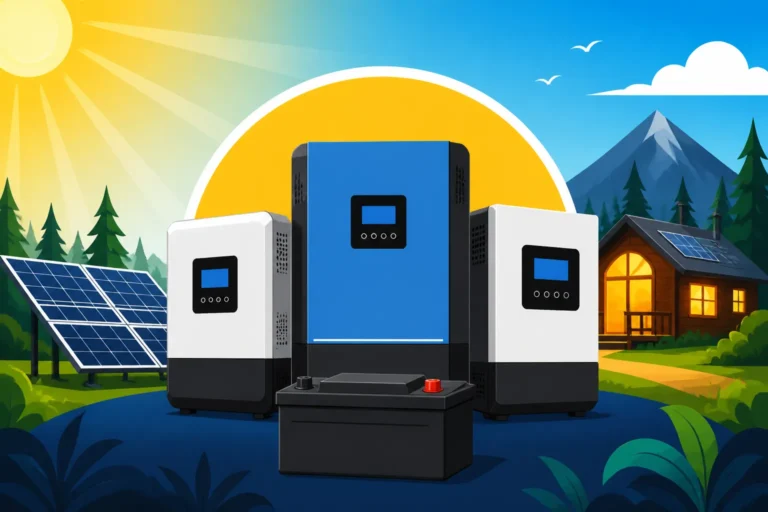
An inverter's primary job is to take that DC power stored in your batteries and convert it into usable AC power for your household appliances. It's truly the bridge between your solar-generated power and the comforts of modern living. Without an inverter, you'd be limited to only DC-powered devices, which, while possible for some basic needs, severely restricts your options for running most common electronics and appliances.
The conversion process itself is quite complex. It involves rapidly switching the direction of the DC current to create a waveform that mimics the AC power delivered by utility companies. This waveform is where the "pure sine wave" and "modified sine wave" distinctions come into play, and it dictates how smoothly and reliably your appliances will run. It's not just about getting power; it's about getting quality power.
Why the Waveform Matters for Your Electronics
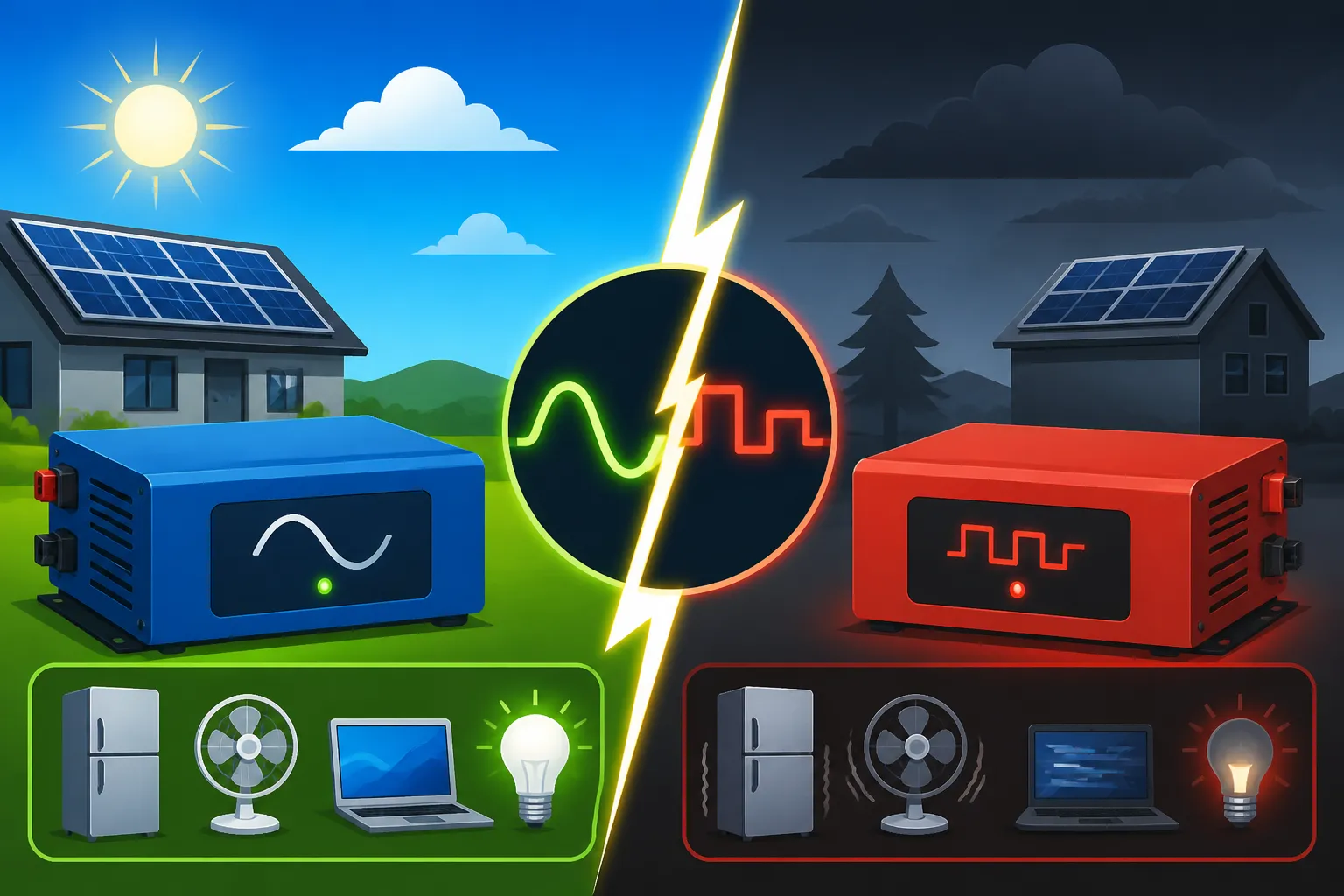
Imagine a smooth, steady ocean wave compared to a choppy, stair-stepped wave. That's a good analogy for what we're talking about with electrical waveforms. The quality of this AC waveform is crucial because different appliances are designed to interact with electricity in specific ways. Sensitive electronics, especially those with microprocessors, sophisticated timers, or induction motors, expect a very clean, consistent sine wave to function correctly and efficiently.
When an appliance doesn't receive the waveform it expects, it can lead to a host of problems. At best, you might experience buzzing sounds from your speakers or a flickering light. At worst, your appliances could overheat, run inefficiently, wear out prematurely, or even suffer permanent damage. Understanding this fundamental difference is key to making an informed decision about your off-grid system and protecting your valuable investments. It impacts everything from the lifespan of your refrigerator to the clarity of your TV picture, making it a critical choice when you're considering the overall How Much Does an Off-Grid Solar System Cost.
Diving Deep into Pure Sine Wave Inverters
When it comes to powering your off-grid life, the pure sine wave inverter is often considered the gold standard. It’s what most people envision when they think about quality, reliable electricity. This type of inverter produces an AC waveform that is virtually identical to the power supplied by utility companies, making it universally compatible with almost any appliance you could imagine.
The Gold Standard: What Makes a Pure Sine Wave "Pure"?
A pure sine wave inverter generates a smooth, continuously oscillating wave pattern, just like the utility grid. This clean, gentle curve allows motors to run cooler, electronics to operate without interference, and sensitive equipment to function precisely as designed. There are no abrupt voltage changes, no harsh corners in the waveform, just a fluid transition that ensures your devices receive power in the most ideal form.
This "purity" is achieved through advanced electronic circuitry that meticulously shapes the DC input into a precise sinusoidal output. It's a more complex process than what's found in other inverter types, but the result is unparalleled power quality. If you were to look at it on an oscilloscope, it would be a beautiful, flowing curve, completely free of the jagged edges you might see with other inverter types. This similarity to grid power is why it's so highly sought after for comprehensive off-grid setups.
The Undeniable Benefits for Your Off-Grid Life
The advantages of choosing a pure sine wave inverter for your off-grid system are significant and far-reaching. Firstly, it offers universal compatibility. This means you can confidently plug in virtually any appliance you would use in a conventional home – from delicate medical equipment like CPAP machines and high-end audio-visual systems to power tools and kitchen appliances with induction motors or sensitive electronics. These devices will operate smoothly, quietly, and efficiently, just as their manufacturers intended.
Secondly, pure sine wave inverters drastically reduce the risk of damage, premature wear, and efficiency loss in your appliances. Motors, for instance, run cooler and quieter because they are not constantly trying to compensate for irregular power pulses. Sensitive electronics won't experience the internal stresses that modified waveforms can induce, extending their lifespan and ensuring consistent performance. Think about your refrigerator: a pure sine wave inverter will allow its compressor to start and run without strain, saving you money on repairs and replacements in the long run. When calculating your Off-Grid Solar Return on Investment, the longevity of your appliances is a major factor.
The Real-World Drawbacks: Cost and Efficiency
While the benefits of a pure sine wave inverter are compelling, it’s important to acknowledge that they come with a higher price tag. The advanced technology and components required to produce that pristine waveform translate into a greater initial investment compared to their modified sine wave counterparts. This can be a significant consideration, especially for those on a tight budget when planning the Cost of an Off-Grid Solar Inverter.
However, it's often a case of "you get what you pay for." The added expense up front can save you headaches and replacement costs down the line. In terms of efficiency, modern pure sine wave inverters are incredibly efficient, typically converting DC to AC with 90-95% efficiency or even higher under optimal loads. While some might suggest they are slightly less efficient at very low loads compared to modified sine wave inverters, the difference is often negligible for most real-world off-grid applications. The critical factor is that the power they produce is clean, making them the superior choice for overall system health and appliance longevity.
Exploring Modified Sine Wave Inverters
On the other side of the inverter spectrum, we have modified sine wave inverters. These were once a common, more affordable alternative, particularly for simpler off-grid setups or those with less demanding power needs. They offer a more budget-friendly entry point into converting DC power to AC, but it's crucial to understand their limitations.
The Stepped Approach: How Modified Sine Waves are Generated
Unlike the smooth curve of a pure sine wave, a modified sine wave is essentially a blocky, stepped approximation of a sine wave. Instead of a fluid oscillation, the voltage output switches rapidly between positive, zero, and negative states, creating a waveform that looks more like a series of steps or squares when viewed on an oscilloscope. Imagine trying to draw a circle by only using straight lines – it gets the general shape, but it's far from a perfect curve.
This "stair-step" effect is created by the inverter rapidly reversing the polarity of the DC input voltage. While it's a clever way to approximate AC power with less complex circuitry, it's not truly sinusoidal. This design makes them simpler and cheaper to manufacture, which is their main draw. However, this approximation carries implications for the types of appliances that can be reliably powered.
The Practical Advantages for Specific Applications
The primary, and often most compelling, advantage of modified sine wave inverters is their lower cost. For those just starting out with a very basic off-grid setup, or perhaps only needing to power a few simple, non-sensitive items, they can seem like an attractive option. They are frequently found in entry-level solar kits or smaller, portable power solutions aimed at weekend camping or very light recreational use.
These inverters are generally sufficient for what we call "resistive loads." These are appliances that primarily convert electrical energy into heat, like old-school incandescent light bulbs, heating elements in a simple toaster, or basic coffee makers that don't have complex electronic controls. They might also handle simple chargers for phones or tablets, though not always with optimal charging efficiency or without producing some heat in the charger itself. For scenarios where your power needs are truly minimal and specific, and you're focusing on keeping the initial setup cost down, a modified sine wave inverter could potentially fit the bill, which is why they are sometimes included in Best Off-Grid Solar Kits for Beginners.
The Hidden Costs and Compatibility Issues
Here's where the rubber meets the road with modified sine wave inverters. While they save you money upfront, they can introduce a host of "hidden costs" and headaches down the line. The stepped waveform they produce can be problematic for many modern appliances. Sensitive electronics, such as laptops, modern flat-screen TVs, gaming consoles, and anything with a digital clock or micro-processor, often react poorly to the choppy power. You might experience buzzing sounds, flickering screens, or even outright malfunction.
Appliances with AC motors, like refrigerators, ceiling fans, washing machines, or well pumps, are particularly susceptible to issues. The motor will try to run on the irregular waveform, often resulting in increased noise (a noticeable hum or buzz), excessive heat generation, reduced efficiency, and significantly shortened lifespan. In some cases, motors may not even start, or their warranties could be voided due to improper power input. Even some LED lights, while generally energy-efficient, can flicker or buzz when connected to a modified sine wave inverter, completely defeating the purpose of their efficiency. This can add to your Off-Grid Solar Maintenance Costs down the road.
Real-World Scenarios: Choosing the Right Inverter for Your Needs
Deciding between a pure sine wave and a modified sine wave inverter isn't just about technical specifications; it's about understanding your real-world power needs and protecting your investment. The choice largely depends on what you plan to power and how critical consistent, clean electricity is to your off-grid lifestyle.
When Pure Sine Wave is Non-Negotiable
For many off-grid homeowners, RV dwellers, or anyone relying on solar for primary power, a pure sine wave inverter is the only sensible choice. If your system will power sensitive electronics like laptops, desktop computers, medical devices such as CPAP machines, or high-definition televisions and audio equipment, a pure sine wave is essential. These devices require the smooth, consistent power to function correctly and avoid damage. Imagine your laptop constantly flickering or your CPAP machine failing in the middle of the night—not ideal situations.
Furthermore, any appliance that incorporates an AC motor or compressor, like a household refrigerator, freezer, well pump, or an air conditioner, absolutely thrives on pure sine wave power. These inductive loads can operate more efficiently, quietly, and reliably, extending their lifespan considerably. Trying to run a refrigerator on a modified sine wave inverter, for instance, can lead to the compressor working harder, generating more heat, and potentially failing prematurely. This is why for most reliable systems, especially for a whole house or a large cabin, you'll find recommendations for Best Off-Grid Solar Inverters, which are almost exclusively pure sine wave models. For specific applications, understanding how to handle surge loads is crucial, as covered in topics like Sizing Solar for a Refrigerator or Sizing Solar for Air Conditioning.
When Modified Sine Wave Might Be Sufficient
There are indeed niche scenarios where a modified sine wave inverter might suffice, primarily when your power needs are extremely basic and non-critical. If you're building a super simple setup for a remote shed that only needs to power an old incandescent light bulb or a basic battery charger for a tool that's not sensitive to power fluctuations, then a modified sine wave inverter could work.
Think of temporary setups for very limited use, such as charging a basic feature phone or running a small fan for a few hours. These are typically appliances with purely resistive heating elements or very robust, simple motors. However, even with these, you might notice some reduced efficiency or a slight hum. It's a choice driven purely by budget when the risk of appliance damage is extremely low or the appliances themselves are cheap and easily replaceable.
The Gray Areas and What to Watch Out For
The problem is, many appliances today fall into a "gray area" where it's not immediately clear if a modified sine wave inverter will cause issues. Modern LED lights, while typically energy-efficient, often incorporate small electronic drivers. Some may run fine on modified sine wave power, while others will flicker noticeably or emit an annoying buzz. The same goes for many power tools: basic universal motor tools might tolerate it, but variable-speed tools or those with electronic controls are likely to struggle or be damaged.
Even common kitchen appliances like microwaves, while they might "work" on a modified sine wave, often do so less efficiently. Their magnetrons, which generate the microwaves, prefer a clean waveform. You might find your food takes longer to heat, or the microwave itself runs hotter. The best advice for anything in this gray area is to research your specific appliance or, better yet, err on the side of caution with a pure sine wave inverter. Ultimately, if you're uncertain about any appliance, assume it needs a pure sine wave for optimal performance and longevity.
Key Considerations Beyond the Waveform
Beyond just the waveform, there are several other critical factors to consider when selecting an inverter for your off-grid solar system. These choices directly impact your system's performance, safety, and long-term reliability. Don't let the waveform discussion overshadow these equally important considerations.
Sizing Your Inverter Correctly
Choosing the right size inverter is paramount. It's not enough to simply have one; it must be capable of handling all your electrical loads. You need to calculate both your continuous power needs (the total wattage of all AC appliances that will run simultaneously) and your surge power needs (the temporary spike in wattage that some appliances, especially those with motors, draw when they first start up). Your inverter must be rated to handle your highest continuous load and your highest surge load. For example, a refrigerator might continuously draw 150-200 watts, but its compressor could surge to 800-1200 watts for a split second when it kicks on.
If your inverter is undersized, it won't be able to start certain appliances or might constantly trip its overload protection, leading to frustration and potential damage to the inverter itself. On the other hand, oversizing too much can lead to higher costs and potentially slightly less efficient operation at very low loads due to increased standby power draw. Learning How to Size an Off-Grid Inverter properly is one of the most important steps in designing your system. A good rule of thumb is to calculate your maximum simultaneous running watts, then factor in the highest surge requirement of any single appliance, giving yourself a comfortable buffer.
Efficiency and Standby Power Draw
Inverter efficiency refers to how much of the DC power from your batteries is successfully converted into usable AC power, typically ranging from 85% to 95%. A 90% efficient inverter means that for every 100 watts of DC power it draws, 90 watts of AC power are produced, with 10 watts lost as heat. Higher efficiency is always better as it conserves your precious battery energy. This is a critical factor in how much battery capacity you need.
Equally important is the "no-load" or "standby" power draw. This is the amount of power the inverter consumes just to be on and ready, even if no appliances are running. For smaller systems or those with limited solar charging, an inverter with a high standby draw can significantly deplete your battery bank overnight. Look for inverters with low standby consumption, especially if your system has periods of very light use. Some advanced inverters even feature "power save" or "sleep" modes that reduce standby draw when no significant load is detected, which is a great feature to look for when you How to Choose an Off-Grid Inverter.
Brands, Features, and Where to Buy
The off-grid solar market is bustling with brands, and choosing the right one can feel overwhelming. For reliable, high-quality pure sine wave inverters, established brands like Victron Energy, Sol-Ark, and Schneider Electric are highly regarded for their robust performance and advanced features. You'll also find excellent options from brands like Renogy and Growatt, which offer a range of products from smaller, budget-friendly options to more comprehensive solutions.
When shopping, consider features beyond just the waveform and wattage. Many modern inverters, often called inverter-chargers, integrate a battery charger and sometimes even a solar charge controller into a single unit. This can simplify your wiring and reduce overall system complexity, making them a popular choice for comprehensive off-grid systems. For more on these integrated units, check out our guide on Best Off-Grid Solar Inverter Chargers. Other useful features include built-in transfer switches for generator integration, remote monitoring capabilities (often via Bluetooth or Wi-Fi), and robust surge protection. You can find these components from specialized solar retailers or large online marketplaces like Amazon, where you can often compare various models and read user reviews.
| Feature | Pure Sine Wave Inverter | Modified Sine Wave Inverter |
|---|---|---|
| Waveform | Smooth, continuous wave; identical to utility grid power. | Stepped, blocky approximation of a sine wave. |
| Cost | Higher initial investment. | Significantly lower initial cost. |
| Compatibility | Universal; safe for all electronics, including sensitive, motors, and medical devices. | Limited; only suitable for basic resistive loads, often problematic for sensitive electronics/motors. |
| Appliance Health | Extends appliance lifespan, runs cooler and quieter. | Can shorten appliance lifespan, cause overheating, buzzing, and potential damage. |
| Efficiency | High (typically 90-95%+), even for sensitive loads. | Generally good for compatible loads, but can be less efficient for some applications. |
| Noise | Very low or no audible noise from appliances. | Often causes buzzing or humming in motors, fans, and some lighting. |
| Best Use | Whole homes, RVs, cabins, medical devices, sensitive electronics, induction motors. | Very basic, temporary setups for non-sensitive, purely resistive loads. |
Installation and Longevity: Protecting Your Investment
Once you've made the crucial decision about your inverter type, the next steps involve proper installation and ongoing maintenance. These aspects are just as vital as the component selection itself for ensuring the long-term reliability and safety of your off-grid solar system. Skimping on these can lead to inefficiencies, hazards, and costly repairs down the road.
Proper Installation for Optimal Performance
Installing an inverter correctly is critical for its performance and safety. First and foremost, ensure it's mounted in a well-ventilated area, away from direct sunlight, moisture, and extreme temperatures. Inverters generate heat during operation, and adequate airflow is essential to prevent overheating, which can significantly reduce their lifespan and efficiency. Never enclose an inverter in a sealed, unventilated space.
Wiring is another key area where attention to detail pays off. Use appropriately sized cables and wires for all connections, from the battery bank to the inverter, and from the inverter to your AC distribution panel. Undersized wires can lead to voltage drop, increased resistance, and generate excessive heat, posing a fire risk. Always incorporate proper fusing and circuit breakers on both the DC and AC sides of the inverter to protect against overcurrents and short circuits. And never forget grounding – your inverter and the entire system must be properly grounded to prevent electrical shock hazards. Our guide on How to Wire an Off-Grid Solar System and Off-Grid Solar Safety and Grounding offers comprehensive details on these critical installation steps. For larger systems, or if you're uncomfortable with electrical work, hiring a certified electrician for the final connections and inspection is always a smart move.
Maintenance and Troubleshooting
While inverters are generally low-maintenance components, a little proactive care can go a long way. Regularly inspect your inverter for any signs of physical damage, loose connections, or corrosion on terminals. Keep the cooling fins and ventilation openings clear of dust, debris, and insect nests, which can impede airflow and lead to overheating. A soft brush or compressed air can be used for cleaning.
Familiarize yourself with your inverter's manual, especially the section on error codes and troubleshooting. Modern inverters often have diagnostic displays or indicators that can alert you to issues like low battery voltage, overload conditions, or internal faults. Knowing what these codes mean can help you quickly identify and resolve minor problems before they escalate. Pay attention to any unusual noises or smells coming from the inverter, as these can be early warning signs of an internal problem. Protecting your system from extreme environmental factors, such as very high humidity or corrosive atmospheres, will also contribute to its longevity.
Upgrading and Expanding Your System
Many off-gridders start with a smaller system and then gradually expand it as their needs grow or their budget allows. When choosing an inverter initially, consider if it's part of a modular or expandable system. Some inverter models are designed to be stacked or paralleled with identical units to increase overall AC output capacity. This can save you from having to replace your entire inverter setup if you decide to add more solar panels, batteries, or appliances in the future.
Planning for future expansion means thinking ahead about your potential power needs. Will you add a well pump, an electric clothes dryer, or perhaps another refrigerator down the line? If so, selecting an inverter from a reputable brand that offers compatible components and clear upgrade paths will make the expansion process much smoother and more cost-effective. Even if you start with a modest setup, choosing quality components that can integrate into a larger system later is a wise investment, as detailed in our advice on How to Design an Expandable System. It ensures that your initial investment continues to serve you well as your off-grid lifestyle evolves.
Disclaimer
Please remember, the information provided in this guide is for educational and informational purposes only and is not a substitute for professional advice. Off-grid solar system installation and maintenance involve electrical work that can be dangerous if not performed correctly. Always consult with a qualified solar installer or electrician to ensure your system is designed, installed, and maintained safely and in compliance with all local codes and regulations.